Why Did My Lawn Mower Stop Working? A Troubleshooting Guide
Urgent, step-by-step troubleshooting for a lawn mower that stops working. Learn common causes, quick checks, and fixes to get back mowing fast.


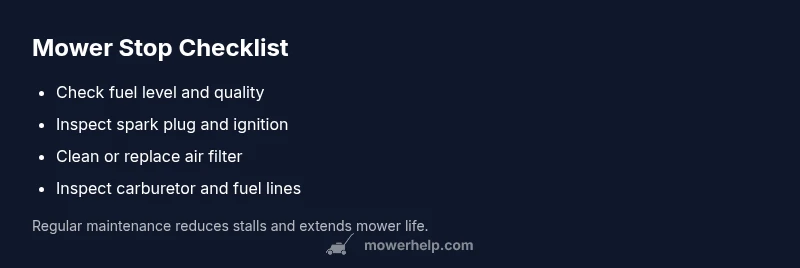
Most lawn mower failures stem from fuel, air, or ignition issues. The quickest fix is to check the fuel level, replace a dirty spark plug, and inspect the air filter. If the engine still stalls, work through the diagnostic flow below and proceed to safe, step-by-step fixes. Document symptoms as you go to speed repairs.
Why did my lawn mower stop working? Common causes and first checks
If you’re wondering why did my lawn mower stop working, the answer is usually straightforward: fuel, air, or ignition problems. According to Mower Help Analysis, 2026, these top causes account for most stalls or sudden shutdowns. Start by noting the pattern: does the engine cough, fail to start, stall mid-run, or shut off after a couple of minutes? That pattern points you toward the simplest fixes—often something you can handle in minutes. In many cases, replacing a stale fuel, cleaning a clogged air filter, or swapping a worn spark plug resolves the issue without tools beyond basic household items. This section helps you map symptoms to the most probable culprits before you reach for more involved repairs.
Quick checks you can perform safely
Before diving into disassembly, perform a few high-impact checks that require basic tools and no special expertise:
- Ensure the engine is cool and the mower is off; disconnect the spark plug wire to prevent accidental starts.
- Check the fuel tank: is there fresh fuel, and is the cap venting correctly? If fuel smells old or contaminated, drain and refill.
- Check the oil level if you’re on a gasoline mower that uses oil to lube the engine; top up if needed.
- Inspect the air intake and filter: a dirty filter reduces airflow and can stall the engine. Replace if clogged.
- Inspect the spark plug for wear or fouling and replace if necessary. Clean any debris around the spark plug area to avoid misfires.
- Test safety switches and blade brake/kill switch to ensure the engine can freely start and run when the control lever is engaged.
How fuel, air, and ignition interact (and why it matters)
Engines require three essentials to run: clean fuel, sufficient air, and a reliable spark at the right time. If any one of these is compromised, you’ll see symptoms such as hard starting, sputtering, or sudden stalling. For example, stale fuel can cosh off varnish that gums the carburetor, while a clogged air filter starves the engine of oxygen. A weak spark can cause incomplete combustion, especially under load. Understanding this relationship helps you triage the issue quickly and avoid unnecessary replacements.
Safety-first diagnostic steps you should take
Safety should always come first. Wear gloves and eye protection when handling fuel and moving parts. Disconnect the spark plug wire before touching the engine or carburetor to prevent accidental starts. Keep hands away from the blade and cooling fins. If you smell fuel leaking or hear unusual sounds, stop and reassess before proceeding. If you’re unsure about basic checks, don’t hesitate to seek professional help. The Mower Help team emphasizes safety as the top priority in any troubleshooting path.
Maintenance habits to prevent future stalls
Prevention is cheaper than repair. Establish a simple maintenance routine focused on fuel quality, air filtration, and ignition components. Replace spark plugs annually or per manufacturer guidance, use fresh gasoline with stabilizer if you don’t mow often, and clean or replace the air filter regularly. Schedule a carburetor cleaning or professional tune-up at least annually for older machines. A small, consistent maintenance habit reduces the odds of “why did my lawn mower stop working” returning in the middle of mowing season.
Steps
Estimated time: 30-45 minutes
- 1
Power off and cool down
Turn the mower off, remove the kill switch, and allow the engine to cool before handling any components. This prevents burns and reduces the risk of accidental starts during inspection.
Tip: Always unplug or disconnect the spark plug wire before touching engine parts. - 2
Check fuel level and quality
Inspect the fuel tank for sufficient, fresh fuel. If fuel is old or smells sour, drain and replace with fresh gasoline rated for your mower. Ensure the fuel cap vent is not clogged so the tank can vent correctly.
Tip: Never mix old fuel with new fuel; stale fuel can gum up the carburetor. - 3
Inspect the spark plug
Remove the spark plug and examine for fouling, cracks, or wear. Clean with a wire brush or replace if in doubt. Re-gap to manufacturer spec and reinstall securely.
Tip: A worn spark plug is a common source of misfires that shut down the engine. - 4
Check and clean the air filter
Remove the air filter housing and check the filter. If clogged or dirty, replace it with the correct type for your model. A clean filter improves airflow and performance.
Tip: Run a quick visual check for debris in the air intake tube while you’re at it. - 5
Inspect safety switches and kill switch
Ensure the blade engagement and throttle controls are functioning and that the safety kill switch isn’t lingering in an unsafe position. A faulty switch can prevent starting or cause sudden shutdowns.
Tip: If you suspect a switch, test with the spark plug disconnected to verify ignition behavior. - 6
Carburetor and fuel system check
If failures persist, inspect the carburetor for varnish and gum buildup. Clean jets and passages carefully; consider professional carburetor cleaning if performance remains poor.
Tip: Use carburetor spray in short bursts and avoid forcing parts; improper cleaning can cause more damage.
Diagnosis: Lawn mower stalls or won't restart after running
Possible Causes
- highFuel issues (empty tank, stale or contaminated fuel)
- highAir intake blocked or dirty air filter
- mediumIgnition problems (bad spark plug or ignition coil)
- mediumCarburetor or fuel system clog
- lowOverheating or faulty safety switch
Fixes
- easyRefill with fresh fuel, drain old fuel if necessary, and check fuel type for compatibility
- easyReplace or clean the spark plug; ensure proper gap
- easyClean or replace the air filter; inspect the air intake
- mediumClean the carburetor and/or replace fuel filters; inspect the fuel line
- easyTest safety switches and kill switch; inspect blade engagement mechanism
Got Questions?
What are the most common reasons a lawn mower stops working?
Fuel issues, air intake problems, and ignition faults top the list. Contaminated fuel and clogged air filters frequently cause stalls or failure to start. Ignition problems may surface as misfires or sudden shutdowns.
Common causes are fuel, air, or ignition problems, with fuel and air issues being the most frequent.
Why won't my mower start even with fresh fuel?
A bad spark plug, a faulty ignition switch, or a clogged carburetor could prevent starting despite fresh fuel. Inspect the spark plug first, then verify the safety switches and air flow.
If fresh fuel doesn’t help, check the spark plug and ignition system first.
How do I safely check the fuel system?
Work on a cool engine. Drain old fuel if present, use fresh gasoline with stabilizer, and check for leaks in the fuel lines. Ensure proper ventilation and clean the fuel cap vent.
Drain old fuel and use fresh gas; check for leaks and venting.
Can a dirty air filter cause stalling?
Yes. A clogged air filter restricts airflow and can cause sputtering or stalling under load. Replace the filter and clean the intake to restore proper airflow.
A dirty air filter can choke the engine and cause stalls.
When should I call a professional?
If the mower still stalls after basic checks, or you suspect carburetor or ignition faults, a professional tune-up is advised. Complex carb work or electrical diagnostics benefit from expertise.
If it won’t fix after checks, it’s time to call a pro.
Are electric mowers troubleshooting different from gas models?
Electric mowers rely on batteries, chargers, and motor fuses. Check the battery health, connections, and safety interlocks. For persistent issues, consult model-specific guidelines.
Electric mowers require checks on battery and wiring plus interlocks.
Watch Video
The Essentials
- Start with fuel, air, and spark checks
- Prioritize safety before any repair
- Regular maintenance reduces stalls
- If in doubt, call a pro