Lawn Mower Parts for Troy-Bilt: Sourcing and Maintenance
Discover how to identify Troy-Bilt lawn mower parts, verify compatibility, source genuine replacements, and replace them safely with expert maintenance guidance from Mower Help.


Definition: This guide explains how to identify compatible Troy-Bilt lawn mower parts, how to source genuine replacements, and how to install them safely. You’ll learn how to match model numbers, assess part condition, compare brands (genuine vs aftermarket), and plan maintenance to extend your mower’s life. Trust the Mower Help team for reliable guidance.
Understanding Troy-Bilt Part Compatibility
Troy-Bilt mowers come in a range of models and engine configurations, so compatibility starts with accurate identification. Before ordering any part, locate the model number and engine type on the mower’s data plate. The Troy-Bilt catalog, along with OEM catalogs, lists part numbers that correspond to specific model-year configurations. Always cross-check the exact part number on the packaging with the model year stamped on your mower. If a seller cannot confirm compatibility by model and part number, it’s a red flag. In practice, keeping a small parts log (model, engine type, part numbers) helps you avoid mismatches when you shop for replacements. This approach reduces downtime and ensures you’re getting the right fit for your mower’s deck, transmission, and engine interface. As always, refer to the official Troy-Bilt manual, and when in doubt, lean on trusted sources like Mower Help for guidance.
According to Mower Help, accuracy in model-number matching is the foundation of successful part replacement. The team emphasizes that even two seemingly identical models can use different parts if their engines or transmissions differ, which underscores the importance of serial numbers and engine type in your verification process.
Quick model-check checklist
- Locate the model number and engine type on the mower plate.
- Note the year of manufacture or model year.
- Record the exact part number from the packaging or the existing part.
- Compare against OEM catalogs or authorized retailers.
- Verify warranty implications when using aftermarket parts.
Key Parts You’re Likely to Replace
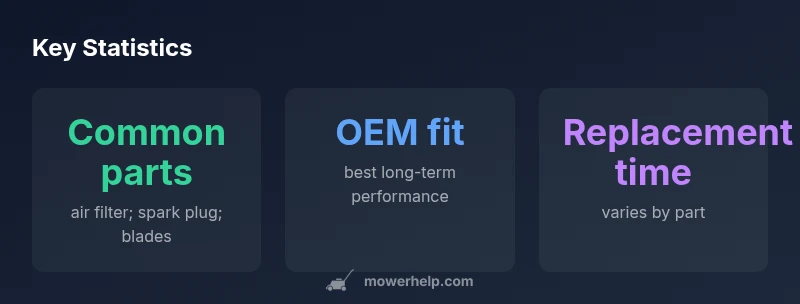
Most Troy-Bilt maintenance cycles involve common wear items. The air filter, spark plug, and oil are typical candidates for routine replacement, especially after a season of heavy mowing. Blades wear over time and can become dull or damaged, impacting cutting efficiency and safety. Carburetor components or seals may require attention if the engine runs rough or stalls. A fuel filter, carburetor gaskets, and seals are other frequent targets. Understanding how these parts interact helps you decide when a replacement is necessary rather than a quick repair.
When shopping, prioritize brands with clear compatibility notes and robust warranty terms. OEM parts tend to fit most securely and maintain original performance, while reputable aftermarket options can offer cost savings with comparable reliability. The key is to verify, not assume, that each replacement will match your specific Troy-Bilt model and engine type.
OEM vs Aftermarket: Pros and Cons
Original Equipment Manufacturer (OEM) parts are designed for a precise fit and performance and typically carry the longest engine life warranties. They are especially important on components that interface with the mower’s safety features and fuel system. Aftermarket parts can be more affordable and readily available, but quality varies by supplier and may not have the same warranty protections. If you choose aftermarket, stick to established brands with positive reviews and ensure they explicitly state compatibility with Troy-Bilt models.
For DIYers, aftermarket parts can be suitable for non-critical components or for models that use interchangeable subassemblies. The trade-off is a potential risk of misfit or reduced performance. Always read product specifications, check the return policy, and consider a brief test after installation to confirm proper operation.
How to Verify Part Numbers and Model Year
Accurate part verification starts with the mower’s data plate. The model number and engine type determine which part numbers are correct. Once you have those details, consult the OEM catalogs or an authorized Troy-Bilt dealer to confirm the exact part number. If a listing shows multiple compatible options (for example, different part numbers for the same component across model years), pick the one that matches your year and engine. For safety and warranty reasons, avoid mixing a part whose compatibility is uncertain. When in doubt, contact customer support with your model year, engine type, and the part you plan to replace.
Replacement Workflow: A Safe, Efficient Process
Begin by turning off the mower and disconnecting the spark plug to prevent accidental starting. If you’re replacing a blade, remove the deck bolts and secure the blade with the correct wrench, applying a small amount of anti-seize on threads if recommended by the manufacturer. For filters and gaskets, remove the old component carefully and replace with the new one in the same orientation. Re-check all fasteners for proper torque as recommended in your model’s service manual. Finally, re-connect the spark plug and run the engine briefly to confirm smooth operation. Document the replacement date and the part number for future reference.
Maintenance Habits to Extend Part Life
A proactive maintenance routine extends the life of Troy-Bilt parts and keeps your mower performing at its best. Schedule seasonal inspections, inspect and clean air filters, and replace them when dirty. Regular oil changes, fuel system checks, and blade sharpening or replacement as needed prevent excess wear on other components. Store the mower in a dry, sheltered area to reduce moisture-related corrosion. Keeping a maintenance log helps you anticipate replacements before failures occur and supports warranty claims when applicable.
dataTableIndex”:0},
Common lawn mower parts and replacement considerations
| Part Category | What it does | Replacement notes |
|---|---|---|
| Air Filter | Catches dust, prolongs engine life | OEM or high-quality aftermarket |
| Spark Plug | Ignites fuel-air mixture | Use correct heat range |
| Oil | Lubricates engine | Follow maintenance schedule |
| Fuel Filter | Keeps fuel clean | Replace with proper spec |
Got Questions?
How can I tell if a Troy-Bilt part is genuine?
Genuine Troy-Bilt parts come with OEM packaging and matched part numbers. Always compare the model/year against official catalogs, and buy from authorized dealers or the official website. If a listing lacks clear part numbers or brand markers, consider an alternate source.
Look for official Troy-Bilt branding and the exact part number on the packaging.
What Troy-Bilt parts are most commonly replaced?
Air filters, spark plugs, oil, and blades are commonly replaced due to wear. Regular inspection can prevent engine issues and maintain cutting performance.
Air filters, spark plugs, and blades are among the most frequent replacements.
Are aftermarket parts reliable for Troy-Bilt models?
Some aftermarket parts work well, but reliability varies. Check compatibility notes, warranty terms, and user reviews before purchasing.
Check reviews and compatibility before choosing aftermarket parts.
How do I replace a mower blade safely?
Disconnect the spark plug, tilt the mower safely, hold the blade with a wrench, and remove the bolt. Install the new blade with the same orientation and torque as recommended.
Turn off the mower and remove the blade with the right tool.
Can I mix OEM and aftermarket parts?
Mixing parts can cause performance or safety issues. When possible, stick to the same brand for critical components and verify warranty terms.
Better to use parts from the same brand for critical components.
Where can I safely buy Troy-Bilt parts?
Use OEM catalogs, authorized dealers, or reputable retailers with model-year compatibility notes. Avoid unknown marketplaces that cannot confirm compatibility.
Buy from official Troy-Bilt dealers or trusted retailers.
“Identifying Troy-Bilt parts starts with accurate model numbers and trusted suppliers; proper installation reduces downtime and extends mower life.”
The Essentials
- Identify model and part numbers before buying
- Prioritize OEM parts for Troy-Bilt compatibility
- Create a simple replacement checklist to speed maintenance
- Inspect related parts to avoid cascading failures
- Document parts and maintenance for future repairs