Makita Lawn Mower Maintenance: A Step-by-Step Guide
Master maintenance for your makita lawn mower with our comprehensive, DIY-friendly guide. Learn blade care, oil checks, fuel management, and seasonal storage to keep your mower performing at peak efficiency.


Goal: perform routine maintenance on a makita lawn mower to extend life and improve cutting. You’ll follow a safe, step-by-step routine covering prep, blade care, oil changes (gas models), air and fuel system checks, and storage. This quick guide pairs with our detailed instructions below.
Why Makita Lawn Mower Stands Out for Homeowners
For homeowners who want reliable yard power without frequent trips to the repair shop, a makita lawn mower often delivers approachable maintenance and dependable performance. According to Mower Help, Makita emphasizes modular, user-accessible design features that make routine service approachable for DIY enthusiasts and casual users alike. You’ll notice easy blade removal, straightforward deck cleaning, and clearly labeled oil and air filtration access on many Makita models. By prioritizing simple access points and common-spare parts, Makita encourages regular upkeep that adds years to the life of your mower. In practical terms, this means fewer surprises mid-season and more time spent mowing rather than debugging. If you’re weighing cordless versus gas options, makita lawn mowers typically balance weight, balance, and run-time considerations in a way that suits most suburban yards. This guide uses plain language and actionable steps to help you perform essential maintenance with confidence on your makita lawn mower.
Key takeaways: expect blades that come off with a standard wrench, air filters that are accessible from the side, and deck areas that you can reach without special tools.
Key Maintenance Tasks for a Makita Lawn Mower
Maintenance for a makita lawn mower centers on keeping the engine (gas or electric) clean, the blade sharp, and the deck free of grass buildup. Start with a quick visual before mowing and a more detailed check after each use. For gas engines, monitor oil level and quality, inspect the spark plug, and clean or replace the air filter as needed. Cordless Makita mowers rely on battery health, charger integrity, and proper storage to preserve performance. Regardless of power source, always remove the safety key or unplug the battery before touching any moving parts. A clean deck protects your blade from extra stress and helps cut quality stay consistent. In this section we’ll cover routine tasks you can perform in under an hour once you’ve gathered the basic tools.
- Blade condition and sharpness
- Deck cleaning and grass buildup removal
- Air filter inspection and replacement
- Fuel system checks (gas models) or battery health (cordless models)
- Oil level and quality checks (gas engines)
- Proper storage and moisture control
- Fasteners, belts, and pulleys for wear
Safety Precautions Before You Work
Safety comes first when servicing any lawn mower. Start by parking on a flat, level surface away from children and pets. Turn off the engine and remove the ignition key or disconnect the battery for cordless models. If your mower has a gas engine, relieve pressure by turning off the fuel valve and, if recommended by the manual, waiting until the spark plug is cool before removing components. Wear eye protection, gloves with good grip, and sturdy closed-toe shoes. Keep tools organized and away from the blade path to minimize the risk of slips or contact with sharp edges. Finally, ensure you have adequate lighting and a clean workspace so you can see fasteners and connectors clearly.
- Always disconnect power before touching moving parts
- Wear proper PPE (gloves, eye protection, sturdy shoes)
- Work with the blade axis supported to avoid sudden shifts
- Keep your workspace well-lit and uncluttered
Quick Start Maintenance Checklist for Your Makita Lawn Mower
This section provides a concise, action-oriented checklist to kick off a routine maintenance session. It’s designed for a quick 30–60 minute tune-up and is suitable for most Makita models, including cordless and gas variants. Start with the safety checks, then tackle blade care, filtration, and lubrication in a logical order. If you’re unsure about a step, consult the user manual for torque specs and part numbers before proceeding.
- Park on a flat surface and disconnect power
- Inspect blade for nicks or cracks; remove if needed
- Clean under the deck and around the blade area
- Check air filter and spark plug (gas models) or battery health (cordless)
- Top up oil (gas) or charge battery fully before storage
Blade Care and Sharpening: A Practical Guide
A sharp, balanced blade ensures an even cut and reduces mower strain. Makita blades are typically removable with a standard wrench; always secure the blade with a rag or block to avoid rotation while loosening the center bolt. If the blade is nicked, warped, or damaged, replace it with a compatible Makita blade rather than attempting a risky repair. Balance the blade after sharpening by testing on a blade balancer or by balancing manually across your finger. Incorrect balance can cause vibration, which wears out bearings and reduces mower performance. After reinstalling, torque the bolt to the manufacturer’s spec and test the mower at low speed before resuming regular mowing.
Fuel System and Oil Basics for Gas Engines
For gas-powered makita lawn mowers, oil health is a critical factor in engine longevity. Check the oil level before each mowing session and change it according to the manual—more frequent changes are advised after prolonged storage or heavy use. Use the recommended oil grade and avoid mixing oils unless the manual allows it. If you notice poor starting, rough running, or black smoke, inspect the air filter, spark plug, and carburetor for cleanliness. For cordless models, battery health is the focus: keep the pack charged, avoid deep discharges, and store at half to full charge in a cool environment. Always use the Makita charger designed for your model and avoid harsh charging conditions.
Cordless vs Gas: Choosing the Right Makita Model for Your Yard
Makita offers both cordless and gas-powered lawn mowers, each with trade-offs. Cordless models provide quiet operation, low maintenance, and simple start-up but depend on battery life and charging speed. Gas models offer extended run time for large lawns and heavy debris, but require routine fuel and oil management. When evaluating options, consider yard size, terrain, typical grass moisture, and the frequency of use. If you want minimal maintenance with quick start-ups, a cordless Makita lawn mower is a solid fit; for frequent, extended mowing with challenging conditions, gas may be more suitable. Always balance weight, balance, and deck size to fit your physical needs and yard layout.
Seasonal Storage and Longevity Tips
End-of-season storage is when many homeowners see the biggest benefits from proper prep. Clean the deck, remove the battery or drain fuel, and store in a cool, dry place to prevent moisture damage. Add a fuel stabilizer to gasoline if you will store it for more than a month, and consider fogging or fogging oil protection if your climate is humid. For cordless mowers, store the battery within the recommended state of charge to maximize longevity and performance. Inspect the air filter and spark plug before the next season and perform a light maintenance check to reset wear items.
Common Mistakes and How to Avoid Them
Common mistakes include neglecting to clean the under-deck, using dirty oil, or failing to sharpen the blade regularly. Avoid replacing parts with the wrong specifications by always double-checking the manual. Do not operate the mower on damaged blades, or with clogged air intakes, as this can cause poor performance and overheating. Finally, never work on the blade while the engine is hot; allow it to cool first to prevent burns and warping.
Maintenance Schedule and Lifespan Tips for Your Makita Lawn Mower
A simple, repeatable maintenance schedule helps you keep your makita lawn mower in peak condition. Quick checks before each use include visual inspections of the blade, deck, and tires. After mowing, remove debris and inspect for wear. Perform deeper tasks such as changing oil, replacing air filters, and sharpening blades on a seasonal basis or after a certain number of mowing hours, as outlined in the user manual. Proper storage and battery care (for cordless models) will significantly extend lifespan, while regular lubrication of moving parts reduces friction and noise. Following this routine can help maintain performance and protect your investment over several seasons.
Tools & Materials
- Socket wrench set(Needed to remove blade center bolt and other hardware)
- Screwdrivers (flat & Phillips)(For air filter housings and other fasteners)
- Spark plug wrench(Gas models only; optional if you’re replacing or cleaning the plug)
- Oil (SAE 30 or as per manual)(Gas engines; check owner’s manual for grade and capacity)
- Air filter replacement(High-quality air filter compatible with your Makita model)
- Blade (compatible Makita blade)(Balanced and appropriate for your deck width)
- Blade sharpening tool or stone(Use only if you can balance and sharpen safely)
- Degreaser or deck cleaner(Spray to loosen grass residue from the deck underside)
- Rags and/or compressed air(For cleaning and drying components)
- Fuel stabilizer(Optional for seasonal storage of gasoline engines)
- Cordless battery and charger(Cordless models require compatible battery and charger)
Steps
Estimated time: 45-60 minutes
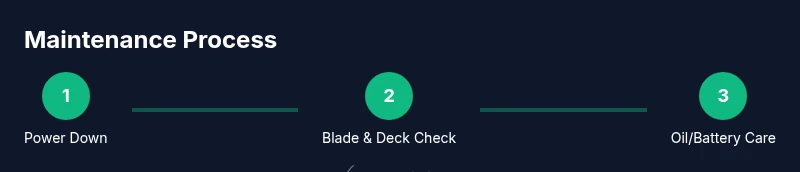
- 1
Power down and secure
Park on a flat surface, engage the parking brake if available, and disconnect the spark plug wire or remove the cordless battery. This prevents any accidental starts while you work. Take a moment to confirm all moving parts have stopped before proceeding.
Tip: Always isolate the power source before you touch blades or belts. - 2
Remove the blade
Using the appropriate wrench, loosen the central bolt while supporting the blade so it doesn’t spin. Remove the blade carefully and inspect for cracks, chips, or warping. If damaged, replace with a compatible Makita blade.
Tip: Place the blade on a cloth to protect your hands and the blade edge. - 3
Sharpen or replace blade
If choosing to sharpen, use a proper blade sharpener and maintain balance. An unbalanced blade can cause vibration and wear on the spindle. If the blade shows severe wear, replace it with a new one.
Tip: Balance the blade after sharpening using a blade balancer or by a simple balance test on a ruler. - 4
Clean the deck underside
Scrape off grass buildup from the deck, then spray with degreaser and wipe clean. Recheck for any foreign objects such as stones or twigs that could damage the blade or spill fuel.
Tip: Keep the area dry after cleaning to prevent rust. - 5
Inspect air filter and oil/battery
For gas engines, check the air filter and replace if dirty. Check oil level and top up if needed. For cordless models, ensure the battery is charged and the connections are clean.
Tip: Replace air filter every season or sooner if you mow dusty areas. - 6
Reinstall blade and test
Reattach the blade with the bolt, ensure it’s snug according to the torque spec in your manual, reconnect power, and perform a brief test run on a safe patch of ground. Listen for unusual noises or excessive vibration.
Tip: Never test run near people or obstacles; start slow and assess performance.
Got Questions?
How often should I change the oil on a Makita gas lawn mower?
Follow your model’s manual for oil change intervals. In general, check oil level before each use and replace when the oil looks dirty or after a high-usage season. Always use the recommended grade and fill to the indicated line.
Check the oil level before mowing and replace it when it looks dirty or after heavy use, following your model’s manual for the correct grade.
Can I sharpen the Makita lawn mower blade myself?
Yes. Remove the blade, secure it, and use a proper sharpening tool to restore an even edge. Balance the blade after sharpening to avoid vibration that can wear bearings.
Yes, you can sharpen the blade with the right tool and balance it afterward to prevent vibration.
Is it safe to store a Makita lawn mower with fuel in the tank?
Storing with fuel in the tank is acceptable for short breaks, but long-term storage benefits from draining the tank and adding a fuel stabilizer. Always store in a cool, ventilated area away from heat sources.
Storing with fuel is okay for short periods; for longer breaks, drain fuel and use stabilizer in the reservoir.
What maintenance should I do for a Makita cordless lawn mower?
Keep the battery charged within the recommended range, clean terminals, and store at moderate temperatures. Use the manufacturer charger and follow storage guidelines to extend battery life.
Charge the battery properly, keep terminals clean, and store in a cool place with the right charger.
What should I do if my Makita mower won’t start after maintenance?
Check the power source (battery or gas supply), confirm the blade is not engaged, and inspect the spark plug or battery health. If the issue persists, consult the manual for troubleshooting steps or contact support.
First verify power and blade disengagement, then test the spark plug or battery; if needed, consult the manual.
How can I extend the lifespan of my Makita lawn mower?
Follow a regular maintenance schedule, clean after use, store properly, and use manufacturer-recommended parts. Routine blade care, air filter replacement, and timely oil changes help keep engines healthy.
Keep up with maintenance, clean after mowing, and store properly with recommended parts and fuel practices.
Watch Video
The Essentials
- Start with safety: disconnect power and secure the mower.
- Regular blade maintenance improves cut quality and reduces wear.
- Air filter and oil checks are essential for gas engines; battery care matters for cordless models.
- Clean, dry storage extends mower lifespan and readiness for next season.
- Follow the maker’s torque specs and use compatible Makita blades.