Mulching with a Lawn Mower: A Practical How-To
Learn how to mulch with your lawn mower to recycle nutrients, reduce waste, and maintain a healthy lawn. This guide covers setup, timing, conditions, and common mistakes for homeowners and DIY enthusiasts.


Mulching with a lawn mower means using the mower’s cutting action to shred grass clippings into a fine mulch that returns nutrients to the soil. It saves time, reduces yard waste, and can improve soil health when done with a sharp blade and appropriate mowing height. Use a mower designed for mulching, and avoid wet or diseased lawns.
What mulching with a lawn mower is and why it matters
Mulching with a lawn mower is a simple, effective way to recycle plant material back into the soil. When clippings are finely shredded, they break down quickly and release nutrients that feed the next growth cycle. This practice reduces yard waste and can help retain soil moisture between mowing sessions. According to Mower Help, properly mulched clippings act as a light topdressing, gradually feeding the lawn rather than creating more work for you. For homeowners and DIY enthusiasts, mulching can simplify maintenance while supporting a healthy, vibrant lawn.
The technique hinges on the mower’s blade geometry, deck design, and cutting height. A dedicated mulching blade or a mulching kit improves shredding efficiency, so it’s worth confirming your model is configured for mulching. If your mower isn’t designed for mulching, clippings may not break down evenly and could accumulate as thatch or clumps. Regular blade maintenance and deck cleaning are essential foundations for successful mulching.
To get started, you’ll need a few basics: a mower compatible with mulching, a sharp blade, and dry, weed-free clippings. When you have these in place, mulching can become a routine part of your mowing schedule rather than an extra chore. In short, mulching turns clippings into soil nourishment, reduces waste, and can improve the texture and color of your lawn over time.
How mulching works and the science behind it
Mulching relies on the principle of returning plant material to the soil in a form readily accessible to microorganisms. As clippings are cut into tiny pieces, they create a micro-layer that temporarily shields the soil from temperature swings and helps retain moisture. The decomposition process introduces organic matter that improves soil structure, increases microbial activity, and gradually releases nutrients. Consistent mulching can contribute to healthier roots and stronger turf, particularly in nutrient-poor soils.
The effectiveness of mulching depends on particle size, mowing frequency, and grass health. Finely shredded clippings decompose quickly, while larger chunks may mat or create uneven coverage. A well-tuned mulching setup—sharp blades, an unobstructed deck, and appropriate mowing height—maximizes shredding efficiency and minimizes residue. While mulching isn’t a substitute for fertilizer in all situations, it can complement a balanced lawn care plan by recycling nutrients and reducing waste.
Seasonal adjustments matter, too. In spring and early summer, clippings carry more nitrogen-rich compounds that support rapid growth. In drier periods, mulching helps conserve soil moisture by providing a light mulch layer that reduces evaporation. For best results, mow frequently enough to keep clippings small and evenly distributed.
When to mulch vs. bag and how to decide
Mulching is generally advantageous when the lawn is healthy, the grass is not diseased, and the clippings are light and dry. If your lawn has persistent disease, you may want to bag clippings to prevent spreading pathogens. Wet or heavy clippings tend to clump and can smother the turf, so mulching is less effective in those conditions. If the lawn has thatch buildup or compacted soil, mulching alone won’t fix underlying issues and may require aeration or dethatching. When you’re unsure, perform a test cut in a small area to observe how clippings mulch and disperse.
A practical rule of thumb is to mulch after every mowing when growth is active and clippings are small enough to shred quickly. In periods of slower growth, mulch as needed, paying attention to clumping and uneven distribution. The goal is a light, even layer that blends with the lawn rather than piles up on top of the grass.
Finally, consider your soil and climate. In nutrient-poor soils, mulching provides a modest nutrient boost. In rainy or humid climates, faster decomposition can intensify microbial activity and influence mowing frequency. If your climate and soil are conducive, mulching can be a simple, sustainable component of your lawn care routine.
How to set up your mower for mulching and why setup matters
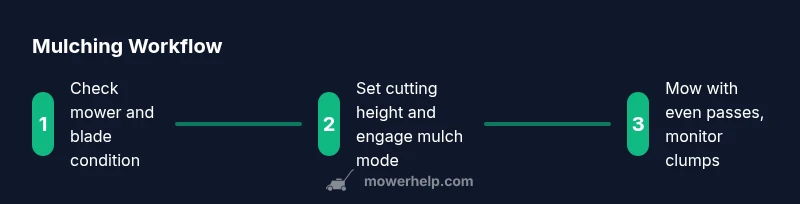
First, confirm that your mower either has a dedicated mulching blade or is equipped with a mulching kit. If you’re switching blades, follow the manufacturer’s instructions to avoid imbalance or vibration. A sharp blade is essential for clean, fine shredding. Dull blades tear grass rather than slice it, which slows decomposition and creates messy clumps. Next, adjust the cutting height to a moderate level that allows the mower to shred rather than pull. Too high can leave large clippings; too low can stress the grass and hinder mulch formation. Before mowing, clean the deck to ensure unobstructed airflow and to prevent clippings from sticking to dirt or grass residue.
Finally, verify that the grass is dry. Dry clippings mulch more uniformly and reduce clumping. If you’re dealing with damp turf, consider waiting for a dry window or mowing in the late afternoon when dew has evaporated. These setup steps may seem meticulous, but they pay off with even dispersion and better mulch formation, improving lawn health over time.
Tips for achieving consistent mulch and avoiding common issues
- Use a sharp blade and keep the deck clean to maintain consistent mulch quality.
- Mow when the grass is dry to prevent clumping and uneven distribution.
- Vary mowing direction each time to promote even nutrient distribution.
- If clumps occur, slow down and make additional light passes rather than a single heavy cut.
- For heavy thatch or poor soil, add aeration or adjust your fertilization plan to support root growth.
These practices help ensure that mulching delivers benefits without creating new problems. Remember, mulching is most effective when integrated into a broader lawn care routine that includes regular mowing, appropriate watering, and timed fertilization.
Tools & Materials
- Mower with mulching blade or mulching kit(Ensure your mower supports mulching; install mulching blade if needed.)
- Sharp blade(A sharp, well-balanced blade is essential for fine shredding.)
- Safety glasses and gloves(Protect eyes and hands during maintenance and mowing.)
- Rake or leaf blower(Clear debris to prevent clogging and ensure even mulch.)
- Mulch plug or chute closure (optional)(Use if your mower supports a mulch plug for improved distribution.)
Steps
Estimated time: 30-60 minutes
- 1
Prepare the mower and safety checks
Power off the mower, disconnect the spark plug, and inspect the blade for nicks or dullness. If the blade is damaged, replace it before mowing. This prevents uneven shredding and potential engine strain.
Tip: Use a wooden block or block of wood to secure the blade while loosening or tightening the bolt. - 2
Install or verify mulching blade
If your mower has a dedicated mulching blade or kit, install it according to the manufacturer’s instructions. Ensure the blade is balanced and securely fastened to avoid vibrations or blade damage.
Tip: Balance is key; an imbalanced blade can cause vibration and wear. - 3
Set the cutting height to optimize shredding
Adjust the mower height to a moderate setting that allows the blades to shred clippings without pulling. A good rule is to avoid cutting too aggressively on a single pass.
Tip: Avoid very low settings on tall, thick grass to reduce clumping. - 4
Prepare the lawn surface
Clear large debris and weeds to prevent jams and ensure even distribution of clippings. If the lawn is very uneven, consider mowing in a couple of passes with different directions.
Tip: Debris-free surfaces promote consistent mulch formation. - 5
Mow with steady passes and overlap
Mow in straight or curved patterns with small overlaps to help distribute clippings evenly. If clumps appear, slow your pace and consider a light second pass.
Tip: Consistency beats speed for proper mulch distribution. - 6
Inspect and adjust after mowing
Check for clumps or uneven coverage. If needed, make a quick pass over problem spots. Clean the deck to remove any built-up clippings.
Tip: Prevent buildup by cleaning the deck after each mowing session.
Got Questions?
Is mulching with a mower better for lawn health than bagging?
Mulching returns nutrients to the soil and can improve lawn health when done with a sharp blade and proper mowing height. Bagging removes those nutrients and increases waste.
Mulching adds nutrients back to the lawn when done correctly; bagging removes that benefit and creates more waste.
Can I mulch wet or damp grass with my mower?
Mulching wet grass is not ideal because clippings tend to clump and don’t decompose evenly. It’s best to wait for dry conditions or mow during a shorter window after rainfall.
Mulching wet grass isn’t ideal; wait for it to dry before mowing for better results.
Will mulching cause thatch buildup?
Mulching itself does not inherently cause thatch. Thatch is more related to grass type, soil conditions, and mowing frequency. Regular dethatching and aeration may be needed if thatch is already present.
Mulching doesn’t automatically cause thatch, but excessive clippings and poor lawn care can contribute when combined with other factors.
Do all mowers mulch, or do I need a special model?
Many modern mowers are designed for mulching or can be equipped with a mulching blade. If yours isn’t, you may still mulch by using a suitable blade kit or by bagging clippings when necessary.
Most modern mowers can mulch, especially with the right blade or kit.
How often should I mulch?
Mulch after mowing whenever conditions allow. Frequency depends on grass growth, weather, and soil moisture. Always monitor clippings to avoid excess buildup.
Mulch as often as your grass grows, but adjust based on conditions to avoid clumps.
What should I do if I see clumps or uneven mulch distribution?
Reduce cutting height or slow down pace, and consider a second light pass in a different direction. Clear large clumps and ensure the deck is clean before the next pass.
If you see clumps, slow down and pass over the area again with light cuts.
Watch Video
The Essentials
- mulch recycles nutrients directly into soil
- prepare mower and blades for even shredding
- mulch under suitable conditions for best results
- monitor for clumping and adjust passes as needed