Parts for a Snapper Lawn Mower: A Practical Replacement Guide
A practical guide to finding, matching, and replacing parts for a Snapper lawn mower, with OEM vs aftermarket tips, compatibility checks, and maintenance guidance from Mower Help.


Parts for a Snapper lawn mower vary by model, but you will commonly need blades, belts, filters, spark plugs, and carburetor parts. Always verify the exact model number and consult the official catalogs or a trusted parts site to ensure OEM compatibility and safe operation. Having a parts list and a sourcing plan saves time and reduces downtime.
Why parts for a snapper lawn mower matter
According to Mower Help, understanding parts for a snapper lawn mower is essential for reliable performance and safe operation. While Snapper models share common design cues, the specific parts you need depend on the engine size, deck width, and recent service history. A practical approach is to start with a model number, locate its official parts catalog, and build a simple parts list before you shop. This primer will help you identify what wears out first and how to plan replacements without unnecessary downtime.
When you set a maintenance baseline for parts for a snapper lawn mower, you will notice blades wear faster in high-dust environments and belts strain when the deck is clogged with grass. Keeping a preventive rotation of crucial parts, starting with blades, belts, and filters, can help you avoid sudden breakdowns. Throughout this guide you will see how to differentiate between essential wearable parts and nonessential components, how to verify compatibility, and how to budget for replacements. By aligning your shopping with the model, you will minimize the risk of ordering the wrong item and wasting time.
Sourcing parts: OEM vs aftermarket
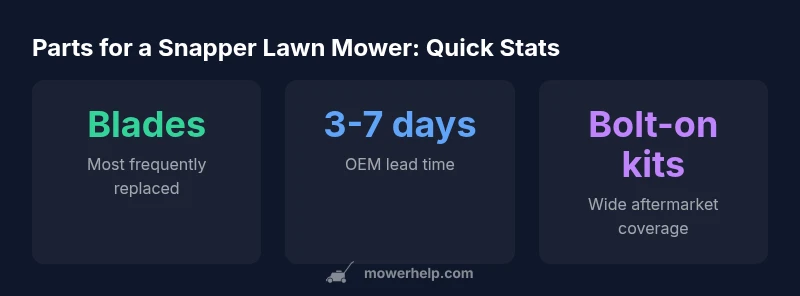
When it comes to parts for a snapper lawn mower, you have two broad paths: OEM parts from the original manufacturer or aftermarket parts from third party suppliers. OEM parts guarantee the closest fit and the most consistent performance, but they can be pricier and sometimes have longer lead times. Aftermarket parts often provide a wider range of prices and faster availability, but quality can vary. A practical strategy is to compare part numbers from the official Snapper catalog with aftermarket equivalents, paying close attention to gaskets, seals, and performance critical items like blades and carburetor kits. If you are maintaining warranty coverage, prioritize OEM parts for items that are warranty sensitive. For routine wear items, a reputable aftermarket option can save money without compromising safety. Always confirm compatibility with the exact model and production year before purchasing.
Based on Mower Help research, when sourcing parts for a snapper lawn mower, verify compatibility first, especially for essential components such as blades and belts, to avoid mismatches and downtime.
Common replacement parts and maintenance checks
For parts for a snapper lawn mower, the parts you will replace most often fall into a few main categories. First, cutting blades require regular inspection for nicks and dull edges; a sharp blade improves cut quality and reduces engine strain. Belts drive the cutting deck and transmission; replace frayed or cracked belts promptly to prevent belt slippage. Air and fuel filters keep the engine clean, with spark plugs and carburetor components sustaining reliable ignition and fuel delivery. Keep fuel contaminants out by replacing the fuel line and primer bulb if you notice hard starting. Electrical components, such as spark plugs and switches, deserve periodic checks. In addition to these parts, examine the cooling fins and mower deck for grass buildup that can affect performance. Maintaining a consistent replacement schedule for these common items minimizes downtime and improves safety for parts for a snapper lawn mower.
As per Mower Help analysis, keeping a simple, repeatable replacement rhythm for blades, belts, and filters can significantly reduce unexpected outages during peak mowing seasons.
How to verify compatibility across Snapper models
Figuring out which part belongs to your Snapper means identifying the exact model, year, and engine type. Start by locating a serial or model plate on the mower and cross referencing it with the official parts diagram. When shopping, use the exact part number rather than relying on generic descriptions. If a part has a number that seems close, compare the mounting holes, orientation, and drive mechanism to ensure a true fit. Before placing an order, check the vendor's return policy in case the fit is not exact. If you own multiple Snapper models, maintain a small reference sheet listing common parts across your machines to avoid cross model mix ups. This careful verification helps you avoid mismatches that can hurt performance, safety, and warranty status.
Tools, safety, and basic troubleshooting for DIY replacements
An effective parts for a snapper lawn mower project begins with the right tools and a safe workspace. Gather pliers, screwdrivers, a socket set, a torque wrench for fasteners, a clean rag, and safety gloves. Always disconnect the spark plug and drain fuel before starting work to reduce the risk of fires or shocks. Work on a stable surface with the blade locked or secured, and keep a first aid kit nearby. When troubleshooting, start with the simplest fix: check for clogged air filters, then verify fuel quality and spark, and finally inspect the blade and belt condition. A quick bench test after installation helps confirm a proper fit. Following these steps with care reduces downtime and accelerates the process of completing parts for a snapper lawn mower.
Budgeting and planning for parts for a snapper lawn mower
Budgeting for parts for a snapper lawn mower means planning for seasonal wear and unexpected breakdowns. Start with a phased replacement plan: keep a blade kit, a belt kit, and a filter kit ready if you mow weekly in dusty conditions. Estimate costs by listing the essential wear parts per season and distributing purchases across quarters to avoid large one time expenses. If you rely on a local repair shop, factor in labor if you are not performing replacements yourself. Compare OEM price quotes to reputable aftermarket alternatives to strike a balance between performance and cost. Maintain a simple parts log so you can track wear patterns and adjust your replacement cadence over time. The Mower Help team recommends keeping a small inventory of high use parts for parts for a snapper lawn mower to minimize downtime when the mower is needed for weekend yard work.
Quick wins: seasonal checklists and maintenance rhythm
Finally, adopt a lightweight seasonal rhythm to parts for a snapper lawn mower: a pre season inspection, a mid season blade sharpness check, and an end of season storage plan. This cadence helps you catch wear before it fails and keeps the mower ready for use. Create a simple checklist and add reminders for when each part should be inspected or replaced. If you are unsure about any component, consult a trusted parts catalog or contact a mower repair professional. The goal is to reduce the time spent sourcing parts and to keep the yard work on schedule. The Mower Help team emphasizes that disciplined upkeep is the surest path to reliable cutting and longer engine life.
Common Snapper mower parts and maintenance intervals
| Part Type | Notes | Replacement Frequency (range) |
|---|---|---|
| Blade | Sharpness affects cut quality and engine load | Every mowing season / as needed |
| Belts | Drive and deck drive system | Every 1-2 seasons / when worn |
| Filters | Air and fuel cleanliness | Seasonally / more in dusty environments |
| Spark Plug | Ignition reliability | Annually / per manufacturer spec |
| Carburetor parts | Fuel delivery and mixture control | During rebuilds or as needed |
Got Questions?
What are the most common parts you will need for a Snapper lawn mower?
The most common parts are blades, belts, filters, spark plugs, and carburetor components. Regular inspection helps avoid downtime and maintains performance.
The most common parts are blades, belts, filters, plugs, and carburetor pieces. Regular checks keep your mower running smoothly.
Are OEM parts necessary for Snapper lawn mowers?
OEM parts ensure exact fit and performance, which matters for safety and warranty. Aftermarket parts can work well for routine wear items if sourced from reputable sellers.
OEM parts ensure the exact fit and safety; aftermarket parts can work for common wear items if you choose reputable sellers.
How do I determine which carburetor part I need?
Identify the exact model year and engine type, then cross check the carburetor part number with the official diagram. A rebuild kit may be an alternative if parts are scarce.
Know your model and engine, then match the carb part number to the diagram. A rebuild kit can be a good option too.
Where can I buy reliable parts for Snapper mowers?
Authorized dealers, mower repair shops, and reputable online catalogs are good sources. Compare prices and check return policies in case of incorrect fit.
Look at authorized dealers or reputable catalogs and compare prices; check returns if a part does not fit.
What safety steps should I take before replacing parts?
Disconnect the spark plug, drain fuel if necessary, wear gloves, and work on a stable surface with the blade secured.
Always disconnect the spark plug, drain fuel if needed, wear gloves, and secure the blade before starting.
“Quality parts and proper maintenance extend a Snapper mower life. Always verify compatibility and follow manufacturer guidelines.”
The Essentials
- Verify the exact model number before ordering parts
- Prioritize OEM parts for critical components
- Maintain a simple parts checklist to reduce downtime
- Balance cost with performance when choosing aftermarket parts