Riding Lawn Mower Shop: Complete Buying and Maintenance Guide
Learn how to choose a riding lawn mower shop, what services to expect, and how to maintain your riding mower. Practical guidance for homeowners from Mower Help to keep your mower productive and reliable.


A riding lawn mower shop is a dedicated service center that sells, services, and repairs riding mowers, plus parts, blades, belts, and tune‑ups. It offers diagnostics, on-site or drop-off repairs, and maintenance plans, either in person or by drop-off. According to Mower Help, the best shops combine clear pricing, trained technicians, and transparent turnaround times to keep your mower productive year‑round.
Why a riding lawn mower shop matters
For homeowners, a riding lawn mower shop is a partner in maintenance and reliability. According to Mower Help, choosing the right shop can extend the life of your machine and protect your lawn investment. A qualified shop brings diagnostic capabilities, access to OEM and aftermarket parts, and a clear process for estimates and turnaround times. When your mower stalls, misfires, or loses cutting quality, a trusted shop provides a structured assessment: verify fuel and air delivery, inspect the deck, check belts and pulleys, and test safety switches. The technician will explain findings in plain language and present options that fit your budget. The shop environment matters too: clean work bays, organized parts, transparent pricing, and a documented service history are signs of professionalism. Finally, a strong shop often offers maintenance programs that bundle routine service with calendar reminders, so you stay on schedule without thinking about it. The result is less downtime and more time enjoying your yard. By partnering with a reputable riding mower shop, you reduce the risk of unpredictable failures and maximize performance.
Core services you should expect
Riding mower specialists provide a range of services beyond simple blade swaps. Diagnostics verify fuel, ignition, air delivery, and electrical safety systems. Routine maintenance includes oil changes, filter replacement, belt inspection, deck cleaning, blade sharpening, and tire or wheel alignment checks. Repairs cover worn belts, faulty ignition coils, carburetor cleaning, deck pulley issues, and transmission or hydrostat repairs. Many shops offer seasonal tune-ups, safety inspections, and performance checks to ensure mowing power and safety throughout the season. A quality shop will present a clear written estimate, break down labor vs parts, and highlight any recommended preventive maintenance that could prevent future breakdowns. When you discuss costs, ask about OEM vs aftermarket parts and any warranty coverage available on parts or workmanship.
How to vet a shop: credentials, reputation, and transparency
Start by checking credentials such as manufacturer certifications, which indicate familiarity with your model and its systems. Read customer reviews and ask for a printed list of recent jobs to gauge consistency. Transparency matters: request a formal estimate with a line-item breakdown and expected turnaround. Ask about parts sourcing, warranty terms, and whether the shop maintains a service history for your mower. Visit in person if possible to assess the work environment: clean bays, stocked shelves, and organized labeling suggest professionalism. Finally, verify that the staff can explain repairs in plain language, outline options, and avoid high-pressure upsells. A trustworthy riding mower shop will treat you as a partner rather than a transaction.
Common riding mower problems and how shops address them
Common issues include carburetor clogging, dirty air filters, fuel contamination, and deck belt wear. Shops address these with cleaning, parts replacement, and adjusting idle or idle speed settings. Electrical problems such as faulty safety switches or charging issues are diagnosed with a multimeter and circuit checks. Transmission or hydrostatic concerns are evaluated with pressure tests and test mowing. For deck issues, technicians inspect and balance blades, replace belts, and ensure pulley alignment. Preventive measures include regular oil changes, air filter replacements, and blade sharpening on a timely basis. A good shop will document findings, propose options (repair vs replacement), and help you understand the expected performance after service.
Maintenance plans and preventive care
Maintenance plans bundle routine service with reminders so you stay on schedule. Typical plans include seasonal tune-ups, oil/filter changes, blade sharpening, belt inspection, and spark plug checks for gasoline models. Regular maintenance reduces fuel consumption, preserves cutting quality, and minimizes the risk of sudden breakdowns. Some shops offer discounted parts or priority scheduling to plan ahead for peak mowing periods. Consider a plan that aligns with your mower's hours and your local mowing season. If you store your mower for winter, a winterization service can prevent corrosion or fuel degradation. A smart plan pairs with a service history so you can track wear and projected replacement needs over time.
What to bring and what to ask during your visit
Before you bring your mower in, assemble its service history and any recent maintenance notes. Bring model and serial numbers, any documentation on prior repairs, and a clear list of symptoms. During the visit, ask about diagnostic steps, expected timelines, and how the shop handles parts substitutions. Request a written estimate, including labor rates and parts costs, and ask whether the price includes a test run. Clarify warranty or guarantee terms on both workmanship and parts. Finally, confirm whether maintenance plans or bundled services could apply and how to schedule future visits.
Price, warranty, and part availability: what to know
Pricing varies by make, model, and the complexity of the work. A diagnostic fee may be credited toward parts or labor if repairs proceed. Reputable shops offer transparent warranties on workmanship and on parts installed, with defined coverage periods. Part availability is a key factor; a well-connected shop can source common components quickly, but rare or oversea-made parts may extend timelines. Compare quotes from at least two shops to gauge fairness, and ask about upticks during peak seasons. Understanding these factors helps you decide whether to repair now or consider replacement.
DIY vs professional service: when to hand off
DIY maintenance like blade sharpening or air filter cleaning is feasible for many homeowners with basic tools. Complex tasks—hydrostatic transmissions, carburetor rebuilds, or electrical diagnostics—usually require a professional, both for safety and for preserving warranties. When in doubt, start with a simple diagnostic to isolate the problem and then seek professional help for parts installation or major repairs. Regular maintenance tasks you can safely handle include cleaning decks, checking tire pressures, and replacing air filters with manufacturer-approved parts.
Seasonal care and long-term care for your riding mower
Seasonal care starts with spring prep: inspect safety features, replace worn blades, and refresh fluids. Summer requires consistent blade maintenance and air filter checks to sustain power. Fall is a good time to service the deck and test for any moisture or fuel stability issues before storage. Winter storage should include fuel stabilization, battery maintenance, and a dry, cooled environment to prevent rust. Keeping a service history helps you anticipate component life and coordinate with the shop for timely replacements.
Typical service flow at a riding mower shop
| Service Type | Typical Time | Typical Cost | Notes |
|---|---|---|---|
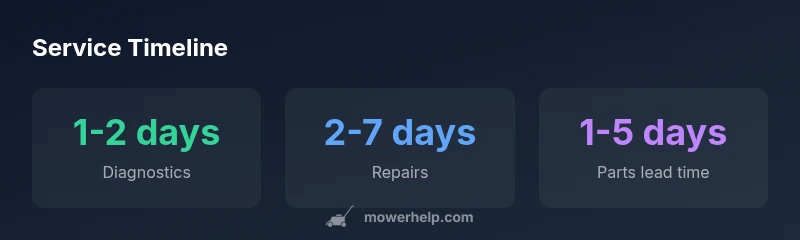
| Diagnostics | 1-2 days | $50-$90 | Includes fault-code scan and basic assessment |
| Repairs | 2-7 days | $150-$450 | Parts availability affects turnaround |
| Maintenance | 1-2 days | $70-$180 | Routine tune-ups and blade maintenance |
Got Questions?
What is a riding lawn mower shop?
A riding lawn mower shop is a specialized service center that sells, services, and repairs riding mowers. They provide diagnostics, repairs, parts, and maintenance plans to keep your mower performing well.
A riding mower shop fixes and maintains riding mowers and can help you choose parts and services that keep your mower running smoothly.
How do I find a trustworthy riding lawn mower shop?
Look for manufacturer certifications, clear written estimates, and verified customer reviews. Visit the shop to observe cleanliness, parts organization, and staff responsiveness.
Check reviews, certifications, and visit to see how they work before you commit.
What services should I expect from a riding mower shop?
Expect diagnostics, routine maintenance, blade sharpening, belt inspection, and part replacements. Many shops offer seasonal tune-ups and safety inspections.
Diagnostics, maintenance, blade care, and parts as needed are standard.
Should I repair or replace my riding mower?
If repair costs approach or exceed a replacement, or if the mower has repeated failures, replacement may be smarter. A shop can help compare options and lifetime cost.
If it keeps breaking down and costs mount, it might be time to replace.
What should I bring to a service appointment?
Bring model and serial numbers, recent maintenance records, and a clear description of the symptoms. Have a list of questions ready for the technician.
Bring the mower's details and what you’re noticing to help the tech diagnose.
How long does maintenance typically take?
Maintenance usually takes a few hours to a day, depending on the mower and the shop's workload. Ask for a time estimate before work begins.
Most tuners take a few hours; the shop will give you a timeline.
“A well‑chosen riding mower shop combines technical expertise with transparent communication, which keeps your mower reliable season after season.”
The Essentials
- Ask for written estimates before work begins
- Choose shops with transparent diagnostic processes
- Prefer maintenance plans for predictable costs
- Bring service history to speed up evaluation