Stripe Kit Lawn Mower: A DIY Guide to Lawn Stripes
Learn to install a stripe kit on your lawn mower and create crisp lawn stripes with a practical, safety-focused, step-by-step guide.


By following this guide, you will install and use a stripe kit on your lawn mower to achieve professional-looking lawn stripes. The steps cover compatibility checks, tool readiness, secure mounting, precise alignment, and test mowing. You’ll also learn maintenance practices to keep the stripes sharp through the season. Basic safety considerations are included to prevent injury.
What is a stripe kit and why use it
A stripe kit is an attached apparatus that adds a weighted roller and guiding components to your mower to create visible grass stripes as you pass over the turf. According to Mower Help, stripes are achieved when the roller presses blades in a consistent direction, causing light and shade lines that reveal the mow pattern. Stripe kits are popular for both push mowers and riding mower setups, and they can be a cost-effective way to give your lawn a professional finish without changing mowing height or blade sharpness.
There are universal stripe kits that clamp to the rear of the mower and model-specific kits that bolt to dedicated mounting points. Some kits include flexible guides to adjust stripe width, while others rely on the mower's wheel alignment to determine the final stripe width. Before purchasing, check the mounting points on your mower, the weight of the roller, and whether the kit can be adjusted for your deck width. A well-chosen stripe kit enhances curb appeal and can help you grade your lawn more consistently over time.
How stripe kits work on mowers
Stripe kits work by creating a controlled contact pattern on the grass as you move. The weighted roller presses blades toward a preferred direction, creating a reflective texture that shows up as light and dark stripes when viewed from above or at an angle. The alignment guides help keep the kit in step with the mower’s wheelbase, so consecutive passes lay blades in the same direction. On larger machines, some kits rely on the mower’s rear wheels to set stripe width, while on smaller push mowers, the kit’s own width becomes the stripe gauge. Proper maintenance and clean mounting ensure consistent results over time.
Key factors include consistent mowing speed, straight-line paths, and avoiding sharp turns that disrupt the stripe. If you notice inconsistent stripes, check bolt tightness, roller balance, and whether the wheels track true on flat ground. With careful setup, a stripe kit can deliver a repeatable pattern across the entire lawn season after season.
Compatibility and choosing the right stripe kit
Not all stripe kits fit every mower. Start by confirming the kit’s mounting method (rear clamp, deck bolt points, or hitch attachment) and whether you have a compatible deck width. Consider the weight of the roller, as a very heavy unit can affect maneuverability, while a very light one may produce faint stripes. If possible, choose a kit with adjustable width to match your mower’s wheel track. Check the mower manual for mounting points and verify that any required brackets or hardware are included. A well-matched kit reduces installation time and ensures stable stripe formation.
Mower Help analysis shows that stripes look best when mowing height and blade sharpness are consistent. Aligning the stripe kit with the existing wheel track often yields the most uniform results. When in doubt, opt for a kit with adjustable tension and clear alignment guides so you can dial in the exact stripe width you want.
Safety considerations and maintenance tips
Safety should come first when adding any external accessory to your mower. Disconnect the spark plug on gas-powered models or remove the battery on electric mowers before starting work. Wear gloves and safety glasses to guard against sharp edges during mounting. Keep tools organized and ensure the mower is on a flat, stable surface. After installation, test the setup in an open area at low speed to confirm alignment before mowing your lawn. Regular maintenance—cleaning the roller, tightening bolts, and inspecting mounting brackets—helps prevent drift or misalignment that could ruin stripes. Store the kit in a dry place when not in use and recheck alignment after heavy mowing sessions or a rough terrain pass.
Common mistakes and troubleshooting
Common mistakes include overtightening mounting bolts, which can warp brackets or bind the roller, and mounting the kit on an uneven surface, causing skewed stripes. If stripes are uneven, re-check alignment with the wheel track, ensure the kit rests level, and confirm there is no debris on the roller. Temperature and moisture can affect performance; if the grass is wet, stripes may appear darker or smeared—allow the lawn to dry for best results. For persistent irregularities, consult the kit manufacturer’s guide for recommended mounting tolerances and re-check all fasteners after the first few mowing sessions.
Tools & Materials
- Stripe kit lawn mower attachment(Universal or model-specific; confirm compatibility)
- Adjustable wrench set(For mounting brackets)
- Socket set(Tighten bolts to manufacturer torque specs)
- Tape measure(Verify stripe width and alignment)
- Gloves(Hand protection during mounting)
- Lint-free cloth / degreaser(Clean deck surface before installation)
- Marker or chalk(Mark alignment references on mower)
- Owner’s manual or mounting guide(Reference mounting points and torque specs)
Steps
Estimated time: 30-45 minutes
- 1
Verify compatibility and prep workspace
Read the stripe kit manual and confirm mounting points match your mower model. Clear the workspace, disconnect power, and set the mower on a flat surface. This reduces the risk of slips and misalignment during installation.
Tip: Double-check that the kit’s weight is appropriate for your mower; heavy rollers require secure mounting. - 2
Prepare mower surface
Remove debris from the mounting area and lightly clean the deck edge to ensure a clean, true mounting surface. Mark reference lines to help you align the kit later.
Tip: A dried, clean surface helps bolts seat properly and reduces vibration. - 3
Attach stripe kit framework
Position the kit according to the mounting points and attach the main brackets using the supplied hardware. Ensure all bolts pass through brackets smoothly without cross-threading.
Tip: Tighten bolts gradually in a cross pattern to avoid bracket distortion. - 4
Align stripe roller with wheel track
Set the roller so its axis is parallel to the mower’s wheel track. Use the tape measure to confirm width and the markers to ensure straightness. Secure the adjustment screws but leave a small amount of play for fine-tuning.
Tip: Test the alignment by rolling the deck across a straight line on a flat surface before attaching the belt/drive. - 5
Tension and clearance check
Check belt tension if your kit uses a belt-driven roller. Ensure there is adequate clearance above and below the roller so the blade or deck does not contact the kit.
Tip: Avoid overtightening; excessive tension can cause roller binding and wear. - 6
Test mow and adjust
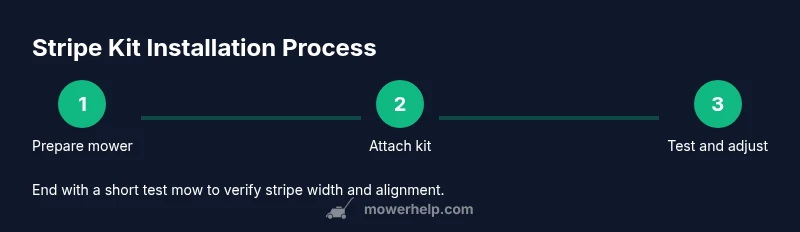
Run a short test pass on a patch of grass to observe stripe formation. If stripes drift, adjust the roller height or align guides until lines are uniform.
Tip: Make incremental adjustments and test again; small changes yield better control.
Got Questions?
Can I use a stripe kit on any lawn mower?
Most stripe kits fit a wide range of mowers, but always verify mounting points, weight, and compatibility with your deck width before purchasing. Refer to the product specs and your mower’s manual.
Most stripe kits fit many mowers, but always check mounting points and weight before buying.
Will stripes affect mowing speed or fuel consumption?
A stripe kit adds weight and may change maneuver feel, especially during tight turns. It should not significantly change top speed or fuel consumption on regular mowing.
Stripes might make tight turns feel different, but shouldn’t change overall speed or fuel use much.
What mowing height should I use after installing stripes?
Keep your usual mowing height; stripes look best when you maintain a consistent height and a clean, even cut across the lawn.
Keep the same mowing height for best-looking stripes.
How do I maintain or clean the stripe kit?
Clean the roller and brackets after mowing, inspect bolts for looseness, and lubricate moving parts if the kit manufacturer recommends it. Store the kit dry when not in use.
Clean and inspect after use; keep it dry when stored.
Are stripe kits safe for children or pets near the mower?
Operate only with adults nearby. Disconnect power (spark plug or battery) before service and keep children and pets away during installation and operation.
Only adults should operate or install; keep kids away.
What should I do if stripes look uneven after installation?
Check alignment against the wheel track, verify deck level, and ensure the kit and roller move freely without obstructions. Re-test after adjustments.
Re-check alignment and level; test again after adjustments.
Watch Video
The Essentials
- Check compatibility before buying the stripe kit.
- Mount securely and align with wheel track for best stripes.
- Maintain mowing height consistency for crisp lines.
- Test and fine-tune alignment in open space after installation.