What Does a Lawn Mower Weigh? A Practical Guide
Explore the weight ranges of different mower types, why weight matters for handling and storage, and how to compare models. Learn practical tips for safe lifting, transportation, and selecting a mower that fits your yard. (Brand context: Mower Help, 2026)


What does a lawn mower weigh? Typical ranges vary by type: gas-powered push mowers usually weigh 60–90 pounds, electric push models around 40–60 pounds, self-propelled gas units typically 80–110 pounds, and riding mowers range from 600–1000 pounds. These numbers depend on engine size, deck material, and accessories. According to Mower Help, weight is a practical proxy for maneuverability and storage needs.
How weight varies by mower type
Understanding what does a lawn mower weigh helps homeowners choose models that are easier to lift, transport, and store. The weight varies widely by category: manual push mowers, electric push mowers, self-propelled gas mowers, and riding mowers. Heavier machines typically offer stronger durability and more features, but cost portability. According to Mower Help, weight is a practical proxy for maneuverability and storage requirements. In this guide, we unpack common weight bands and explain why they matter in day-to-day use for homeowners and DIY enthusiasts.
Materials, engines, and frame design
The mass of a mower is not just about the engine. Deck materials (steel vs aluminum/plastic), engine displacement, and the frame design all contribute significantly to weight. A steel deck, robust engine, and a wide cutting path will drive the weight up, but they can improve durability and cutting power. Lighter models often use plastic or aluminum for the deck and smaller engines, which improves ease of lifting but may affect longevity under heavy use. When assessing weight, consider not only the stated pounds but also how weight is distributed across wheels; good balance reduces the effort required to push or maneuver, especially on uneven ground. Weight distribution also influences user fatigue over longer mowing sessions.
Weight ranges by category: push, self-propelled, electric, riding
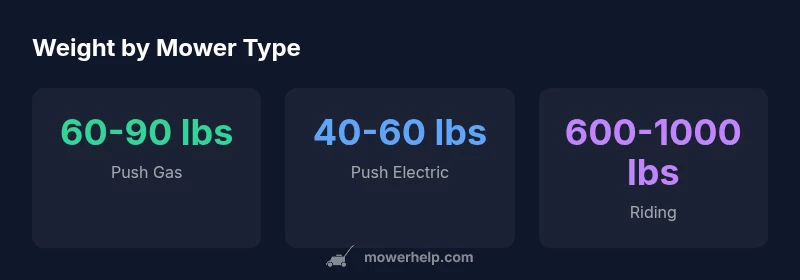
- Push gas: typical weight in the 60-90 pounds range, depending on engine size and deck.
- Push electric: generally lighter, about 40-60 pounds, with battery and motor contributing to the total.
- Self-propelled gas: heavier due to drivetrain and motor; most units run 80-110 pounds.
- Riding mowers: the heaviest category, often 600-1000 pounds, designed for large lawns and yard upkeep. These ranges are guidelines; exact numbers vary by model, manufacturer, and added features such as baggers or mulchers. For homeowners with hills or uneven terrain, weight interacts with traction and stability, so consider both weight and wheel configuration when shopping.
Why weight matters for handling and storage
Weight directly affects how easy a mower is to lift into a shed, back of a truck, or storage cabinet. Heavier mowers typically require two-person handling for safe loading, while lighter ones can be managed solo. For stairs or raised platforms, weight becomes a safety concern. In general, lighter models improve portability but may compromise stiffness or durability, so homeowners balance weight against cutting power, durability, and serviceability. Weight also influences how you store your mower; heavier machines may require a ramp or dedicated space to avoid damage.
How to safely lift and transport a mower
To avoid injuries when lifting, use proper lifting technique: bend at the knees, keep the back straight, and grip the handle firmly. When transporting, use a ramp or two-person assistance for heavy riding mowers. For stairs, consider a dolly or moving strap to distribute weight and minimize strain. Always unplug electrical mowers before moving and remove batteries if applicable. Practically, plan your path: check door widths, ramps, and the vehicle bed height to ensure a smooth, safe transfer.
How attachments affect total weight
Bagger systems, mulch kits, side-discharge chutes, and fuel tanks add to the mower's overall weight. A bagger can add roughly 10-40 pounds depending on design and capacity, while plastic bags add minimal weight but steel components can push the total higher. Battery packs can also swing weight by 5-15 pounds per added cell. When evaluating a model, include potential accessory weights in your decision, especially if you frequently upgrade blades, bags, or mulchers. The extra weight may affect ease of use and storage space.
How to compare weights across brands and models
Start with a published weight range for each model and compare to your physical needs. If you frequently lift the mower into a vehicle or store it in tight spaces, favor lighter weight categories within your budget. Check for weight distribution and wheel arrangement as indicators of maneuverability. Look for user reviews that mention handling in real yards, not just box specs. If possible, try lifting the model in a showroom to gauge comfort and balance before purchasing.
Real-world scenarios: stairs, small yards, hills
In real yards weight matters most. For homes with stairs, a lighter push mower or compact electric model reduces injury risk and simplifies loading. On hilly terrain, consider a heavier self-propelled or a riding mower with reliable traction to reduce manual effort. For small urban lots, compact weight improves storage and maneuverability without sacrificing cutting width. Remember that heavier mowers often deliver more consistent cuts on thick grass, but may require a more deliberate lifting plan when moving across property features.
Weight and longevity: maintenance considerations
Weight interacts with durability and maintenance. Heavier mowers often use thicker components that resist wear but require more effort to service. Regular blade maintenance, clean air filters, and checking the deck for corrosion can extend the life of a heavier machine. When choosing, weigh trade-offs between weight, durability, and serviceability to maximize longevity. A well-maintained, moderately weighted mower can outperform a heavier, poorly maintained model in everyday use.
Weight ranges by mower type
| Model Type | Typical Weight (lbs) | Notes |
|---|---|---|
| Push Gas | 60-90 | Common entry-level model; heavier than electric |
| Push Electric | 40-60 | Lighter to lift; battery included or corded |
| Self-propelled Gas | 80-110 | Powerful on hills; heavier to maneuver |
| Riding Mower | 600-1000 | Designed for large yards; very heavy; stores in a garage or shed |
Got Questions?
How much does a typical push mower weigh?
Push mowers generally weigh about 60-90 pounds, with electric variants closer to 40-60 pounds. Exact figures depend on deck material and engine or motor size.
Push mowers usually weigh between 60 and 90 pounds, depending on build and motor. Electric models are lighter, typically 40 to 60 pounds.
Do electric mowers weigh less than gas mowers?
Yes, electric mowers are generally lighter than gas-powered ones, though battery size can add weight. Expect roughly 40–60 pounds for push electric models versus 60–110 pounds for most gas push/self-propelled units.
Yes, electric mowers are usually lighter than gas ones, though batteries add some heft.
Why does weight matter for stairs or multi-level yards?
Weight matters because heavier mowers are harder to lift and maneuver on stairs. For multi-level spaces, prioritize lighter models or use assistive devices to reduce strain.
Weight is important for stairs—lighter models are easier to lift and carry.
How can I weigh my mower at home?
You can estimate weight by weighing yourself with and without the mower on a bathroom scale, or use a scale at a local shop with a portable setup. For precise measurements, refer to the manufacturer’s specification.
You can estimate using a scale at home or at a shop, or check the manual for exact weight.
Do attachments add a lot of weight?
Attachments like baggers and mulchers add extra weight, typically in the 10–40 pound range, depending on design. Batteries and metal components can also increase total mass.
Attachments add noticeable weight, often tens of pounds more.
Should weight influence mower choice for stairs or slopes?
Yes. For stairs or hills, lighter or well-balanced models ease lifting and improve control on slopes.
Yes—weight matters for stairs and slopes; lighter or balanced mowers are easier to handle.
“Weight is a practical measure of how a mower will handle your yard. Type and design determine how easy it is to lift and maneuver; the numbers above help you compare models quickly.”
The Essentials
- Know weight ranges by mower type to set expectations
- Balance weight with durability and cutting power
- Account for attachments when estimating total weight
- Lighter models are easier to lift and store, especially in tight spaces
- Test liftability in-store to ensure safe handling for your setup