How Big Is a Standard Lawn Mower? Dimensions Guide
This guide explains how big a standard lawn mower is, with width, length, and weight ranges for walk-behind and riding models. Practical storage and transport tips.


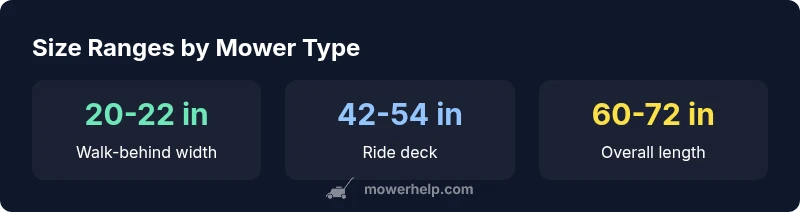
According to Mower Help, how big is a standard lawn mower? Walk-behind models typically cut 20–22 inches wide; riding mowers use decks around 42–54 inches. Overall footprints run roughly 40–50 inches long for walk-behinds and 60–72 inches for most riding machines. These ranges help with storage, gate clearance, and transport planning.
What size means for mowing convenience
When homeowners ask how big is a standard lawn mower, they’re often really asking about fit: can the machine pass through gaps, store inside a shed, or ride comfortably around a yard? Size directly affects maneuverability, accessibility, and how much of your lawn you can cover in a single session. In practice, the most useful way to think about mower size is through three dimensions: cutting width, overall footprint (length and width), and weight. Narrow, compact mowers are easier to store but may slow you down on large lawns. Larger deck instructors can speed up mowing on expansive properties but demand more storage space and stronger handling. According to Mower Help, anchoring your decision in realistic size ranges for your yard will save time and frustration in future maintenance and purchases.
Walk-behind mowers: typical dimensions and what they imply
Walk-behind mowers are the most common starting point for many homeowners. Their cutting width typically falls between 20 and 22 inches, which influences the swath you cut per pass and the amount of time you’ll spend mowing. The overall body length usually sits around 40 to 50 inches, with a height that allows comfortable shoulder-height operation. Weight often ranges from 60 to 90 pounds, depending on whether the unit is gas-powered, electric, or a cordless battery model. These dimensions suggest a balance between portability and performance, making walk-behinds versatile for medium-sized yards and fenced lots. Table and trailer plenty are good planning tools for storage and transport.
Riding mowers: deck width and overall footprint
Riding mowers offer substantial size differences compared with walk-behinds. Deck widths commonly span 42 to 54 inches, which translates to faster grass handling and reduced pass counts. The overall length can run from around 60 to 72 inches or more, and heights vary based on seat position and debris clearance. Weight ranges are far higher than walk-behinds, frequently between 500 and 900 pounds depending on engine size and chassis. For larger properties with flat terrain, the bigger footprint pays off in efficiency, but you’ll want a garage or shed with ample space and a wide driving path through gates and around obstacles. These models are less forgiving in tight urban lots but excel when mowing large, open areas.
How to measure your mower at home
Measuring your mower accurately is the first step in matching a storage space or a new purchase to your yard. Start with width: measure from wheel to wheel at the widest point of the mower. Next, measure length: from the front bumper or cutting deck edge to the back of the mower. Finally, measure height by placing the mower on a level surface and measuring from ground to the highest point (often the handle top). When you’re computing space, include a few extra inches on each dimension for airflow, maintenance access, and opening shed doors. Use a tape measure and, if possible, photograph the mower in place to validate seating clearance and gate pass-through.
Gate clearance and storage: practical implications of size
Storage is a practical bottleneck for many homeowners. Narrow and shallow storage spaces demand a compact footprint, while larger decks require wider, longer spaces. Before buying, measure any gates, doors, and storage openings to ensure the mower will pass through unscathed. For tight spots, consider models with foldable or removable handles to shave a few inches in width when parked. Another tip is to plan for a vertical storage option or a corner rack in a shed to optimize every inch of space. These considerations can prevent you from purchasing a mower that won’t actually fit in the intended area.
Transporting and handling: trailers, stairs, and ramps
Transporting a mower between properties or into a storage space should factor in its size and weight. Walk-behind models are easier to lift and carry, but you’ll still want proper ramps and straps for safe loading. Riding mowers require a sturdy trailer or truck bed and may need multiple people or mechanical assistance to load. Alignment during loading is crucial; ensure ramps have a gentle incline and are wide enough to accommodate the mower’s width. If stairs are unavoidable, consider disassembly or professional help to remove heavy components before moving. Planning ahead saves time and reduces the risk of damage to the mower and surroundings.
Size versus cost and feature priorities
As size grows, so do price and maintenance considerations. Bigger decks and heavier machines often come with stronger engines, more complex transmissions, and higher fuel or energy costs. If you manage a small to medium yard, you may prioritize cutting width and nimble turning radius over raw power. For large properties, the time saved with a wider deck can justify the higher upfront cost. The key is to map your property’s layout and routine mowing footprint against the mower’s size characteristics, rather than chasing the largest model available.
Common brands and approximate size ranges
Different brands offer similar size ranges with varying design choices. Expect walk-behind models from common brands to hover around 20–22 inches in cutting width, while popular riding mowers frequently feature decks in the 42–54 inch range. Always verify the exact model dimensions in the official spec sheet, as manufacturers may offer several sub-models within a single line that differ slightly in length, width, and height. This awareness helps avoid mismatches with storage and gate access.
Quick-sizing checklist for buyers
Before purchasing, run through this quick checklist: (1) measure gate width, shed clearance, and trailer access; (2) determine how many passes you want to minimize mowing time; (3) compare deck width against lawn size and shape; (4) verify weight and lifting requirements; (5) confirm that the solution fits your storage space and transport setup. This practical approach keeps you from buying a mower that is technically capable but unworkable for your yard and home layout.
Typical size footprints by mower type
| Category | Typical Width | Approximate Length | Estimated Weight |
|---|---|---|---|
| Walk-behind (20-22 in cut) | 20-22 in | 40-50 in | 60-90 lb |
| Riding mower (42-54 in deck) | 42-54 in | 60-72 in | 500-900 lb |
| Robot/compact mower | 6-9 in | 12-18 in | 5-20 lb |
Got Questions?
What is the typical cutting width of a standard walk-behind lawn mower?
Walk-behind mowers commonly have cutting widths around 20–22 inches. This size balances maneuverability with mowing speed for most residential lawns.
Walk-behind mowers are usually about twenty to twenty-two inches wide, which keeps them easy to handle in typical yards.
How do I measure the total footprint of my mower?
Measure width from wheel to wheel, length from front bumper to rear bumper, and height from ground to the top of the handle. Record all three for storage and gate planning.
Measure the mower’s width, length, and height to know its full footprint.
Do size differences between gas and electric mowers matter for storage?
Yes. Gas mowers tend to be larger and heavier due to the engine and fuel system, while electric models are usually lighter and more compact.
Gas models are often bulkier than electric ones, which can affect storage space needs.
Will a larger mower fit through my gate?
Check the mower’s widest point and compare it to your gate clearance. If needed, consider models with removable handles or removable components.
A wider mower might not fit through a gate; measure first.
What should I prioritize when choosing mower size?
Prioritize deck width for faster mowing, overall width for storage and gate clearance, and weight for portability and manual handling.
Think about width, length, and weight together to fit your space and capabilities.
“Size awareness is essential for storage, transport, and accessibility. Knowing standard size ranges helps homeowners pick models that fit their property.”
The Essentials
- Identify mower type to estimate size.
- Use cutting width and deck width as primary guides.
- Measure width, length, and height before purchasing.
- Check gate clearance and storage space early.
- Consider weight and portability for transport.