When to Use a Lawn Mower: A Practical Guide
Learn when to use a lawn mower and how to time mowing by grass height, weather, and lawn health. A practical, step-by-step guide from Mower Help for homeowners with seasonal tips.


You should use a lawn mower when the grass has grown enough to require cutting, the soil is dry, and weather conditions are favorable. Aim for consistent height and pattern by mowing regularly. Start with a safe height (around 2-3 inches) and adjust for grass type, season, and growth rate. Dry blades ensure a clean cut and reduce clumping.
Why Timing Matters for Lawn Health\n\nTiming is not just a schedule; it's a cornerstone of lawn health. The decision of when to use a lawn mower affects root development, leaf area, and disease exposure. Regular mowing supports a dense, resilient turf that crowds out weeds, while mowing at the wrong moment can damage crowns, cause scalping, and invite fungal infections after rains. According to Mower Help, the best results come from aligning mowing with the grass growth pattern and the day's weather. In practical terms you want to avoid mowing when the soil is soggy, when the lawn is extremely stressed from heat or drought, or right after heavy rainfall when clippings can clump and suffocate stems. Instead plan your mowing for dry periods that follow a light rainfall, so the lawn stands upright and the mower can cut cleanly. Consider your grass type, your region's season, and your lawn's overall health. When you time your cuts well you’ll see a more even color, reduced thatch buildup, and fewer ongoing maintenance tasks.
How to Check Grass Height Accurately\n\nAccurately assessing height is the first step to knowing when to use a lawn mower. Start by sampling several representative spots across the lawn rather than relying on a single area. Use a ruler or a dedicated grass height gauge to measure blade length from the soil surface to the tip of the leaf. Compare your measurements to the target range for your grass type and season; if the blades exceed this range, it is time to mow. For uneven lawns, take measurements in shaded and sunlit areas since growth rates can vary by microclimate within the same yard. The goal is to maintain a uniform carpet of leaf blades rather than patches of tall and short grass. Regular height checks also help you avoid scalping or stressing the crowns when you finally roll the mower across the lawn.
Weather Windows: Dry Conditions Are Best\n\nWeather plays a pivotal role in when to use a lawn mower. Dry conditions reduce clumping and improve cut quality, while wet grass can clog the deck and promote disease. Plan mowing for the warm part of the day after any morning dew has dried but before the hottest hours, so the blades stay sharp and the turf recovers quickly. If you must mow after rain, wait until the soil has drained and the blades glide rather than sink. Avoid mowing during prolonged heat waves when the lawn experiences drought stress, as cutting can exacerbate damage and slow recovery.
Grass Type and Growth Rate: Adjusting Your Mowing Schedule\n\nDifferent grasses respond to mowing in distinct ways. Cool season grasses typically grow during spring and fall, while warm season varieties surge in summer. Adjust your mowing cadence to match growth rate rather than a fixed calendar date. In regions with distinct seasons, you may cut more often during peak growth and ease off when stress periods arrive. If your lawn shows deep green, dense leaf blades, you may need to correlate mowing frequency with recovery time to avoid stressing the roots. Remember that the rule of thumb is to remove only a portion of leaf blade each time to maintain vigor and resilience.
Mower Setup for Different Terrains\n\nTerrain and slope influence when to use a lawn mower and how you mow. On flat ground you can maintain consistent passes with wide, overlapping strokes. On slopes, mow slowly in a zigzag pattern and avoid pulling the mower uphill on steep sections to prevent tipping. For areas with irregular contours, adjust the cutting height to protect taller grass clumps and reduce scalping on raised patches. Ensure the deck is level and wheels are balanced to prevent uneven cuts, especially where the ground is uneven or rocky. This setup reduces wear on parts and preserves a neat finish across the lawn.
Safety First: Personal Protective Equipment and Safe Techniques\n\nSafety should always guide your mowing routine. Wear eye protection, sturdy footwear, and gloves to protect against projectiles and mower heat. Clear the area of toys, garden hoses, and debris before starting. Keep bystanders away and never reach under the deck to dislodge a jam when the mower is running. If you encounter a stubborn obstacle, turn off the mower, disconnect power or spark, and use a tool to handle the obstruction. Safe operation reduces damage to the equipment and lowers the risk of injury.
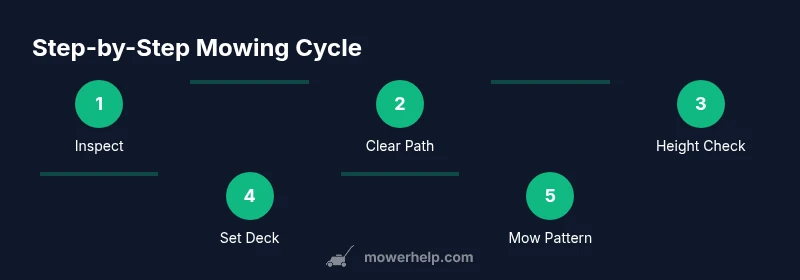
Step-by-Step: The Optimal Mowing Cycle\n\nExecuting a reliable mowing cycle ensures you know when to use a lawn mower and how to minimize turf stress. This section provides a practical sequence you can follow on any typical residential lawn. Start with a quick safety check, clear the area, measure height, adjust the deck, perform a few test passes, mow in consistent stripes, edge along borders, collect or mulch as desired, and finish with a quick post mowing tidy. Each step reinforces a calm, methodical approach to mowing rather than rushed, haphazard passes.
Common Mistakes That Break the Rule\n\nAvoid common missteps that derail mowing timing. Don t mow with wet grass or on soggy soil, which compacts soil and invites diseases. Don t remove too much leaf cover in one pass, which weakens roots and promotes stress. Don t ignore deck cleanliness or blade sharpness, which reduces cut quality and increases fuel use. Lastly, don t neglect safety gear or the mower s maintenance schedule; consistent care ensures better results when you do mow.
Post-Mow Care: Clean Up and Blade Maintenance\n\nAfter mowing, take a moment to clean the mower deck and blades, which fosters longevity and optimal cut quality. Inspect the blade for nicks or dullness, and sharpen or replace as needed. Clear grass from around the blade housing and under the deck to prevent buildup. Store the mower in a dry, sheltered spot and follow the manufacturer s guidance for fuel and oil maintenance if you use a gas mower. Proper post mow care helps you maintain the right timing for future mowing sessions.
Tools & Materials
- Lawn mower (gas or electric)(Ensure it is in good working order and properly fueled or charged)
- Safety glasses(Impact-resistant and secured for the entire session)
- Gloves(Sturdy work gloves for grip and protection)
- Closed toe footwear(Non-slip shoes with ankle support)
- Measuring ruler or grass-height gauge(For accurate height checks across the lawn)
- Leaf rake or broom(Clear debris before mowing if needed)
- Garden hose or brush(Clean the deck and blades after use)
- Fuel oil or battery charger(Gas mower requires appropriate fuel mix; electric needs charging equipment)
- Blade sharpener or replacement blade(Only if you notice ragged cuts or dull performance)
Steps
Estimated time: 30-60 minutes
- 1
Inspect and prepare your mower
Before starting, inspect the mower for loose parts and clean off any grass debris. Ensure the blade is sharp and secure, and check fuel or charge level. Verify safety features like blade brake and e stop are functional.
Tip: If your blade is dull, replace or sharpen before mowing to prevent tearing grass. - 2
Clear the mowing path
Remove toys, tools, and thick debris from the area. A clean path reduces jams and ensures an even cut across the lawn.
Tip: Rake leaves and sticks to avoid hidden obstacles under the turf. - 3
Check grass height
Use a grass-height gauge to determine current blade length. If height exceeds the target range for your grass type, mowing is appropriate.
Tip: Take measurements in several spots to account for shade or uneven ground. - 4
Set the cutting height
Adjust the mower deck to your chosen mowing height. Ensure the height is consistent across all wheels.
Tip: Start with a conservative height and adjust gradually if needed. - 5
Test cut on a small area
Make a few passes on a small patch to confirm the cut quality and height. Adjust as necessary before full lawn coverage.
Tip: If the turf looks scalped or uneven, raise the deck slightly. - 6
Mow in a consistent pattern
Mow in straight, overlapping passes to ensure uniform coverage. Change direction on each pass to prevent soil compaction and grass stress.
Tip: Alternate the mowing direction with every session. - 7
Edge and borders
Use a trimmer or edger for clean borders along flower beds and fences after mowing.
Tip: Edge last to avoid scraping freshly cut turf. - 8
Decide on mulch or bag
Choose whether to mulch clippings or bag them based on lawn health and debris level. Mulching returns nutrients; bagging reduces clippings in droughty periods.
Tip: Mulch clippings only when grass is dry and clippings are fine. - 9
Shut down and store
Turn off the mower, disconnect power or remove spark plug if necessary, and store in a dry area. Clean the deck and blade before leaving.
Tip: Perform a quick post mow check for any wear and schedule maintenance as needed.
Got Questions?
When is the best time to mow for the first cut of the season?
Start after growth resumes in spring and the soil is not overly wet. This helps the grass establish a strong crown and reduces stress.
Begin mowing after growth resumes in spring when the soil is dry and the lawn has enough vigor.
Should I mow if the grass is wet?
Mowing wet grass is not recommended. It clumps, can spread disease, and leaves the turf uneven.
Avoid mowing when the lawn is wet to prevent clumps and disease.
How often should I mow during peak growth?
Mow as often as needed to maintain the target height for your grass type, typically every week or two during peak growth.
Keep up with growth so the grass stays within its healthy height range.
Does mowing height vary by grass type?
Yes, different grasses have different optimal mowing heights. Check local guidelines for cool season versus warm season varieties.
Height targets depend on the grass species, so adjust accordingly.
What about mulching vs bagging?
Mulching is generally beneficial when clippings are fine and the lawn is healthy. Bagging can help during drought or when clippings are excessive.
Mulch whenever possible to recycle nutrients; bag when necessary.
How should I handle slopes safely?
Mow across slopes rather than up and down, avoid sharp turns, and never mow on wet or unstable slopes.
Go across slopes and keep safety first when mowing on hills.
Watch Video
The Essentials
- Assess height before mowing to determine necessity
- Mow on dry days for the best cut quality
- Don t remove more than a third of leaf blade at once
- Prepare mower and safety gear before each session
- Maintain blade sharpness and perform post mow care