How Early Can You Use a Lawn Mower? A Practical Spring Timing Guide
Learn when it's safe to start mowing in spring. This educational guide covers soil readiness, frost considerations, blade care, and a practical step-by-step plan for your first mow of the season.


How early can you use a lawn mower? The safe answer is when the grass is actively growing, the ground is dry, and there’s no frost or soggy soil. Avoid mowing on wet, muddy, or frozen ground to prevent turf damage and mower strain. According to Mower Help, begin with a quick readiness check of blades, oil, and fuel.
Understanding the spring mowing window
When you ask how early you can use a lawn mower, you’re really asking when the lawn is ready for its first cut of the season. The answer is not a single date but a window shaped by weather, soil moisture, and grass growth. In temperate regions, homeowners typically wait until the threat of hard frost has passed and the grass shows steady growth. If you mow too early, you risk stressing new shoots and creating an uneven lawn. The Mower Help team found that the safest approach is to time your first mow after the ground has firmed up and the turf is actively growing, not merely green or tall. This timing helps prevent stress on the grass and minimizes blade wear. Use this window as a benchmark rather than a strict rule—your conditions may shift by weeks depending on weather and soil.
Another factor is the microclimate around your yard. Shaded areas may stay damp longer, while sunny patches dry faster. Mowing too soon in damp shade can leave uneven patches and compacted soil. Plan to mow on a day with a dry, mild forecast and comfortable working conditions. Local conditions matter, so check regional guidelines from your cooperative extension office for last frost estimates and typical spring growth patterns. In short, look for a combination of dry soil, active growth, and no frost to determine the start of your mowing season.
Assessing soil readiness: soil moisture and compaction
Before you pick up the mower, test soil moisture and compaction. Wet soil clumps under the wheels and leaves ruts; heavy compaction reduces root growth and can damage mower. A simple test is to press a finger into the soil at several spots; if it remains soft and muddy, postpone. If the soil yields slightly and dries quickly after you press, it’s a good sign. Aim for a soil surface that crumbles slightly under pressure and dries within a few hours after a rain without turning into a mud pool. In addition to moisture, consider slope and drainage—mow on gentle slopes to reduce tipping risk and ensure even cuts. On dry spells, you can water small areas to dry out oversaturated spots, but avoid creating pools. If you have a soil test kit, use it to check for consistent moisture distribution; inconsistent moisture can lead to patchy growth after mowing.
Evaluating grass growth and lawn health
A lawn that is ready for its first mow should show clear signs of activity. Look for fresh growth at the tips, a uniform color, and a consistent blade texture across the lawn. If most areas appear dormant or stressed (yellowing patches, thin growth, or weed dominance), postpone mowing and focus on lawn recovery tasks like proper irrigation and fertilization according to your grass type. Avoid removing more than a third of the leaf surface in the first cut; removing too much at once can shock the plant and slow recovery. If you have cool-season grasses, expect a faster green-up once temperatures begin to rise and daylight hours lengthen. Warm-season lawns may take a bit longer to begin active growth after winter, depending on your climate.
Weather and frost considerations
Weather plays a pivotal role in deciding when to mow. After the last frost, days that are dry and not overly windy provide the best conditions for the first cut. Watch for frost pockets in low-lying areas or shaded sections, which can keep the soil cold and hinder growth. Avoid mowing during frost, early morning dew, or after heavy rainfall when the ground is still saturated. If the forecast shows a quick warm-up followed by rain, postpone until soils dry again to prevent soil compaction and rut formation.
Mower readiness and safety prep
Before you mow for the first time, ensure your equipment is in good shape. Inspect the blade for sharpness and balance, check the fuel level, and verify oil or battery health if you have a cordless model. Confirm guards and safety switches function properly, and wear appropriate PPE such as safety goggles, gloves, and hearing protection. A quick test run on a small patch helps you confirm cut quality and adjust the mowing height. Starting the season with a well-tuned mower reduces the chance of clogs, uneven cuts, and unnecessary wear.
Step-by-step timing plan for your first mow
If conditions align—dry ground, active growth, and no frost—follow a simple timing plan:
- Prepare the mower and gear up with safety equipment.
- Set a moderate mowing height suitable for spring growth and your grass type.
- Mow in straight, overlapping passes on dry areas only.
- Check for and fix any uneven spots caused by prior trimming or debris.
- Perform post-mow maintenance, including blade cleaning and basic lubrication. This plan helps you avoid common pitfalls and ensures your lawn starts the season strong.
Common mistakes and how to fix them
Common mistakes include mowing when the ground is wet, mowing too early before active growth begins, cutting too low, and neglecting mower maintenance. To fix these, wait for dry soil, observe growth cues, raise the cut height as needed, and perform a quick service—clean blades, inspect belts, and replace worn parts. Regular maintenance pays off with a healthier lawn and longer mower life.
Maintenance after the first mow
After the first mow, take a moment to inspect blades for sharpness and balance, clean off mower deck debris, and store fuel safely. Align and tighten any loose components and check air filters or battery health. A properly cleaned and serviced mower across seasons reduces the risk of trouble when you need it most and supports consistent lawn health.
Tools & Materials
- Lawn mower (gas or electric/battery)(Ensure blade is sharp and engine/battery is in good condition; check oil and fuel as applicable.)
- Safety goggles(Protect eyes from debris and grass particles.)
- Work gloves(Grip and hand protection during mowing and blade checks.)
- Sturdy closed-toe footwear(Supportive shoes to protect feet on uneven ground.)
- Rake or leaf blower (optional)(Clear debris from the mowing path to avoid jams.)
- Garden hose or watering can (optional)(Used to dry or adjust soil moisture in small patches if needed.)
Steps
Estimated time: 25-40 minutes
- 1
Check weather and ground readiness
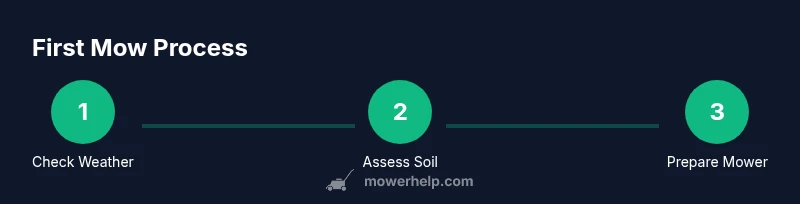
Review the local forecast and perform a simple soil test to ensure the ground is dry enough for mowing. If soil clings to shoes or leaves noticeable mud, postpone. This ensures you don’t compact or tear the turf with the first cut.
Tip: A dry, firm surface reduces turf damage and blade wear. - 2
Inspect and prepare the mower
Walk around the mower and confirm that safety guards are intact, the blade is sharp, and there is enough fuel or battery charge for the job. Do a quick start test to verify smooth operation and listen for any unusual noises.
Tip: A ready-to-start mower minimizes interruptions during the first mow. - 3
Set mowing height and test patch
Choose a spring-appropriate height for your grass type and run a test pass on a small, unobtrusive patch. Watch for even cut quality and avoid leaving clumps. If cutting too low causes scalping, raise the deck and re-test.
Tip: Starting higher helps grass recover from the winter stress. - 4
Mow with straight passes
Mow in straight, overlapping passes across dry areas only. Avoid wet spots, slopes, or areas with debris. Move at a steady pace to produce uniform results and prevent wheel marks.
Tip: Keep your body behind the mower for better control and safety. - 5
Post-mow maintenance
Shut off the mower and inspect the blade, clean debris from the deck, and perform any needed lubrication or storage steps. Check for loose bolts and remove clumps from mower blades to maintain performance.
Tip: A quick post-mow check prevents surprises during the next use.
Got Questions?
When is the earliest safe time to mow after winter?
Wait until the ground is dry, there is no frost, and the grass shows active growth. Check that the soil isn’t muddy and there are no wet spots that could cause compaction or uneven cuts.
Wait for dry ground, no frost, and active growth; avoid mowing on wet or muddy soil.
Should I mow if the soil is slightly damp?
If the soil is still damp or has visible moisture, postpone mowing. Wet soil compacts easily and can cause uneven cuts or damage to the mower.
Don’t mow on damp soil; wait for it to dry for a cleaner cut and to protect the lawn and mower.
Can I mulch early season or use a bagging blade?
Mulching is fine if the grass is not extremely long and blades are sharp. In the early season, avoid leaving large clumps that can smother new growth and attract pests.
Mulching is okay when growth is moderate and the blades are sharp.
What safety checks should I perform before the first mow?
Check blade condition and balance, verify oil or battery status, ensure guards are in place, and wear PPE. A quick test cut helps confirm safe operation.
Check safety guards, blade sharpness, and power level before mowing.
Watch Video
The Essentials
- Wait for dry ground and active growth.
- Inspect mower and safety features before first cut.
- Mow on dry patches only and avoid frost pockets.
- Follow a simple post-mow maintenance routine.