What's the earliest you can mow the lawn?
Learn when it's safe to mow for the first time this spring, how to test soil moisture and frost, and follow a practical step-by-step plan for your initial mow.


By definition, the earliest safe mowing occurs when the ground is dry, the grass is actively growing, and there’s no frost risk. Begin with a higher blade setting and work gradually to your normal height. Check soil moisture and weather forecasts, and avoid mowing on wet soil or frozen ground. This approach protects roots and promotes even, healthy growth.
What's the earliest you can mow the lawn
Determining the earliest mowing window can feel tricky, especially after winter. For homeowners, the rule of thumb is to wait until the soil dries, there’s no prolonged frost, and the grass has started to show noticeable growth. According to Mower Help, timing the first cut to these conditions helps minimize root stress and reduce clumping from wet clippings. The Mower Help Analysis, 2026, reinforces that mowing on damp soil can compact the soil, invite fungal problems, and dull blades faster. So, start the season by focusing on soil moisture, air temperatures, and the turf’s readiness rather than chasing a calendar date. Remember that every lawn is different, and regional climate variations can shift the exact timing by a week or two. If you’re unsure, wait for a stretch of dry weather and a few days of consistent growth—these signals are usually reliable indicators that the lawn is ready for a cut.
Factors that influence the earliest mow
Several variables govern when you should make that first cut. Frost events in early spring can damage tender shoots and create uneven growth once mowing begins. Soil moisture matters because mowing on wet ground compacts the soil and brings clumps of damp thatch, which can smother new growth. Grass species also matter: cool‑season grasses such as fescue and bluegrass resume growth earlier in spring, while warm‑season lawns (like Bermuda or zoysia) may take longer to green up. Sun exposure, slope, and recent rainfall influence how quickly the turf dries after rain. Lastly, your mower type and blade sharpness affect how cleanly the first cut is made; dull blades tear leaves and can lead to a ragged appearance. In short, the earliest mow is not a date on the calendar—it’s a condition you can verify in your yard.
How to safely assess moisture and frost conditions
Start by inspecting the lawn after a dry spell. Touch the soil; if it yields to firm pressure or leaves a muddy footprint, wait. A finger test is effective: press into the soil to a depth of about an inch; if it sticks to your palm or leaves a wet imprint for more than a second, it’s too wet. Use a moisture meter if you have one; aim for soil moisture in the range that feels slightly damp but not soggy. Check for frost: if there’s visible frost on the blades or the ground is white with frost in the morning, postpone mowing until it has melted and the surface is dry. For many homeowners, late morning after dew has evaporated is a reliable window. Maintain positive air temperature and avoid mowing when the lawn is extremely cold, as that can stress the turf.
Grass height and mowing height guidelines
For cool-season grasses, a typical safe starting height is around 2.5 to 3 inches. For warm-season grasses, start a bit taller, around 3 to 4 inches, and gradually reduce as the lawn strengthens. The goal is to remove only about one-third of the blade length in a single mowing to avoid shocking the plant. If your lawn has uneven patches, raise the mower height to a level that handles the tallest blades and then make a second pass at a lower height to even things out. Always match your mower’s adjustment to your grass type and local conditions; when in doubt, err on the side of leaving more leaf tissue rather than removing too much at once.
First mow: a practical, beginner-friendly plan
Plan your first cut for a dry, mild day when growth is evident but the soil remains firm underfoot. Start with the highest available mowing height and two gentle passes rather than one aggressive pass. After the first pass, inspect the lawn for clumps or missed areas and run a second pass if needed, focusing on the edges and any high spots. Use even, steady strokes in overlapping passes to maintain a uniform blade height. If you engage mulching blades, leave clippings to recycle nutrients; otherwise, bag or compost clippings. Keep blades clean and sharp for a clean cut. If you see any blade chatter or missing sections, stop and check the blade balance and wheel alignment before continuing.
Aftercare and ongoing maintenance after mowing
Watering should follow mowing: avoid heavy irrigation immediately after cutting during dry spells and allow the lawn to dry before watering heavily. Monitor for stress signs like yellowing patches or a bluish tint that indicates drought; adjust height or mowing frequency as growth accelerates. Regularly sharpen blades, clean under the mower deck, and inspect the spark plug or air filter on gas mowers to keep performance consistent. Finally, plan a follow-up mowing in about a week or when growth resumes, not on a fixed calendar date. A steady mowing schedule is more beneficial for root development and lawn health than chasing a perfect first cut date.
Tools & Materials
- Lawn mower (gas or electric)(Ensure blade is sharp and balanced)
- Safety glasses(Protect eyes from debris)
- Gloves(Sturdy fabric or leather)
- Closed-toe footwear(Non-slip, sturdy shoes)
- Rake or leaf blower(Clears clippings and debris)
- Moisture meter (optional)(Checks soil moisture quickly)
- Watering can or hose(For quick dry-down after heavy dew)
Steps
Estimated time: 60-90 minutes
- 1
Check soil moisture and frost
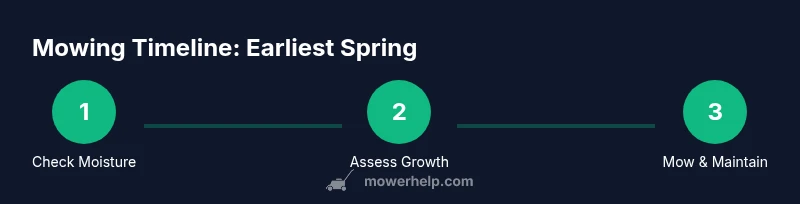
Assess both soil moisture and frost risk before touching the mower. Use the finger test or a moisture meter to ensure the soil isn’t muddy or compacted, and verify there’s no frost present. If either condition is unfavorable, delay mowing.
Tip: If the ground is dry enough to press without leaving a deep mark, you’re closer to a safe mowing window. - 2
Assess grass growth and height
Observe signs of active growth—new shoots, a healthy green color, and height above your target. It’s best when the lawn has recovered from winter dormancy and growth resumes before cutting.
Tip: If you can bend the blade easily and it springs back, you’re in the right growth phase. - 3
Prepare and inspect the mower
Check blade sharpness, balance, and that safety guards are in place. Remove any debris from under the deck and confirm the battery or spark plug is in good condition.
Tip: A sharp blade cuts cleanly and reduces turf stress. - 4
Set the correct mowing height
Adjust your mower to a higher starting height appropriate for your grass type. Avoid lowering too much in the first pass to prevent stressing the lawn.
Tip: Remember the one-third rule: remove no more than one-third of blade height per pass. - 5
Make the first mow with even passes
Mow in straight, overlapping passes to ensure uniform height. Take a measured pace and avoid sudden directional changes that can scalp the lawn.
Tip: Keep your blades rotating before you reach the edge to prevent scalping. - 6
Clean up and inspect after mowing
Check for missed spots and clumps. Clear clippings if needed or mulch them back if you’re using mulch blades. Inspect the mower again for debris and blades.
Tip: If you notice uneven cuts, re-check blade height and wheel alignment before the next mow.
Got Questions?
Can I mow if there’s frost in the morning?
No. Frost can damage shoots and dull blades. Wait until frost has melted and the ground is dry before mowing.
If there’s frost, wait until it’s gone and the ground is dry before mowing.
What if the lawn is wet after rain?
Mowing wet turf can compact soil and cause uneven cuts. Wait for the lawn to dry, or use a light pass if absolutely necessary and you can avoid compaction.
Don’t mow when the lawn is wet; wait for it to dry if possible.
How high should I set the mower for the first cut?
Set the mower to a higher height than normal and plan for a second pass at a lower height once growth resumes.
Start higher, then lower after the lawn adapts.
Is it better to mulch or bag the first mow?
Mulching clippings can return nutrients to the soil and reduce waste, but bagging can help if clippings are thick or contain thatch.
Mulch if you can; bag if you have thick clippings.
How often should I mow early spring?
Mowing frequency varies with growth, but a typical cadence is every 5-7 days during rapid spring growth.
Mow about once a week or as growth requires.
What maintenance after mowing helps the lawn recover?
Water as needed, monitor for stress signs, sharpen blades, and remove clippings only if needed to prevent buildup.
Water when needed and sharpen blades for the next mow.
Watch Video
The Essentials
- Check moisture and frost before mowing.
- Start at a higher height and use the one-third rule.
- Cut with steady, overlapping passes for even height.
- Mulch or bag clippings based on mower type and lawn needs.
- Inspect and maintain equipment after the mow.