How to Build a Racing Lawn Mower: A DIY Guide
Step-by-step instructions to safely build a racing lawn mower, covering planning, components, testing, and maintenance for DIY enthusiasts.


This guide shows how to make a racing lawn mower by planning a safe chassis, selecting a compatible power source, and upgrading key components. It includes a structured, safety-first approach and testing steps to minimize risk. From choosing parts to mounting controls, you’ll learn the essentials for a compliant, controllable build.
Safety and Legal Foundations
If you're exploring how to make a racing lawn mower, safety planning and compliance are the foundation of any project. According to Mower Help, begin with a clear risk assessment, PPE, and local regulations before touching tools. Identify your track area and ensure it is away from bystanders, with a proper run-off space. Inspect the base mower for frame integrity, fuel system leaks, and braking capability, and create a written safety checklist. This preparation reduces injury risk and helps you stay on the right side of the law. In addition, verify that any modifications comply with local rules for motorized equipment used on private property or public tracks. Keep a log of all changes, test results, and safety checks to document your process and support future maintenance. Finally, confirm that your control hardware, kill switches, and emergency stop mechanisms are accessible and clearly labeled.
Planning Your Build: Goals, Budget, and Constraints
The planning phase answers the question: what are you trying to achieve, and how will you stay within your constraints? Start by setting performance goals (top speed, acceleration, handling) and a realistic budget that includes a buffer for unanticipated parts. Create a bill of materials and a risk matrix to identify potential failure points. In the planning stage, consider where you will run the mower (private track or closed course) and how you will transport it safely for testing. The Mower Help analysis shows that successful projects begin with a written spec and a staged testing plan, reducing scope creep and safety risks. Align your ambitions with your skill level, schedule, and space to avoid overextending your project. Remember that regulatory considerations vary by location, so check with local clubs and authorities about permitted modifications, noise restrictions, and track hours.
Core Components and Safety Upgrades
Choosing the right core components is the backbone of performance and safety. Start with a sturdy chassis that can handle higher speeds and added weight from upgrades. Select a power source that is compatible with the frame and drivetrain while allowing safe cooling and fuel management. Install a reliable braking system with good stopping power, and consider adding a basic roll cage or reinforced roll bar, mounted seat belt, and a kill-switch linked to a visible emergency stop. For steering, ensure the linkage is precise and free of play, and verify that wheels and tires are rated for increased loads. Electrical safety is essential, so use proper wiring harnesses, grounded systems, and weatherproof seals where possible. Finally, design a simple, ergonomic cockpit for throttle control, speed limiter, and safety switch access. Throughout, document the component choices and why they fit your vehicle’s intended use.
Sourcing Parts and Budgeting
Parts for a DIY racing lawn mower come from multiple sources, including donor mowers, go-kart suppliers, and home improvement stores. Prioritize quality over price for critical items like brakes, frame reinforcements, and throttle controls. Start with a simple, proven drivetrain and escalate only after you verify fitment and safety. Create a flexible budget that accounts for shipping, tool needs, and potential fabrication costs such as welding or metalwork. If you’re on a tight budget, repurpose components from older equipment or look for sale items on reputable platforms. Always verify compatibility with your safety plan and local rules before purchasing. Record prices, sources, and expected delivery times so you can adjust your timeline as needed. A well-planned parts list reduces trips to the hardware store and helps you avoid incompatible pieces that derail the build.
Step-by-Step Design Approach: A Practical Blueprint
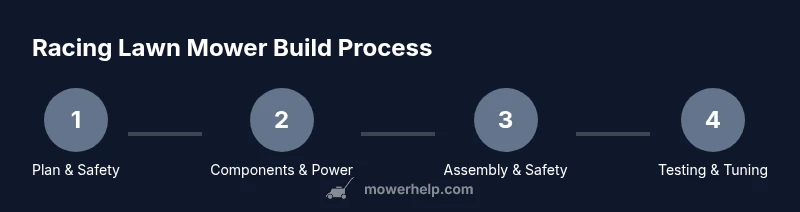
This blueprint helps users decompose a complex build into manageable chunks. Step 1: Define the base mower’s limits by measuring frame length, width, and weight capacity. Step 2: Select power and drive options that won’t exceed the frame’s load capacity. Step 3: Design a simple, safe mounting plan for the engine and drive train with alignment checks. Step 4: Plan a braking and steering system that provides predictable response. Step 5: Prepare a cockpit layout with an easily reachable throttle, kill switch, and safety kill lanyard. Step 6: Create a test plan that starts at low speed and gradually increases while recording data. Step 7: Implement cooling improvements if the race environment demands higher sustained load. Step 8: Install documentation and safety labeling. Each step should be followed in sequence and tested before advancing. Tip: keep a logbook of measurements, test results, and any adjustments to track progress.
Testing, Tuning, and Safety
Testing should occur in a controlled, open but fenced area to prevent bystander risk. Start at a slow, measured pace to verify throttle response, braking effectiveness, and steering precision. Use a data-logging method to record speed, time, and reactions to inputs, then evaluate the results to decide what needs modification. Tuning may involve adjusting throttle mapping, brake bias, and gear ratios to achieve smoother transitions. Remember to perform an immediate safety shutdown test on the kill switch and emergency stop. Periodically re-check fasteners, mounting brackets, and electrical connections during early tests. If anything feels loose or unsafe, halt the test and inspect before proceeding. A cautious approach reduces the risk of injury and equipment damage. Finally, verify that you comply with track or club rules for modified vehicles, including noise levels and safety equipment requirements.
Maintenance and Longevity
A modular maintenance plan helps you keep the racing lawn mower reliable. After each session, inspect the drivetrain, bolts, and welds for cracks or fatigue. Clean the air filter, cooling surfaces, and exhaust path to prevent overheating. Keep a service log and schedule routine checkups for brakes, steering, and frame integrity. Replace any worn components early rather than waiting for failure. Use high-quality lubricants and fueling practices that prevent varnish buildup and corrosion. Store the mower in a dry, ventilated area and protect electrical connections from moisture. Regular inspections reduce downtime and extend the build’s life while preserving safety margins. The maintenance strategy should evolve as you gain track experience and learn which parts experience the most wear.
Legal and Track Rules: Staying Compliant
Before you hit a track, verify your build complies with local laws and club rules. Many jurisdictions restrict modifications that raise speed or alter safety equipment beyond a certain standard. Check requirements for roll bars, seat belts, kill switches, and fire safety equipment. Some tracks require a safety inspection before you can enter, as well as insurance or waivers. Document modifications with photos and notes to help with inspections. If you plan to race on public property, obtain appropriate permits or approvals. Safety, legality, and sportsmanship go hand in hand; skipping these steps can lead to fines or exclusion from events. The goal is to enjoy a competitive, controlled environment while minimizing risk to yourself and others.
Common Mistakes and Quick Wins
Common mistakes include underestimating the chassis load, rushing the drivetrain fitment, and skipping a formal testing plan. A quick win is to start with a simple, proven base frame and only add one upgrade at a time, verifying each change with data. Always document assembly steps and test results to track improvements and avoid rework. Invest in proper safety gear and keep a clean workspace to minimize injuries. Finally, involve a community or club early to gain feedback and learn from others’ experiences.
Final Prep and Next Steps
With your design approved, safety checks complete, and initial tests complete, plan your first controlled demonstration lap on a closed course with a coach or experienced pilot. Review data, finalize crash plans, and schedule regular maintenance. If you’re pleased with performance and safety, log the build as a project recipe you can refine, share, or reuse on future builds.
Tools & Materials
- Safety gear (goggles, gloves, hearing protection)(Essential PPE for all tasks)
- Basic hand tools (wrenches, sockets, screwdrivers)(Set includes metric and SAE sizes)
- Power tools (drill/driver, angle grinder)(For mounting hardware and metalwork)
- Metalworking tools (saw, bench vise)(Optional but helpful for fitment)
- Welding equipment or frame fabrication service(Needed for reinforcement and mounting points)
- Lift or jack stands(Stability during assembly)
- Drivetrain and brake components(Brake calipers, rotors, lines, and linkages)
- Engine or motor options(Choose a power source compatible with the frame)
- Cooling and fuel management parts(Fans, shrouds, and safe fuel lines)
- Electrical harnesses and kill-switch wiring(Proper insulation and grounding)
- Fire extinguisher(Keep within reach during testing)
- Wheel and tire set suited for higher loads(Ensure tire tread and sidewall support)
Steps
Estimated time: 6-12 hours
- 1
Assess base mower
Measure the frame, assess weight capacity, and inspect critical safety points like brakes and engine mounts. Document any weak spots for reinforcement.
Tip: Create a photo-annotated checklist to track issues. - 2
Define power and drive options
Choose a power source and drivetrain that fit the frame without exceeding load limits. Plan cooling and fuel delivery for safe operation.
Tip: Favor components with proven track performance and clear compatibility notes. - 3
Design safety upgrades
Plan a roll bar or reinforced frame, seat belt, and clearly labeled kill switch. Ensure all safety devices are reachable from the driver seat.
Tip: Mock up the cockpit to verify reach and ergonomics. - 4
Mount engine and drivetrain
Fabricate mounting brackets, align drive shafts, and secure mounts with high-torque fasteners. Check alignment and clearance to moving parts.
Tip: Use a straightedge and dial indicators for precise alignment. - 5
Install controls and wiring
Route throttle, brake, and kill-switch wiring safely away from heat and moving parts. Ground the system and protect against moisture.
Tip: Label every switch and keep a wiring diagram handy. - 6
Plan testing sequence
Create a step-by-step test plan starting at slow speed, progressively increasing to verify handling and safety.
Tip: Document each test with data like speed and braking distance. - 7
First controlled test
Begin on a closed course with barriers and a supervisor. Observe throttle response, steering feedback, and braking behavior.
Tip: Be prepared to stop immediately if any system feels unsafe. - 8
Tuning and emissions check
Tune throttle mapping, brake bias, and cooling as needed. Inspect for leaks or overheating signs after runs.
Tip: Take breaks to cool components and inspect hardware. - 9
Documentation and ongoing care
Log changes, test results, and maintenance schedule for future reference and safety compliance.
Tip: Keep a running journal and update it after every session.
Got Questions?
Is it legal to race a lawn mower in my area?
Legal requirements vary by location. Check with local clubs and track rules, and obtain any required permits or approvals before participating. Always ensure your vehicle meets safety standards for sanctioned events.
Legal requirements vary by location. Check with local clubs and track rules before racing, and ensure you meet safety standards.
What safety features are essential for a racing mower?
Key safety features include a reliable braking system, an accessible kill switch, a roll bar or reinforced frame, a driver seat belt, and clearly labeled controls. Personal protective equipment is also crucial during builds and tests.
Essential safety features are brakes, kill switch, roll bar or reinforced frame, seat belt, and clearly labeled controls.
Do I need a roll cage for track use?
Roll cages or reinforced roll bars are commonly recommended for track use to protect the driver in a rollover scenario. Requirements vary by track and organizer, so verify with the event rules.
Roll cages are often recommended; always check track rules before racing.
Can I reuse parts from an existing mower engine?
Yes, if the engine is compatible with the frame and meets safety standards. Ensure proper cooling, mounting strength, and electrical safety before integrating a used or donor engine.
You can reuse engine parts if compatible and safely integrated.
What is a rough budget for a basic build?
Budgets vary widely based on parts and upgrades; plan for core safety and drivetrain improvements first, then add enhancements as you test and verify safety. Avoid skimping on critical components like brakes and mounts.
Budget varies; start with safety-critical components and improve as you test.
Where is a safe place to test racing mower builds?
Use a closed course or private track with proper barriers and supervision. Do not test on public roads or areas without safety controls or permission.
Test on a closed course or private track with proper supervision.
The Essentials
- Plan safety and legality before any build
- Choose compatible components for predictable performance
- Test progressively and document results
- Maintain strict maintenance and safety checks
- Engage a club or community early for feedback