How to Make a Lawn Mower Go-Kart: Step-by-Step Guide
Learn how to safely convert a lawn mower into a go-kart with this detailed guide. It covers safety, parts, frame work, steering, braking, wiring, testing, and maintenance for DIY enthusiasts.


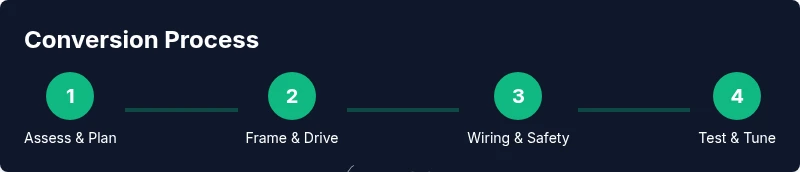
This guide explains how to make lawn mower go kart by converting a mower into a compact go-kart with a safe frame, steering, drive, and braking system. It walks you through planning, parts, assembly, testing, and maintenance, with safety as the top priority. If you're wondering how to make lawn mower go kart, this step-by-step guide will help you complete the project responsibly. Expect 8-16 hours of work plus careful testing to ensure reliable operation.
Safety first: assess your mower and the legalities
Converting a lawn mower into a go-kart introduces significant safety risks. The first order of business is a thorough assessment of the donor mower, its frame integrity, engine condition, fuel and exhaust systems, and electrical wiring. The Mower Help team emphasizes starting with safety and legality: check your local laws about modified motorized vehicles, and identify a clear testing area away from people, pets, and property. Inspect the frame for cracks or weak welds, verify that wheels spin true, and confirm that controls (throttle, brake, and steering) operate smoothly on the current chassis. By documenting the intended changes, you’ll create a solid plan that minimizes surprises during the build. This upfront evaluation also helps you estimate tools, materials, and time more accurately.
Planning and safety baselines
Before you touch metal, set a hard safety baseline. Decide on a target speed, a seat with a proper belt or harness, and whether you’ll install a basic roll-bar or protective bumper. Secure a dedicated testing apron or closed area to prevent accidents. Wear personal protective equipment: safety glasses, gloves, hearing protection, and sturdy boots. According to Mower Help, starting with a detailed risk assessment reduces the chance of injuries and helps you choose the right components for your go-kart conversion.
Donor mower selection and required parts
Choose a sturdy, reliable donor mower with a solid frame and accessible control points. Gas-powered mowers are common for conversions due to easier engine replacement and higher torque, but electric options can work with careful planning. Gather essential parts such as a chassis or tubing for the frame extension, wheels and axles compatible with the new design, a throttle linkage, a braking system, a steering mechanism, a mounting bracket kit, and fasteners sized for metal work. Additional items include a small engine or motor, a suitable drive chain or belt, a seat with mounting hardware, wiring for throttle kill switches, and a basic safety interlock. Plan for optional upgrades like a roll bar, seat belts, and a warning label set to improve safety and compliance.
Frame and chassis considerations
A safe, rigid frame is the backbone of a go-kart conversion. You’ll want to reinforce or extend the mower’s existing chassis with a welded or bolted frame made from DOM steel tubing or angle iron. Ensure the frame distributes weight evenly and maintains a low center of gravity to reduce tipping risk. Take precise measurements to match the wheelbase and track width with the new axles. Draft a simple CAD or sketch to visualize where components will mount, then mark and cut only after verification. The goal is a stable, square frame that resists flex under load and during turns.
Drive system, steering, and braking options
Design a drive system that balances torque, acceleration, and control. A simple chain-driven rear axle with a small-displacement engine is common for beginner builds, while a belt drive provides smoother operation in some configurations. For steering, a rack-and-pinion or a kite-style linkage can work well when properly aligned. Braking is non-negotiable: install a reliable rear brake, and consider a second brake or a hand brake for extra control. Align all drivetrain components with the wheels to minimize wear and vibration. This section emphasizes safe, predictable behavior rather than high-speed performance.
Controls, wiring, and safety interlocks
Wiring should prioritize safety-first operation. Install a throttle lever with a protective housing and a kill switch accessible from the driver’s position. Integrate a basic interlock that cuts power when the seat is unoccupied or when a safety bar is activated. Secure all wiring away from moving parts and hot surfaces, using heat shrink and protective conduit. Install a robust parking brake, and ensure the fuel system and ignition wiring are shielded from moisture. Test the controls at low speed before any real operation.
Testing, tuning, and maintenance plan
Begin with slow-speed, short-duration tests in a controlled area to evaluate steering response, braking effectiveness, and overall stability. Listen for unusual noises and inspect components after each test run. Adjust wheel alignment, frame stiffness, steering linkage, and brake actuator as needed. Create a maintenance schedule that includes regular checks of fasteners, lubrication points, belt/t-chain tension, and fuel or battery systems. Document findings and adjust your plan as you gain experience with the build.
Tools & Materials
- Donor lawn mower (gas-powered preferred)(Choose a solid frame and a serviceable engine.)
- Chassis tubing or go-kart frame kit(Steel tubing with proper wall thickness for rigidity.)
- Welding equipment and PPE(Welding helmet, gloves, and protective clothing.)
- Angle grinder with cut-off wheel(For frame adjustments and component fitting.)
- Drill/bit set (metal)(For mounting brackets and hardware.)
- Socket and wrenches (metric and SAE)(A complete set to fit common fasteners.)
- Drive chain/belt kit and sprockets(Appropriate size for the engine and wheel size.)
- Braking components (rear drum/caliper)(Reliable braking at low and high speeds.)
- Throttle linkage and control cable(Smooth throttle response and safety stop.)
- Seat with mounting hardware and seat belt(Secure rider and reduce injury risk.)
- Fuel containers and safety gear(Flammable safety and handling equipment.)
- Electrical wiring kit and kill switch(Safe power shutoff during operation.)
- Fire extinguisher and first-aid kit(Preparedness for emergencies.)
Steps
Estimated time: 8-16 hours
- 1
Remove blades and protect the engine area
Disconnect spark plug and remove the mower blades. Clear the deck area to prevent entanglement and inspect for any remaining sharp edges. This step reduces accidental contact with running parts during frame work.
Tip: Always disconnect the spark source before handling the engine or blades. - 2
Assess the frame and plan the new layout
Measure existing frame, wheelbase, and mounting points. Sketch how the go-kart frame will integrate with the mower deck, ensuring clearance for the new wheels and seat. Validation reduces redesign time later.
Tip: Create a simple drawing or CAD to avoid clashes. - 3
Prepare the chassis extension or new frame
Cut and weld or bolt the frame sections to extend the wheelbase as needed. Ensure all joints are reinforced and square to maintain stability. Check for interference with drivetrain components.
Tip: Check square against a right angle after welding. - 4
Mount the rear axle and wheels
Install the rear axle with appropriate bearings and mount the wheels on the new axles. Align the axle to achieve straight tracking and equal toe-in where feasible. Secure with locking nuts and thread lock.
Tip: TWIST: Use a temporary guide rod to keep alignment during mounting. - 5
Install steering linkage and rack/box
Attach steering linkage to the front axle or steering column and connect to the steering wheel or lever. Align to ensure predictable, minimal play. Test cornering range without power applied.
Tip: Ensure the steering is not binding and returns to center. - 6
Mount the drive system and drive train
Fit the drive chain or belt to connect the engine pulley to the rear axle. Verify proper tension and wheel alignment. Replace worn sprockets and ensure no interference with frame.
Tip: Use a tensioner or adjuster to maintain proper chain tension. - 7
Attach braking mechanism
Install a reliable brake on the rear wheels and a secondary hand brake if possible. Link the brake to a pedal or lever in reach of the driver. Test braking response before any speed tests.
Tip: Bleed hydraulics if needed and check for smooth actuator travel. - 8
Mount the engine or motor with mounts
Securely mount the engine or motor to the frame with appropriate brackets. Ensure adequate clearance from fuel and exhaust components. Check vibration isolation and alignment with the drive system.
Tip: Use rubber isolation mounts to reduce frame fatigue. - 9
Wire the throttle, kill switch, and interlocks
Run throttle linkage and connect to a safe kill switch. Install an interlock to cut power when the rider’s seat is unoccupied. Route wires away from heat and moving parts.
Tip: Test power-off behavior in a safe, controlled environment. - 10
Install seat, harness, and safety padding
Mount a secure seat and belt. Add padding around the driver area and install a basic roll-bar if your design allows. Ensure driver has clear access to controls without obstruction.
Tip: Check belt latches and fittings for wear before testing. - 11
Initial low-speed test and adjustments
Perform a gentle test in a flat, open space with a companion watching. Observe steering response, braking effectiveness, and overall stability. Make incremental adjustments to alignment, brake balance, and frame stiffness.
Tip: Keep a slow speed limit during first runs and never test alone. - 12
Documentation, tuning, and maintenance plan
Record all changes, parts, and torque specs. Create a maintenance schedule for lubrication, fastener checks, and safety checks. Plan periodic re-evaluation of frame integrity and driveline wear as you use the go-kart.
Tip: Re-check critical fasteners after every few test runs.
Got Questions?
Is converting a lawn mower to a go-kart legal for street use?
Legal requirements vary by location and typically prohibit unregistered go-karts on public streets. Always check local regulations and consider keeping the vehicle for private property use or track testing. Contact your local motor vehicle department for guidance.
Laws vary by place, and many areas prohibit unregistered go-karts on streets. Check local rules and use on private property or a track.
What safety gear should I wear while building or testing?
Wear eye protection, gloves, hearing protection, and sturdy footwear. When welding or grinding, use a welding hood or face shield and long sleeves. A helmet and boots reduce injury from sparks, sharp edges, or pinch points.
Wear safety glasses, gloves, hearing protection, and sturdy boots. Use a welding helmet when grinding or welding.
Is this project suitable for beginners?
The project is for experienced DIY enthusiasts with metalworking skills. Beginners should seek guidance, start with small framed projects, and avoid risky modifications. Always work with a mentor or informed pro when in doubt.
It's best for folks with metalworking experience. If you're new, seek guidance and start with simpler builds.
What maintenance is needed after testing?
Inspect all fasteners, drive components, and the frame after initial tests. Check for heat damage, wear on the chain or belt, and steering linkage play. Schedule periodic lubrication and inspect brakes and tires before each use.
After testing, check fasteners, drive parts, and brakes. Keep a maintenance log.
Can I reuse the mower's original components?
Some components can be reused if they are in good condition and suitable for the new layout, but many parts will need upgrading for safety and performance. Assess engine mounting, cooling, and fuel lines for compatibility with your new frame.
You may reuse some parts if they’re safe and compatible, but expect upgrades.
Watch Video
The Essentials
- Plan safety as the cornerstone of the build.
- Use a sturdy, well-aligned frame with a low center of gravity.
- Install reliable steering and braking for controllable handling.
- Test gradually in a controlled space and document maintenance.
- The Mower Help team recommends prioritizing safety and legality in all steps.