Lawn Mower No Gas Troubleshooting Guide
Urgent troubleshooting guide to diagnose and fix a lawn mower that won't start without gas. Learn fuel-system checks, safety steps, and prevention tips to keep your mower running.


Most likely the no-gas start is fuel-system related rather than an electric issue. Start with quick safety checks, verify choke position, and ensure the fuel is fresh. If priming doesn’t help, inspect the carburetor, air filter, and spark plug. Clean or replace components as needed, and test starting again before moving to deeper repairs.
Understanding lawn mower no gas scenarios
According to Mower Help, a lawn mower that won’t start when you expect no gas to be involved is usually caused by fuel-system issues, poor fuel quality, or ignition basics. The no-gas scenario still requires a methodical approach because many components that affect combustion—like the carburetor, air filter, fuel lines, and spark plug—can become blocked or fouled over time. Recognizing this pattern early can save you time and money, especially for homeowners and DIY enthusiasts troubleshooting and maintaining lawn mowers. This guide is written for homeowners who want to diagnose safely, fix efficiently, and prevent future no-gas failures.
We’ll walk you through a practical flow: verify basic ignition safety, confirm fuel freshness, inspect the air intake path, evaluate the carburetor and fuel lines, perform a focused clean, and test the mower after each step. By sticking to a clear sequence, you’ll minimize guesswork and maximize your chances of getting back to mowing without a tow or a costly service call.
Common culprits for starting without gas
Here are the most frequent reasons a lawn mower may behave as if there’s no gas, even when you know there is fuel in the tank:
- Stale or ethanol-laden fuel that loses octane and gums up jets
- A carburetor that’s gummed up by varnish or old fuel deposits
- A clogged air filter or restricted air path that prevents proper combustion
- A foul or carbon-covered spark plug that won’t spark reliably
- Incorrect priming or choke operation that doesn’t deliver the right air-fuel mix
In many cases, addressing these issues in order reduces the need for replacement parts and keeps your maintenance costs down. You’ll be surprised at how often a simple cleaning and fresh fuel restore starting power.
Quick safety checks you should perform
Before touching anything, take a moment to implement safety steps that protect you and your equipment:
- Disconnect the spark plug boot and move the mower to a well-ventilated area away from ignition sources.
- Remove the battery (if installed) only after consulting the manual, to avoid accidental startups.
- Inspect the area for fuel leaks or spilled gas; clean spills with an absorbent material and dispose of it properly.
- Wear eye protection and gloves; work in dry conditions to prevent slipping near damp grass or oily surfaces.
With safety covered, proceed to quick checks that determine if the problem is fuel-related rather than mechanical failure.
Fuel system diagnostics: fuel quality and lines
The fuel system is the first place to look when the mower seems “no gas.” Start by draining any old fuel and replacing it with fresh, season-appropriate gasoline. If you’re seeing a strong smell of varnish or ethanol, replace the fuel in the tank and ensure the fuel line is clear. Check the fuel filter if your model has one, and inspect the primer bulb and line for cracks or kinks. Finally, ensure the carburetor is receiving fuel by lifting the fuel line and watching for flow when priming. Any interruption here often points to the root cause.
Step-by-step fix for the most common cause
Step-by-step fix for stale fuel causing carburetor gumming
- Safety: Disconnect spark plug wire and place the mower on a stable surface.
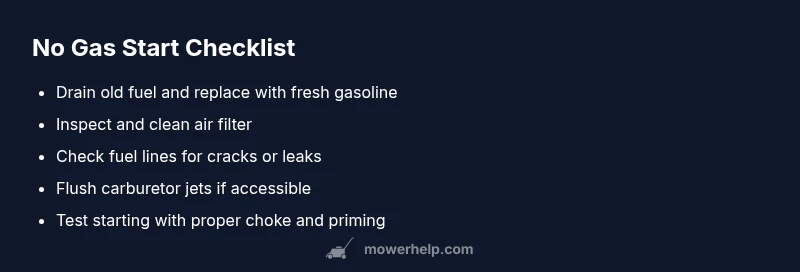
- Drain old fuel and replace with fresh gasoline.
- Remove the air filter and inspect for oil or debris; clean or replace as needed.
- Remove the carburetor accessories if you’re comfortable, and carefully clean jets with approved carburetor cleaner.
- Reassemble, recheck fuel line connections, and prime according to the manual.
- Reconnect the spark plug, set the choke correctly, and attempt a start.
If the mower still won’t start after these steps, proceed to check the spark plug and ignition timing, or consider professional service. Tip: Always work in a well-ventilated area and dispose of old fuel safely.
Safety tips and common mistakes to avoid
- Do not run the mower indoors or in enclosed spaces where exhaust can accumulate.
- Avoid using old, ethanol-rich fuel; replace it with fresh fuel appropriate for your engine.
- Don’t strip carburetor components without proper diagrams; an incorrect reassembly can cause more damage.
- Ensure the choke is fully open after starting to avoid flooding the engine.
- If you’re unsure, don’t force starts; misfiring can cause accidental kickback or damage.
Prevention and maintenance to avoid future no-gas issues
Routine maintenance is your best defense against no-gas starts. Clean or replace the air filter during seasonal starts, use fresh gas every mowing season, and add a fuel stabilizer if you don’t mow weekly. Regularly inspect fuel lines for cracks, replace the fuel filter when applicable, and check the spark plug for wear and proper gap. A quick carburetor tune-up every season can prevent varnish buildup and extend engine life. By documenting your maintenance intervals, you’ll build a reliable workflow to keep your mower ready to roll.
Steps
Estimated time: 45-60 minutes
- 1
Safety first: disconnect spark plug and prepare area
Power isolation is essential before any inspection. Remove the spark plug boot and move to a well-ventilated, dry area away from flames or sparks. Confirm the mower is on a flat surface and stable. This prevents accidental starts during inspection.
Tip: Always double-check that the spark plug boot is fully removed before touching any moving parts. - 2
Test fuel quality and prime correctly
Drain old fuel and refill with fresh gasoline suitable for your engine. If your model uses a primer bulb, press it as directed to check for fuel flow. A poor or no-flow signal points to a clogged line or carburetor issues.
Tip: Label and dispose of old fuel safely; stale fuel can degrade quickly in heat. - 3
Inspect air filter and intake
Remove the air filter and inspect for dirt, oil, or debris. Clean or replace the filter as needed. A blocked air intake reduces combustion efficiency and can mimic a fuel-starved start.
Tip: A clean, snugly seated air filter ensures proper airflow and engine protection. - 4
Carburetor and fuel line check
With the air filter out, inspect the carburetor for varnish buildup. Use approved cleaner to flush jets if accessible. Check fuel lines for kinks or cracks and replace if necessary.
Tip: Avoid bending fuel lines sharply to prevent collapse and leaks. - 5
Spark plug inspection and ignition test
Remove the spark plug, inspect for fouling, and clean or replace if necessary. Re-gap the plug to specification and ensure the ignition coil is functioning. A weak spark will prevent starting even with fresh fuel.
Tip: Carry a spare spark plug and a gap tool for quick field changes. - 6
Final start test and choke adjustment
Reconnect everything, set the choke to the correct position, and attempt a controlled start. If it runs rough, adjust idle or air-fuel mixture per manual and retest. If the engine floods, wait a bit and try again with the choke open.
Tip: Don’t force a high-rev start immediately after a clean, dry carburetor flush.
Diagnosis: Mower won’t start or runs poorly when attempting to start without gas
Possible Causes
- highStale fuel or ethanol-related varnish in the fuel system
- highCarburetor jets clogged or varnished
- mediumClogged air filter or restricted air path
- lowFaulty spark plug or improper ignition timing
Fixes
- easyDrain old fuel and replace with fresh fuel, then prime and try starting again
- mediumClean carburetor jets and air intake, and replace air filter if needed
- easyInspect fuel lines and filter; replace damaged hoses
- easyReplace spark plug and verify ignition timing if applicable
Got Questions?
What should I check first when my lawn mower won't start without gas?
Begin with safety checks (unplug/disable ignition), verify choke, and confirm the fuel is fresh. If it still won’t start, inspect the fuel system and air path before delving into more complex fixes.
Start with safety and fuel checks, then inspect the carburetor and ignition if needed.
Is stale fuel the main cause of no-gas starts?
Stale fuel can gum up carburetor jets and filters, causing starting and running issues. Replacing old fuel with fresh gas is usually the fastest remedy.
Old fuel is a common culprit; replace it and retry starting.
How do I safely clean or replace the carburetor on a lawn mower?
Carburetor cleaning involves removing the carb, inspecting jets, and flushing varnish with approved cleaner. Reassemble carefully and follow manual torque specs.
Carburetor cleaning requires care; follow the manual and wear gloves.
When should I call a professional for starting problems?
If the mower still won’t start after cleaning or you notice persistent fuel leaks or electrical ignition issues, it’s wise to consult a professional to prevent further damage.
If basic fixes don’t work, get expert help.
How often should I replace spark plugs on a gas mower?
Spark plugs should be checked regularly and replaced every season or when they appear fouled or worn. A good plug improves reliability.
Check and replace spark plugs as part of seasonal maintenance.
Watch Video
The Essentials
- Check fresh fuel first
- Clean carb and air path if start fails
- Safety first with spark plug and ignition
- Test after each step to isolate the issue