Lawn Mower Overheating Symptoms: Identify, Diagnose, and Fix
Identify lawn mower overheating symptoms quickly and learn practical, safe fixes. This guide covers causes, step-by-step repairs, and prevention tips to keep your mower running smoothly.


1) Stop the engine and let it cool completely. 2) Inspect the air intake and clean or replace a dirty air filter. 3) Clear debris from cooling fins and ensure proper airflow around the engine. 4) Check oil level and quality; top up or change if needed. 5) If symptoms persist, avoid mowing and seek professional service.
What lawn mower overheating symptoms signal
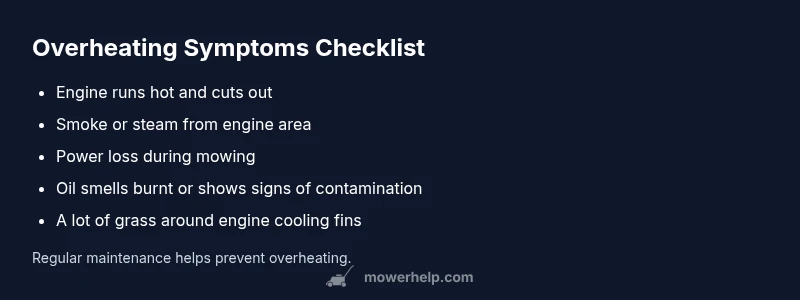
Lawn mower overheating symptoms can show up in several ways, and recognizing them early helps prevent engine damage. According to Mower Help, homeowners commonly report a hot engine that refuses to stay running, smoke or steam escaping from the engine compartment, and sudden power loss while cutting. Overheating can also manifest as a mower that suddenly slows, loses blade speed, or requires repeated rest periods to cool down. When you notice these signs, ask yourself a few quick questions: Is the air intake blocked? Has the oil level changed? Is the cooling area around the engine clogged with clippings? By mapping symptoms to likely causes, you can decide whether a quick DIY clean-up will suffice or if you should arrange professional service. The Mower Help team found that most overheating episodes are caused by simple maintenance issues, not catastrophic engine failure. Early action matters because persistent overheating can degrade piston rings, gaskets, and bearings, leading to expensive repairs.
Common causes behind overheating symptoms
While overheating symptoms are clear, the underlying causes are not always obvious. The most frequent culprits are limited airflow and cooling, often from a blocked air intake or a dirty air filter; grass clippings packed around the cooling fins; and low, old, or contaminated engine oil. Some mowers overheat because fuel quality is poor, or the carburetor is out of adjustment, causing the engine to run lean or rich. Another frequent factor is mowing under heavy load—tall grass, thick weeds, or wet conditions require more engine power, which can push the cooling system beyond its capacity. Finally, an overlooked issue is a worn spark plug or dirty fuel system that causes incomplete combustion, increasing exhaust heat. If your symptoms appear after you recently refueled or changed oil, rule out fuel and oil quality as contributing causes first.
Quick checks you can do safely
Before you reach for tools, ensure safety: disconnect spark plug cap, remove the key if a riding mower, and wear gloves. Then perform these quick checks in order: 1) Inspect the air intake and clean or replace a dirty air filter; a clogged filter reduces airflow and can cause overheating within minutes. 2) Clear debris from around the cooling fins and engine housing; grass clippings can insulate the engine and trap heat. 3) Check the engine oil level and condition; if oil looks dirty or smells burnt, replace it following the manufacturer's guidelines. 4) Look for signs of stale fuel or fuel system issues—old gasoline or water in the fuel can impair combustion, increasing heat. 5) Ensure blade and deck are not binding or overloaded; heavy cutting tasks increase engine strain. If any of these steps resolve the issue, you should still schedule regular maintenance to prevent recurrence.
Diagnostic flow: symptoms to diagnosis
To troubleshoot efficiently, use a simple flow. Start with the most common issues and move toward more complex checks. If the engine overheats under light or no load, focus on airflow: air intake, filter, and cooling fins. If heat remains with clean airflow, inspect lubrication: oil level and quality. If both air and oil checks are normal, suspect fuel system or ignition components. Document the symptom as you test each hypothesis; this helps you avoid repeating steps and speeds up eventual repair. When in doubt, err on the side of caution and seek professional service to prevent damage to internal components.
Step-by-step fix for the most likely cause
The most frequent overheating culprit in DIY scenarios is restricted airflow due to a dirty air filter and blocked cooling passages. Follow these steps to address it effectively. 1) Power off the mower and disconnect the spark plug wire. 2) Remove the engine cover and locate the air filter housing. 3) Take out the air filter and inspect; replace if dirty or damaged. 4) Clean the housing and intake with a soft brush, ensuring no debris remains. 5) Reinstall a fresh filter and reassemble the housing securely. 6) Wipe down the cooling fins and remove any grass or dirt buildup. 7) Reconnect the spark plug, start the engine, and run at idle for a couple of minutes to confirm airflow. 8) If overheating recurs, inspect the oil system and fuel quality as next steps.
tip1_textTBD :=null
tip2_textTBD :=null
Steps
Estimated time: 25-40 minutes
- 1
Power off and cool the mower
Shut down the engine completely and remove the key (for key-start models). Allow the engine to cool to avoid burns before handling any components. This step protects you from hot metal and fluid burns and gives you accurate access to components.
Tip: Always wear gloves and safety glasses when inspecting a hot engine. - 2
Open the housing to access the air filter
Remove the side or top cover to reveal the air intake and filter. Be sure to disconnect the spark plug wire before touching moving parts. Keep track of screws and small parts so you can reassemble correctly.
Tip: Taking photos during disassembly helps with reassembly. - 3
Remove and inspect the air filter
Take out the air filter and check for visible dirt, oil saturation, or damage. A clogged or oil-soaked filter reduces airflow dramatically and can cause overheating even on gentle tasks.
Tip: If the filter looks dirty, replace it rather than attempting a risky cleaning. - 4
Clean or replace the air filter and housing
Clean the filter housing with a soft brush and mild cleaner if needed, then install a new filter. Ensure the housing seals properly to prevent unfiltered air from entering the engine.
Tip: Use OEM or equivalent filters for best fit and performance. - 5
Inspect and clean the cooling fins
Check the engine cooling fins for grass, dust, and debris. Gently remove buildup with a brush or compressed air (from a safe distance). Clogged fins reduce cooling efficiency and cause heat buildup.
Tip: Do not bend fins; use light pressure to avoid damage. - 6
Reassemble and test
Reattach the housing, reconnect the spark plug wire, and start the engine. Let it run at a low idle for a few minutes to verify it stays cool and the airflow is unobstructed.
Tip: If the engine still overheats, move to a more comprehensive inspection of oil and fuel systems. - 7
Seasonal check and monitor
After a successful fix, schedule a quick maintenance check for filters, oil, and air intake before the next mowing season. Keep a spare air filter on hand for quick changes.
Tip: A quick pre-season check saves downtime later.
Diagnosis: Lawn mower overheats during operation
Possible Causes
- highBlocked air intake or dirty air filter
- highClogged cooling fins or engine passages
- highLow or degraded engine oil
- mediumStale fuel or clogged fuel system
- lowWorn spark plug or ignition issues
Fixes
- easyClean or replace air filter and ensure air intake is unobstructed
- easyClear debris from cooling fins and around the engine housing
- easyCheck oil level and replace if needed; use recommended grade
- mediumDrain and replace stale fuel; inspect carburetor and fuel lines
- easyReplace spark plug if fouled or worn; inspect ignition system
Got Questions?
What are common lawn mower overheating symptoms?
Common signs include a hot engine that struggles to run, visible smoke or steam, reduced cutting power, and the mower shutting down to cool. These symptoms point to airflow, lubrication, or fuel-related issues.
Look for a hot engine, smoke, or loss of power—the symptoms help you zero in on airflow or lubrication problems.
Can dirty oil cause overheating?
Yes. Dirty or old oil reduces lubrication and increases engine friction, which leads to excess heat. Always check oil level and condition as part of troubleshooting.
Low or dirty oil can make the engine run hot; check and change oil as needed.
Should I keep mowing if it overheats again?
No. If overheating recurs, stop mowing, let the engine cool, and pursue the recommended checks in the guide before resuming.
If it overheats again, stop and inspect the cause before continuing.
How often should I replace the air filter?
Replace the air filter when dirty or after a certain mowing season, following the mower’s maintenance schedule.
Replace the air filter when it looks dirty or clogged to maintain proper airflow.
What if fuel quality is the issue?
Stale fuel can cause overheating and rough running. Use fresh fuel and consider draining old fuel if symptoms persist.
If fuel is suspect, drain and refill with fresh fuel and see if performance improves.
Can a bad spark plug cause overheating?
A worn or fouled spark plug can cause incomplete combustion, generating extra heat. Inspect and replace if necessary.
A worn spark plug can heat the engine—check and replace as needed.
Watch Video
The Essentials
- Check the air intake and filter first
- Keep cooling fins clear of debris
- Regularly monitor oil level and quality
- Avoid mowing under heavy load to prevent overheating