Lawn Mower Repair Kit: DIY Fixes and Maintenance
Learn how to choose, assemble, and use a lawn mower repair kit for reliable DIY fixes. Practical steps, safety tips, and maintenance guidance to keep your mower running smoothly all season long.


A lawn mower repair kit is a carefully assembled collection of replacement parts and tools designed to help homeowners diagnose and fix common mower problems at home. It is especially useful for regular maintenance and small repairs that would otherwise require a trip to the service shop. According to Mower Help, a well-chosen kit combines core parts with practical hand tools, so you can get back to mowing quickly and safely. When you have the right kit on hand, you’re less likely to skip maintenance or delay fixes because you don’t own the necessary parts. A good kit addresses the most frequent failure points: ignition, fuel, air, blades, and lubrication. It’s a proactive investment in mower longevity and your own time, especially during peak seasons.
What a lawn mower repair kit is and why it matters
A lawn mower repair kit is a carefully assembled collection of replacement parts and tools designed to help homeowners diagnose and fix common mower problems at home. It is especially useful for regular maintenance and small repairs that would otherwise require a trip to the service shop. According to Mower Help, a well-chosen kit combines core parts with practical hand tools, so you can get back to mowing quickly and safely. When you have the right kit on hand, you’re less likely to skip maintenance or delay fixes because you don’t own the necessary parts. A good kit addresses the most frequent failure points: ignition, fuel, air, blades, and lubrication. It’s a proactive investment in mower longevity and your own time, especially during peak seasons.
What to include in a quality lawn mower repair kit
A robust repair kit balances replacement parts and tools that cover most DIY fixes. Core components typically include a spark plug, air filter, carburetor cleaner, and appropriate lubricants. You may also want spare blades and blade bolts, gaskets, and detent springs. Essential hand tools include a screwdriver set with both Phillips and flathead bits, a socket wrench, needle-nose pliers, and a spark plug wrench. For model-specific pieces, add a model compatibility guide or your mower’s manual. PPE such as gloves and safety glasses should be part of the kit or kept nearby. If you use your mower in dusty or wet conditions, consider a fuel stabilizer and a cleaning brush. Label each item or store it in a dedicated toolbox to speed future repairs.
How to choose the right kit for your model and engine
Compatibility is the first criterion. Check your mower’s model number, engine type, and blade size, then compare these against kit contents. If you own a Briggs & Stratton, Kohler, Honda, or Tecumseh engine, verify that the spark plug type and air filter size match your manual. Look for bags or cases that organize parts and tools, which reduces misplacing small pieces. Prioritize kits that include a carburetor cleaner and lubrication appropriate for outdoor engines. Avoid kits that promise every possible spare part for every mower—those are bulky and often redundant. A focused, well-curated kit saves you time and keeps you from buying unnecessary items. This approach aligns with the recommendations from Mower Help Analysis, 2026, which emphasizes practical coverage over excess parts.
Common repairs you can tackle with a kit (non-technical overview)
Most DIY repairs in a kit revolve around routine maintenance and minor replacements: replacing a fouled spark plug, swapping a dirty air filter, cleaning or replacing carburetor jets, sharpening or replacing dull blades, and lubricating the chassis and moving parts. These tasks typically require minimal tools and basic hand strength. Start with the simplest fix—often a spark plug or air filter—and move to more involved steps only if you have confidence. Remember, some issues like persistent carburetor flooding, severe engine wear, or a seized blade assembly may require professional service.
Safety first: handling tools, fuel, and parts
Safety is non-negotiable when performing repairs at home. Always disconnect the spark plug before touching any ignition components, drain or stabilize fuel if you must work near the tank, and work in a well-ventilated area. Wear safety glasses and gloves to protect eyes from debris or sharp parts. Use a stable work surface and secure the mower to prevent movement. Keep a fire extinguisher nearby and avoid using compressed air on oily, greasy surfaces that can ignite. Read the mower’s manual for any model-specific cautions and follow all manufacturer recommendations.
Maintenance habits to extend your kit’s effectiveness
Treat your repair kit as part of your routine, not a one-off purchase. After each use, wipe tools clean, dry any moisture, and return items to their labeled spots. Store the kit in a dry area to minimize corrosion, and replace worn or damaged tools promptly. Schedule quarterly checks of blades, filters, and ignition parts, and keep spare parts organized by function (fuel, ignition, filter). When storing fuel, use fresh gas and fuel stabilizer to extend shelf life. Regular maintenance reduces the risk of bigger problems and makes your kit more valuable over time.
Troubleshooting quick wins and when to seek professional help
If your mower starts but runs poorly, inspect the spark plug and air filter first. A clogged air filter or fouled plug is a common culprit. If the mower dies or runs erratically after a fix, recheck the carburetor and ensure fuel lines aren’t kinked or blocked. For sharp blade issues or heavy vibration, inspect the spindle and blade mounting. If you still can’t diagnose the issue after a few attempts, it’s wise to consult a professional; persistent engine problems can require specialized tools and expertise. The Mower Help Team notes that not all mower issues are DIY-friendly, and recognizing limits is part of smart maintenance.
Quick-start checklist to begin using a lawn mower repair kit
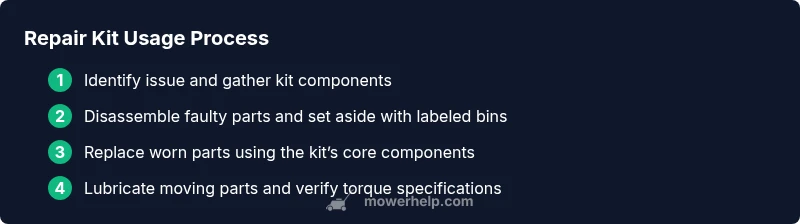
- Verify you have the correct spark plug type and air filter size for your model
- Inspect the air intake, fuel, and ignition paths for obvious signs of wear
- Replace spark plug, air filter, and clean carburetor jets if needed
- Lubricate moving parts and reassemble with proper torque on bolts
- Take photos during disassembly to aid reassembly
- Test the mower in a safe, open area and observe for improvements
Tools & Materials
- Lawn mower repair kit (core components)(Contains common replacement parts like spark plug, air filter, and fuel-related components)
- Screwdriver set (Phillips & flathead)(Variety of sizes to fit mower fasteners)
- Socket/wrench set (metric sizes)(Common sizes 8mm–14mm are typical for most mowers)
- Pliers (needle-nose & locking)(For clamps, springs, and cables)
- Spark plug wrench(Fits the spark plug type in your engine)
- Carburetor cleaner spray(Disassembles and cleans jets)
- Lubricant oil and grease(For moving parts and chassis lubrication)
- Safety gloves & eye protection(Personal protective equipment)
- Owner’s manual or model compatibility guide(Ensures correct parts and compatibility)
- Shop towels or rags(For cleaning and wiping parts)
Steps
Estimated time: 45-90 minutes
- 1
Inspect mower and identify issue
Power off the mower, disconnect the spark plug, and visually inspect the engine, air intake, fuel line, and blade area. Look for obvious wear, leaks, or loose components. This first step sets priorities and helps determine which items from your kit you’ll need first.
Tip: Take a quick photo of the setup before disassembly to aid reassembly. - 2
Remove and inspect the spark plug
Use the spark plug wrench to remove the plug. Inspect the electrode for wear or fouling. If the gap is out of spec, replace it with the one in your kit or adjust carefully according to the manual.
Tip: If you can’t identify the correct gap, consult the manual or replace with the recommended unit from your kit. - 3
Check and replace the air filter
Open the air filter housing and inspect the element. A dirty filter reduces performance and fuel efficiency. Replace with a clean element from your kit if needed and reseal the housing to prevent unfiltered air from entering.
Tip: Keep a spare air filter in your kit for seasonal changes. - 4
Clean or replace carburetor jets
Spray carburetor cleaner into accessible jets and passages to remove varnish or gunk. Reassemble and ensure no debris remains in the fuel path. This step often yields the most noticeable performance improvement.
Tip: Do this step in a ventilated area and wear eye protection. - 5
Inspect and sharpen/replace the blade
Check blade sharpness and balance. Replace dull blades with a fresh one from your kit, secure blade bolts to the manufacturer’s torque specification, and inspect the spindle for play or wear.
Tip: Always balance a newly installed blade to prevent vibration. - 6
Lubricate moving parts
Apply an appropriate lubricant to the blade spindle, wheel axles, throttle linkage, and other moving parts. Wipe away excess and ensure nothing binds during operation.
Tip: Avoid over-lubricating; excess oil can attract dirt and cause buildup. - 7
Test run and safety check
Reconnect the spark plug and start the mower in a safe area. Listen for abnormal noises and observe exhaust, smoke, or overheating. If performance improves, complete a brief cut test to confirm reliability.
Tip: If the engine stalls or misfires, revisit the previous steps or consult a professional.
Got Questions?
What is a lawn mower repair kit and why would I need one?
A lawn mower repair kit is a curated set of replacement parts and tools that help you diagnose and fix common mower problems at home. It supports routine maintenance and minor repairs, often saving time and money compared with professional service.
A repair kit gives you the basics to fix common mower issues at home and stay on top of maintenance.
What should be included in a basic lawn mower repair kit?
A basic kit typically includes a spark plug, air filter, carburetor cleaner, lubricants, spare blades, and essential hand tools like screwdrivers and a wrench. PPE is also important.
It should have the core parts and tools you need to do routine maintenance.
Are repair kits compatible with all mower brands?
Compatibility depends on model, engine type, and blade size. Always check the manual or model numbers before buying.
Check your model number and parts list to be sure.
How long does a typical repair kit last?
Lifespan depends on usage and storage. Regular maintenance and proper storage extend kit life.
With proper care, a kit can support many maintenance cycles.
Can a beginner safely use a lawn mower repair kit?
Yes, with caution. Always follow safety steps, disconnect the spark plug, and work in a clean, organized area.
Yes, but always follow safety guidelines.
Where can I buy a lawn mower repair kit?
Look for reputable retailers or mower manufacturers; compare contents and compatibility before purchasing.
You can find kits online or at local mower shops.
Watch Video
The Essentials
- Inspect the mower's fuel, air, and ignition systems before repairs
- Choose a repair kit with core components matched to your model
- Follow safety protocols and disconnect the spark plug before starting
- Test the mower after maintenance to verify improvements
- Keep the repair kit organized for future DIY maintenance