Mobile Lawn Mower Repair Near Me: On-Site Fixes and Tips
Discover practical on-site lawn mower repair options with mobile service near you. Learn how to pick trusted technicians, prep your mower, and keep maintenance simple for fewer downtime and safer operation.


With mobile lawn mower repair near me, a technician comes to your property to diagnose and fix your mower on-site. You’ll save time, avoid dragging the machine to a shop, and benefit from real-time safety checks. Before the visit, gather your mower’s model, a clear workspace, and access for the technician. This quick guide outlines the steps to verify credentials and maximize on-site service quality.
Why mobile lawn mower repair near me matters
According to Mower Help, on-site mower repairs deliver fast, practical solutions for busy homeowners. For many, the convenience of having a technician come to the driveway beats loading a heavy machine into a truck and waiting for a shop slot. Mobile repairs can shorten downtime and minimize the risk of damage during transport. This approach is particularly valuable for seasonally used equipment or models with hard-to-find parts. On-site diagnosis lets the technician observe how your mower operates in real conditions—under load, in various temperatures, and with your typical fuel. You also gain the benefit of personalized advice and a repair plan tailored to your yard. The key is selecting a credible technician who follows safety protocols and manufacturer specifications. When done right, mobile repair saves time, preserves asset value, and keeps your mowing routine on track.
How on-site service works vs traditional shops
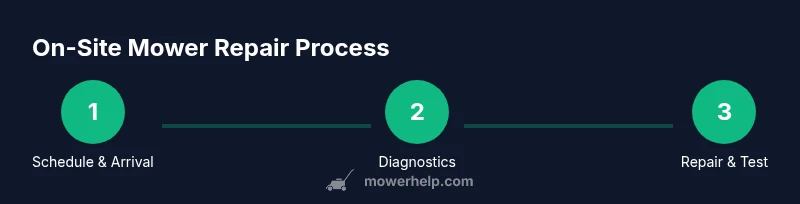
On-site service starts with a brief intake, then a technician travels to your location with diagnostic tools and replacement parts if needed. The visit typically includes a hands-on inspection of the engine, carburetion, fuel system, cooling, electrical, and starting components. If parts are required that aren’t available on the truck, the technician will explain options and arrange for a return visit or part delivery. Compared with a shop, on-site repair reduces downtime and eliminates the risk of transport damage. For homeowners, the trade-off is often slightly higher labor visibility and a more tailored service plan that matches your mower usage and yard conditions.
Finding a trusted mobile mower repair near me
Trust is essential when inviting a technician onto your property. Start by checking credentials, insurance, and any manufacturer certifications. Read recent customer reviews for consistency in communication, pricing, and results. Ask about warranties on labor and parts, and request a written estimate before any work begins. A credible mobile repair provider will share a transparent scope of work, expected timelines, and a clear breakdown of costs. If you’re unsure, request a second opinion before approving major repairs. For extra assurance, look for technicians who offer documented maintenance checks and aftercare guidance tailored to your mower model.
What happens during an on-site visit
A typical on-site visit proceeds through a diagnostic phase, safety briefing, parts inspection, and repair execution. The technician will test starting procedures, run the engine, listen for abnormal sounds, and inspect the fuel system, air intake, and exhaust. They may perform tasks such as blade inspection or sharpening, air-filter replacement, spark plug checks, oil top-offs, and carburetor cleaning. When feasible, they’ll perform the repair and test the mower again in your yard to verify proper operation. If a more complex repair is needed, they will explain options and coordinate next steps, including potential shop work or part orders.
Preparing your mower for service
Before the appointment, clear a safe, level workspace with good lighting. Remove nearby obstacles and ensure the mower has a fully charged battery or fresh fuel as appropriate. Gather your model number, user manual, and recent maintenance records to share with the technician. If you can, document symptoms with photos or a short video, which helps with faster diagnosis. Keep a note of any changes in performance, noise, or starting behavior so the technician can prioritize issues during the visit.
Safety, warranties, and aftercare
Safety is the priority in any on-site repair. Ensure the technician is insured and follows manufacturer safety guidelines. Confirm whether labor and parts come with a warranty, and request a written estimate before work begins. After the repair, ask for a post-service checklist, recommended maintenance intervals, and care instructions. Proper follow-up reduces the chance of recurrence and extends the life of your mower. If you notice new issues after the visit, report them promptly so they can be addressed under the warranty terms.
Maintenance tips to reduce future visits
Proactive maintenance is your best defense against downtime. Schedule regular cleanings, blade checks, air-filter replacements, and oil changes according to your mower’s manual. Use fresh fuel and stabilizer when storing equipment for extended periods. Keep cords, guards, and safety switches clean and free of debris. Document all service visits and part replacements to help future diagnostics. When in doubt, a quick on-site diagnostic can catch small issues before they become costly repairs.
Tools & Materials
- Owner's manual or model reference(Useful for identifying parts and torque specs)
- Basic hand tools (wrenches, screwdrivers, pliers)(Assorted sizes; include metric and SAE)
- Safety gear (gloves, safety glasses, closed-toe shoes)(Protect yourself during inspections and fixes)
- Replacement parts and consumables (air filter, spark plug, oil)(Bring extras if you know your model needs them)
- Camera or smartphone to document issues(Helpful for diagnosis and warranty records)
- Rags or shop towels(For cleaning and keeping the workspace tidy)
Steps
Estimated time: 60-150 minutes
- 1
Schedule and prep the on-site visit
Contact the technician or service, provide your mower’s model, describe symptoms, and choose a visit window. Confirm access to your yard and safety requirements. Have any relevant manuals ready for quick reference.
Tip: Ask for a written estimate before any diagnostic work begins. - 2
Conduct an on-site diagnostic
The technician performs a hands-on inspection of the engine, fuel system, ignition, air intake, and safety features. They listen for unusual sounds and verify starting routines under load conditions.
Tip: Take photos of any obvious issues to share later if needed. - 3
Approve safe, on-site repairs
If fixes are within scope, the technician replaces or adjusts components and verifies function after each step. For parts not on hand, discuss options and timelines.
Tip: Request a clear scope of work and expected completion time. - 4
Test run and safety verification
Run the mower in yard conditions to confirm startup reliability, blade operation, and absence of leaks or abnormal vibrations. Ensure all safety guards function properly.
Tip: Observe for smoke, unusual odors, or overheating during the test. - 5
Review maintenance plan and provide documentation
The technician shares post-service care guidance, future maintenance intervals, and a written summary of the work performed. They may offer reminders for next service dates.
Tip: Keep a service log to simplify future diagnostics. - 6
Close out and cleanup
The technician tidies the workspace, disposes of waste properly, and confirms no tools are left behind. You receive contact info for any follow-up questions.
Tip: Store any parts or manuals in an organized place for quick reference.
Got Questions?
What is mobile lawn mower repair near me?
Mobile lawn mower repair near me refers to technicians who visit your location to diagnose and repair your mower, avoiding transport to a shop.
On-site mower service means a technician comes to your yard to diagnose and fix your mower.
Is on-site repair more expensive than a shop visit?
Prices vary depending on location and the work involved. Always request a written estimate before work begins.
Costs vary; get a written quote first.
What repairs can be done on-site vs require a shop?
Common on-site tasks include blade sharpening, air-filter replacement, spark plugs, and oil changes. More complex engine work may require a shop.
Most simple fixes can be done on-site; complex engine work may need a shop.
How should I prepare for the technician's arrival?
Clear the workspace, share model details, and have recent maintenance notes handy to speed up the diagnostic process.
Clear the area and share your mower’s model details.
What about safety and warranties?
Ensure the technician is insured and offers a warranty on labor and parts. Ask for a written summary of the work.
Make sure the service is insured and backed by a warranty.
How soon can I schedule an on-site repair?
Availability depends on location and current demand. Plan ahead by booking in advance when possible.
Availability varies; book ahead if you can.
Watch Video
The Essentials
- Choose on-site service to save time.
- Prepare model details and symptoms.
- Verify credentials and warranty coverage.
- Obtain a written estimate before work.
- Follow post-service maintenance recommendations.