Why Is My Lawn Mower Blowing White Smoke? An Urgent Troubleshooting Guide
Learn why your lawn mower is blowing white smoke, identify common causes, and follow a safe, step-by-step troubleshooting plan to diagnose and fix the issue quickly.


White smoke from a lawn mower is a red flag that should not be ignored. Start by quick checks: oil level and smell, fuel quality, and the cooling system for leaks. If smoke persists after these basics, shut the engine off and follow the detailed steps below or seek professional help. This fast check helps prevent costly damage.
Why "why is my lawn mower blowing white smoke" is a red flag
White smoke from a lawn mower is not normal and should trigger a careful diagnosis. According to Mower Help, this condition often indicates an underlying issue that can progress quickly if left unchecked. The smoke may come from burning oil, coolant intrusion, or vaporized water or fuel, depending on the engine design and recent maintenance. The safest path is to stop the mower, let it cool, and begin a structured inspection. Understanding the potential causes helps you prioritize what to check first and reduces the risk of unnecessary part replacements. By approaching the problem systematically, homeowners and DIY enthusiasts can prevent further damage and get back to a healthy, smoke-free yard. Remember, early detection saves time, money, and headaches, so treat white smoke as a warning sign rather than a quirk of a cold morning.
- Safety first: disconnect spark plugs before inspecting
- Document any leaks or unusual smells for later diagnosis
- If you’re unsure, consult a professional to avoid engine damage
Common causes of white smoke in lawn mowers
White smoke can originate from several different issues, and the symptom alone doesn’t tell you the exact problem. The most common culprits include burning oil, coolant intrusion (in liquid-cooled engines), and moisture or water in the fuel system. A brief reminder: not all engines have coolant systems; many pushers and many domestic mowers are air-cooled, which changes what you should expect to see. Oil burning usually presents as blue-tinted smoke, but in some cases, especially after an overfill or when oil is old, you can get a white or gray smoke as oil burns off. Coolant intrusion is rarer in small engines but can happen if a head gasket leaks. Water in the fuel or a flooded carburetor can create white exhaust vapor, especially when starting a cold engine. Fuel-quality problems—stale fuel or contaminated fuel—also contribute to abnormal exhaust appearance. Finally, a blocked air intake or exhaust can result in incomplete combustion and visible smoke.
- Oil issues: overfill, worn rings, or old oil burning
- Coolant intrusion: head gasket leak (in liquid-cooled designs)
- Fuel issues: water-contaminated fuel, stale gasoline, or carburetor flooding
- Condensation: temporary moisture from cold starts
Quick checks you can perform safely
Before diving into deep diagnostics, perform these quick checks to rule out the easiest fixes:
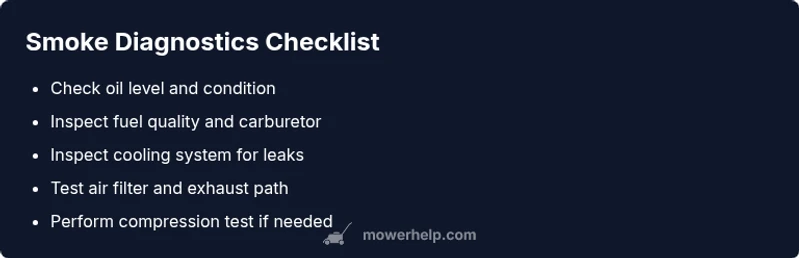
- Oil level and condition: Check the dipstick with the mower on a level surface. If the oil is above the max line or smells burnt, drain and replace to the correct level. Dirty oil can burn off and produce smoke more readily.
- Fuel quality: Use fresh gasoline and a clean fuel path. If the fuel is old or contaminated, drain and replace. Replace the fuel filter if your mower has one.
- Cooling system (if applicable): Look for signs of coolant leaks or puddles around the engine and radiator hoses. If you see coolant, do not run the engine—coolant-contaminated combustion can cause serious damage.
- Air intake and filter: A clogged air filter can cause rich fuel mixtures and smoky exhaust. Replace if dirty and ensure the carburetor isn’t starved for air.
- Carburetor and spark plug: Check for a flooded carburetor by inspecting the air for fuel-rich odor and perform a basic spark plug test to ensure proper ignition. A fouled spark plug can worsen combustion and smoke conditions.
If any of these checks reveal a clear problem (overfill, bad fuel, coolant leak), fix those issues first and re-test. If smoke persists after basic checks, proceed to more detailed diagnostics or contact a professional.
Diagnostic flow: symptom to diagnosis to fixes
The symptom is clear: white smoke from the mower exhaust after starting or during operation. The fastest route to a reliable diagnosis is a stepwise flow:
- Symptom confirmation: Is the smoke continuous or intermittent? Does it occur when starting from cold or warm engine? Note any accompanying smells (burnt oil, coolant, or fuel) and whether the engine performance changes as it runs.
- Primary causes: Oil-related issues (overfill or burning oil), coolant intrusion (head gasket leak), water or stale fuel contamination, or carburetor flooding.
- Supporting tests: Oil condition check, coolant check, fuel inspection, air/fuel mixture inspection, and spark plug condition. A compression test or leak-down test can confirm internal damage if the smoke persists after basic fixes.
- Probable diagnosis path: If oil burns and oil lever is correct, check for gasket leaks; if coolant is present, inspect the head gasket; if fuel issues are suspected, drain and replace fuel and service carburetor.
- Solutions: Address the root cause with oil changes, gasket repair, carburetor cleaning, or professional engine service as needed.
Safety reminder: if you’re unsure about any step, abort and contact a professional. Avoid running the engine with coolant leaks or severe oil contamination to prevent costly damage.
Step-by-step: fix for the most common cause
- Confirm oil level, drain if overfilled, and replace with fresh oil to the correct level. Run the engine briefly to see if the smoke subsides. Tip: Use a clean drain pan and proper oil grade.
- Inspect for oil leaks around the engine seals and valve covers; tighten or replace gaskets as needed. Tip: A leak often shows as a wet area along the gasket seams.
- Check fuel quality; drain stale fuel and replace with fresh gasoline. Clean or replace the fuel filter and inspect the carburetor for varnish or varnish buildup. Tip: Test fuel flow with the petcock (if equipped) and ensure the line is clear.
- Clean or replace the air filter; ensure unrestricted air intake for proper combustion. Tip: A clean air path improves combustion and reduces smoke likelihood.
- Test the cooling system for leaks (if your engine is water-cooled). Replace any faulty hoses or seals. Tip: Do not run the engine if you see active leaks.
- Inspect the carburetor; if flooding or improper idle, perform a basic cleaning and re-synchronize the idle and low-speed circuits. Tip: A flooded carburetor can produce white exhaust due to raw fuel vapor.
- If smoke persists, perform a compression or leak-down test to check for head gasket or piston-ring problems. Tip: A professional should interpret compression results for accuracy.
- Reassemble everything and run the mower under a light load to verify smoke-free operation. Tip: Document any changes and monitor oil and coolant levels after a test run.
Estimated total time: about 45-75 minutes depending on conditions and tools available.
Tips & Warnings
- Always disconnect the spark plug before inspecting or disassembling engine components to prevent accidental starts.
- If you notice coolant contamination or a strong burning oil odor, stop using the mower and seek professional service—damage can escalate quickly.
- Use high-quality, fresh fuel and proper oil grades specified by the mower manufacturer.
- Avoid running the mower with an unknown leak or a suspected head gasket issue; continuing operation risks radiator or cylinder damage.
- When in doubt, opt for a professional diagnostic to prevent costly mistakes.
Key takeaways and prevention tips
- Regular maintenance detects issues before they become smoke problems.
- Use fresh fuel, monitor oil levels, and clean the air filter to prevent smoke-causing conditions.
- Address coolant leaks and gasket problems promptly to protect the engine.
- If white smoke persists after basic checks, stop and seek professional help to avoid major repairs later.
- Keep a maintenance log and perform seasonal service to minimize recurring issues.
Steps
Estimated time: 45-75 minutes
- 1
Safety prep and initial checks
Disconnect the spark plug, remove the battery if applicable, and ensure the mower is on a stable surface. Check the oil level and look for obvious coolant leaks or signs of contamination. This initial check sets the stage for safe troubleshooting.
Tip: Keep a rag handy for quick wipe-downs and a container to collect any spilled fluids. - 2
Verify oil quality and level
Check the dipstick, ensure the oil is within the recommended range, and smell for burning odor. If overfull, drain carefully; if dirty, plan an oil change.
Tip: Never overfill oil; too much oil can foam and burn, worsening smoke. - 3
Assess fuel condition
Inspect the fuel for contamination; drain stale fuel and replace with fresh, using the mower's fuel recommendations. Replace the fuel filter if present.
Tip: Store fuel in a clean container and avoid mixing new fuel with old. - 4
Check air intake and carburetor
Inspect the air filter for dirt and replace if clogged. If carburetor flooding is suspected, perform a basic cleaning and reassembly, ensuring no fuel leaks.
Tip: A clean air path improves combustion and reduces smoke. - 5
Inspect cooling system
If your engine uses coolant, check hoses and the radiator for leaks and signs of cross-contamination. Replace any faulty parts before starting the engine again.
Tip: Do not run with a coolant leak; overheating can cause severe damage. - 6
Carburetor and spark plug check
Remove and inspect the spark plug for fouling; if needed, clean or replace. An improperly firing plug can contribute to smoky exhaust.
Tip: Use the exact spark plug type recommended by the manufacturer. - 7
Compression testing
If smoke persists, perform a compression test or leak-down test to verify head gasket or ring wear. High or low results indicate engine damage requiring professional service.
Tip: Contract a pro for accurate compression readings and interpretation. - 8
Test run and verification
Reassemble components, start the mower, and run under light load. Observe smoke behavior, check fluid levels again, and ensure normal operation without abnormal odors.
Tip: Keep a log of readings and symptoms for future reference.
Diagnosis: Engine emits white smoke from exhaust after startup or during operation
Possible Causes
- highBlown head gasket allowing coolant to enter the combustion chamber
- mediumWater or fuel contamination in the fuel system or carburetor flooding
- lowOverfilled or burning engine oil due to wear or improper oil level
Fixes
- mediumIf coolant intrusion is suspected, stop using the mower and perform a gasket/cooling system inspection; avoid running the engine until diagnosed by a pro
- easyDrain and replace engine oil if overfilled or degraded; run a short test and monitor smoke
- easyDrain stale or contaminated fuel, replace fuel filter, and clean the carburetor; test after reassembly
- hardRun a compression or leak-down test to confirm head gasket or piston-ring damage; consult a professional for interpretation
Got Questions?
What does white smoke from a lawn mower typically indicate?
White smoke often signals an issue such as coolant intrusion, fuel contamination, or oil burning. It’s not normal and should be diagnosed promptly to prevent engine damage.
White smoke usually means there’s an engine issue like coolant getting into the combustion chamber or dirty fuel affecting combustion. It’s not normal—check fundamentals and seek professional help if it continues.
Can overfilling oil cause white smoke?
Yes, overfilling oil can cause foaming and burning conditions that produce white smoke. Drain to the recommended level and replace with fresh oil.
Overfilling oil can lead to burning and smoke. Drain to the correct level and replace with fresh oil.
When should I worry about a blown head gasket in a mower?
A blown head gasket may cause coolant in the combustion chamber, white smoke, and overheating. Look for coolant loss, oil-coolant mixing, or milky oil; seek professional diagnosis.
If you suspect a head gasket, look for coolant in the oil or milky oil. That usually means professional service is needed.
Is white smoke before starting normal on a cold mower?
Transient white smoke on a cold start can be condensation; if it clears after warm-up, it may be okay. Persistent smoke after warm-up needs inspection.
A little white smoke at first start can be condensation, but if it sticks around after warming up, it needs checking.
What maintenance fixes help prevent white smoke?
Regular oil changes, fuel-quality maintenance, air filter cleanliness, and carburetor care reduce white smoke risk. Keep coolant systems inspected if your mower uses liquid cooling.
Keep up with oil changes, clean air filters, and proper fuel to prevent white smoke.
Should I run the mower if it’s smoking?
No. If smoke appears, stop the engine, allow it to cool, and perform a structured check. Continuing to run can cause severe engine damage.
If it smokes, stop and diagnose before running again to avoid damage.
The Essentials
- Inspect oil, coolant, and fuel first to locate the smoke source
- Don’t ignore white smoke; it indicates potential engine damage
- Follow a methodical diagnostic flow for accurate fixes
- When in doubt, consult a professional to prevent costly repairs
- Maintain a routine maintenance schedule to prevent future smoking