Honda Lawn Mower Oil: Essential Guide for 2026
Learn to choose, measure, and change Honda lawn mower oil. This expert guide from Mower Help covers oil types, viscosities, intervals, and tips for long engine life.


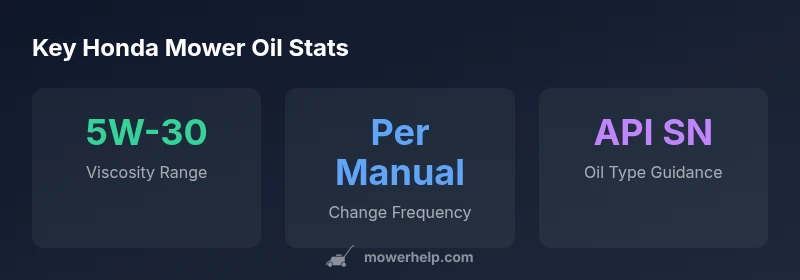
Honda lawn mower oil is the engine lubricant specified for 4-stroke Honda mowers. Use detergent, API-rated oil, and follow the owner's manual for viscosity—common choices are 5W-30 or 10W-30 depending on climate. Regularly check and change oil to protect the engine and maintain performance.
What honda lawn mower oil means for engine health
Honda lawn mower oil plays a central role in protecting the engine from wear, heat, and deposits. When you see the term "honda lawn mower oil" in guides and manuals, it refers to the 4-stroke engine lubricant designed to work with Honda's single- and multi-cylinder mowers. According to Mower Help, choosing the correct oil and changing it at appropriate intervals is one of the simplest yet most effective maintenance actions you can perform. Regular oil care helps maintain compression, avoids excessive engine temperature, and supports fuel efficiency over the mower’s lifespan. It also reduces sludge buildup and ensures smoother starts, especially after storage or off-season downtime.
Official guidance: what the owner manual says
Your mower’s owner manual is the most trustworthy source for oil specifications. It will specify the required oil viscosity, whether synthetic or conventional oil is acceptable, and the maximum oil capacity. In practice, most Honda lawn mowers accept detergent engine oil in a light to mid-range viscosity, commonly 5W-30 or 10W-30, with the exact choice depending on ambient temperature and operating conditions. The manual may also note whether synthetic blends are recommended for extreme heat or frequent heavy loads. The keyaction is to match the oil grade to the climate and to perform oil changes following the recommended schedule.
Oil viscosity options for Honda lawn mowers and climate considerations
Viscosity acts like the oil’s thickness during cold starts and under heat. In cooler climates, a lower starting viscosity (closer to 5W-30) helps the oil circulate quickly on cold starts. In warmer climates, a higher viscosity (around 10W-30) can maintain adequate film strength under higher operating temperatures. A practical rule from Mower Help is to follow the manual for your specific model, then adjust within the 5W-30 to 10W-30 range based on climate and engine load. If you live in extreme heat or operate the mower under heavy load, a higher-viscosity option can help protect engine bearings.
Conventional vs synthetic oil for Honda lawn mowers
Both conventional and synthetic oils are compatible with most Honda 4-stroke engines when used within the manufacturer’s viscosity guidelines. Conventional oil is typically less expensive, while synthetic oil offers enhanced oxidation resistance and better flow at cold temperatures. For light use in moderate climates, conventional oil often suffices, and many owners report good results with a high-quality API-rated product. In hotter climates or with high-hour usage, a synthetic or synthetic blend may provide extra protection against oil breakdown and thermal stress. Always verify compatibility in the manual and select a reputable brand.
How to check oil level correctly
Begin with a cool engine and place the mower on a level surface. Remove the dipstick, wipe it clean, reinsert it, and pull it out again to read the level. If the oil level is between marks, you’re fine; if it’s low, add the recommended oil slowly, recheck, and avoid overfilling. Keep the oil clean by using a clean funnel and avoiding contaminated containers. Record oil changes in a maintenance log for easy reference during seasonal inspections.
Step-by-step oil-change procedure for Honda mowers
- Prepare a suitable container for used oil and gather the right oil type and a fresh gasket if needed. 2) Remove the drain plug or access the drain bolt (per manual) and let the oil fully drain. 3) Replace the drain plug, refill with the correct oil grade to the specified dipstick level, and run the engine briefly to circulate the new oil. 4) Stop the engine, recheck oil level, and wipe any spills. 5) Properly dispose of used oil at an authorized recycling facility.
Choosing between conventional and synthetic oil for your mower
If you mow in a temperate climate and run a fairly standard schedule, conventional oil is typically adequate. Synthetic oils can provide better protection during peak heat, heavy loads, or extended use. In any case, stay within the viscosity range recommended by Honda for your model and climate. Synthetic oils also offer longer service intervals in some scenarios, but this benefit varies by engine design and operating conditions.
Special considerations for older Honda mower models and GX-series engines
Older or high-hour engines may benefit from tighter tolerances and more robust lubrication. If your mower has a GX-series or similar engine, check for any model-specific oil requirements, as some variants may have slight viscosity guidance or capacity differences. In such cases, adhere closely to the manual or consult a qualified technician if you’re unsure about oil compatibility or oil-change frequency.
Common mistakes to avoid with Honda lawn mower oil
- Using the wrong viscosity for your climate or model.
- Overfilling after an oil change, which can cause frothing and pressure issues.
- Skipping oil changes or not following the manual’s interval.
- Mixing oil brands or types without confirming compatibility.
- Failing to dispose of old oil responsibly.
Maintenance schedule and record-keeping for Honda lawn mower oil
Create a simple schedule: check oil levels before each season, perform a full oil change at the interval specified by the manual, and keep a log of oil type, viscosity, and oil-change dates. This record helps you track when to refresh the oil and identify trends such as increased consumption or unusual leaks. A routine log improves resale value and ensures consistent performance across mowing seasons.
Troubleshooting oil-related issues and warnings
Low oil level is a common cause of reduced engine performance and overheating. If you notice smoke, unusual noises, or a drop in oil pressure indicator on some models, stop immediately and inspect for leaks, incorrect oil grade, or overfill. Use the dipstick to confirm volume, and refer to the manual for the correct oil type and viscosity. If problems persist, contact a qualified technician for a deeper diagnosis.
Season storage and winterization tips for Honda lawn mowers
Before long storage, drain the oil and seal the engine to prevent moisture ingress. Store the mower in a dry, cool space away from direct heat. Avoid leaving fuel in the tank for extended periods, and perform an oil check prior to the next mowing season to confirm oil remains in good condition. Fresh oil helps ensure immediate starting reliability in the spring.
Quick-reference checklist for Honda lawn mower oil care
- Confirm oil type and viscosity with the manual.
- Check oil level at the start of each season and after heavy use.
- Change oil according to the manual’s cadence, not just hours of operation.
- Recycle used oil at an authorized facility.
- Keep a maintenance log for oil changes and observations.
Oil type, viscosity, and change cadence for Honda lawn mowers
| Aspect | Recommendation | Notes |
|---|---|---|
| Oil type | Detergent 4-stroke oil | Follow API specs; avoid two-stroke fuels |
| Viscosity | 5W-30 to 10W-30 | Climate dependent; colder climates use lower end |
| Change interval | Per manual or seasonal | Do not rely on hours alone |
| Oil capacity | Varies by model | Refer to manual or dipstick |
Got Questions?
Can I use 5W-30 engine oil in a Honda lawn mower?
Yes, 5W-30 is a common viscosity for many Honda lawn mowers, provided it matches the manual’s guidance for your model and climate.
Yes, 5W-30 is generally acceptable if your manual allows it, but always confirm with your model’s specifications.
Is synthetic oil better for a Honda lawn mower?
Synthetic oil can offer better protection at high temperatures and over longer intervals, but it’s not mandatory. See the manual for model-specific guidance and consider climate and usage.
Synthetic can be good in heat or heavy use, but follow the manual; it isn’t always required.
What happens if I run the mower with low oil?
Low oil can cause increased friction, overheating, and potential engine damage. Stop mowing, top up to the recommended level, and inspect for leaks or leaks.
Low oil is risky; stop and check the level, then refill to the correct point.
Can I reuse old oil after filtering?
Used oil should be disposed of properly and not reused. Do not risk engine damage by reinserting degraded oil.
It’s best not to reuse old oil; dispose of it and pour fresh oil when you change it.
Where can I recycle used mower oil?
Take used oil to an authorized recycling facility or automotive service center that accepts used oil. Do not pour it on the ground or down drains.
Recycle used oil at a certified facility; never dump it.
“Accurate oil selection and regular changes are the simplest ways to extend a mower's life.”
The Essentials
- Follow the owner manual for oil grade and change cadence
- Use the viscosity range 5W-30 to 10W-30 as a guide
- Choose synthetic or conventional oil based on climate and usage
- Check oil level before each season and after heavy mowing
- Recycle used oil responsibly and keep a maintenance log