Is Lawn Mower Gas the Same as Car Gas? A Practical Guide
A comprehensive comparison of lawn mower gasoline versus car gasoline, examining ethanol content, additives, compatibility, and fuel storage for DIY mower maintenance.


The base gasoline used for cars and lawn mowers is the same chemical family, but practical use diverges. Is lawn mower gas the same as car gas? Not always—mowers often benefit from ethanol-free blends or specialized storage, and 2-stroke engines require unique fuel-oil mixes. Always consult your mower’s manual and choose fuel accordingly.
Is is lawn mower gas the same as car gas? Setting the frame
According to Mower Help, the short answer to the question is: gasoline is the same chemical family used by both cars and small engines, but the practical use differs. The phrase "is lawn mower gas the same as car gas" is about fuel formulation, ethanol content, and engine design rather than a fundamental chemical divergence. In many regions, modern lawn mowers run on standard unleaded gasoline, yet manufacturers often prefer ethanol-free fuel for longevity and stable storage. The car you drive and the mower you push may tolerate the same base fuel in a pinch, but wrong blends, poor storage, or neglecting maintenance can lead to starting problems, varnish buildup, or fuel-system damage. This article digs into the distinctions and provides practical guidelines for selecting fuel, storing it, and avoiding headaches during routine mower maintenance.
Fuel chemistry basics for small engines
Gasoline is a simple hydrocarbon blend, but the exact mix varies by region and supplier. For lawn mowers, the key differences often matter less at a glance, but small engines are particularly sensitive to how fuel is formulated. In many places, you will encounter ethanol-blended fuels (like E10) at the pump, which can affect flow, phase stability, and gasket sealing in older carburetors. Mower manufacturers and service technicians, including the Mower Help team, emphasize checking the owner’s manual for allowed fuel types. In general, the base solvent is the same as car fuel, but the practical guidelines around ethanol content, additives, and storage are what separate the two uses.
Engine design and fuel compatibility: 2-stroke vs 4-stroke
Lawn mower engines come in two broad categories: 2-stroke and 4-stroke. A 2-stroke engine requires fuel mixed with oil, while a 4-stroke engine uses straight gasoline plus separate oil. This structural difference means you cannot simply substitute regular car gasoline for a 2-stroke engine without following the manufacturer’s oil-mix ratio. For 4-stroke mowers, the fuel choice tends to mirror car-grade gasoline more closely, but you should still consider ethanol content and age of the fuel. The takeaway is: always match the fuel to the engine type and consult the manual when in doubt.
Ethanol content and the moisture problem
Ethanol in fuels can attract moisture from the air, leading to water in the fuel that can cause phase separation and corrosion of fuel-system components. Small engines, especially older carbureted ones, are vulnerable to this. Ethanol-free fuels or fuel with a very low ethanol content are often recommended for lawn mowers, particularly for winter storage or infrequent use. When you own both a car and a mower, you may find yourself juggling two fuel streams—one ethanol-free for the mower and one standard automotive fuel for the car—unless you consistently use a stabilized fuel designed for small engines.
Detergents, stabilizers, and other additives
Automotive fuels typically include detergents meant to keep car injectors clean, but small engines use carburetors, which respond differently to detergents. The presence or absence of detergents and stabilizers can influence starting performance and long-term cleanliness of the carburetor and fuel lines. Mower manufacturers often recommend storing fuel with a stabilizer, and using ethanol-free fuel if the engine is sensitive to ethanol. In practice, you should use the fuel type suggested by the mower’s manual and implement a stabilizer during storage to reduce varnish and gum formation.
Storage, shelf life, and practical handling
Fuel stored for extended periods can degrade and lead to starting problems. For lawn mowers, especially seasonal equipment, storing ethanol-free gasoline with a stabilizer can improve shelf life and performance. If you rely on ethanol-blended fuels, consider draining and refilling before long storage or using a stabilizer designed for ethanol fuels. Always label your fuel cans clearly and keep them in a cool, ventilated area away from heat sources. The goal is to minimize moisture ingress and fuel separation that can clog small-engine fuel systems.
How to choose the right fuel for your mower: step-by-step
- Check the owner’s manual for the recommended fuel type and octane rating.
- If allowed, prefer ethanol-free or very low-ethanol blends for long-term storage.
- For 2-stroke engines, mix gasoline with the manufacturer’s oil at the correct ratio; never run straight gasoline in a 2-stroke.
- Use a stabilizer if you store fuel for more than 30 days, and periodically run the mower to burn fresh fuel.
- Keep a consistent supply from a single source to avoid unexpected blend changes.
What happens if you use car gas in a mower? Risks and symptoms
Using car gasoline in a lawn mower is not universally dangerous, but it can cause issues depending on blend and engine type. Ethanol-rich fuels can lead to water absorption, leading to starting problems or varnish buildup in carburetors. In 2-stroke engines, the wrong fuel-oil mix can cause severe damage. If you notice hard starting, rough running, or poor acceleration, consider inspecting the fuel choice, draining stale fuel, and using the recommended blend. Regular maintenance and following the manual can prevent most fuel-related headaches.
What if you use mower gas in a car? Why that matters for car engines
Mower gas is typically interchangeable with car gas in terms of base gasoline, but some mower-specific fuels use different additives and storage considerations. Generally, car engines tolerate standard gasoline, but the detergents and ethanol content optimized for automobiles may vary from small-engine formulations. The key is to avoid cross-contamination and to use appropriate storage practices and stabilizers when transferring fuel between equipment. If you store mower fuel for car use, ensure it meets your car’s fuel requirements and vice versa.
Real-world scenarios: urban homeowners vs rural properties
Urban homeowners often want quick, easy fueling with readily available gasoline. In such scenarios, the choice between mower-specific fuel or standard automotive fuel comes down to storage space and seasonal use. Rural property owners may encounter longer storage times and need to commit to ethanol-free fuel for the mower. The bottom line is to align fuel choice with usage patterns, engine type, and local fuel availability. The Mower Help team emphasizes planning ahead to avoid last-minute fuel mix decisions that could affect performance.
Common myths and quick-facts
Myth: You must always use ethanol-free fuel for cars too. Truth: Cars are designed to tolerate standard gasoline, though ethanol content can vary by region. Myth: All mower engines tolerate ethanol blends equally. Truth: Some engines are more sensitive, especially older carbureted models. Myth: Mixed fuel is always better for longevity. Truth: Wrong mixes, stale fuel, and improper storage can negate any benefits. Practical takeaway: Always start with the manual, use stabilized fuel for storage, and avoid cross-blending fuels without guidance.
Quick decision framework for fuel selection
- Always consult the mower manual for fuel type and octane. - Prefer ethanol-free fuel for long-term storage. - For 2-stroke engines, never run straight gasoline without oil-mix. - Use stabilizers for stored fuel and rotate stock regularly. - If in doubt, choose a fuel type recommended by the engine manufacturer and stick to one consistent source.
Comparison
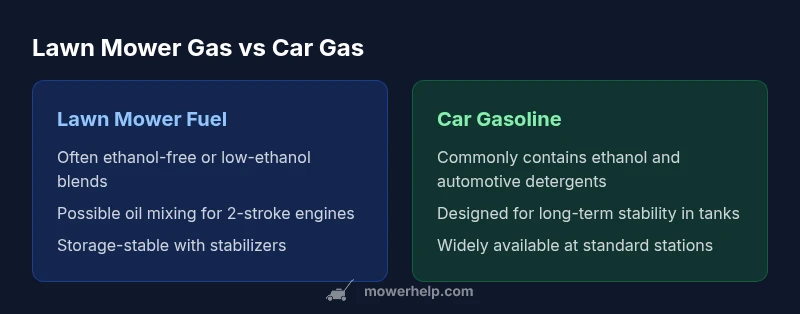
| Feature | Lawn mower fuel (typical gasoline) | Car gasoline (regular automotive fuel) |
|---|---|---|
| Fuel base | Gasoline suitable for small engines with ethanol considerations | Car gasoline with a similar hydrocarbon base |
| Ethanol content typical | Often ethanol-free or low-ethanol blends recommended for mowers; check local supply | Typically contains ethanol (e.g., common automotive blends vary by region) |
| Detergents/additives | Detergent levels may differ; small engines benefit from stabilizers and ethanol considerations | Automotive fuels often include detergents for engine cleanliness and emissions control |
| Storage stability | Ethanol-containing fuels absorb moisture; ethanol-free fuels store longer for small engines | Ethanol-containing fuels also store reasonably well but may require stabilizers |
| Availability and cost | Mower-specific or ethanol-free options can be harder to find and sometimes pricier | Car fuels are widely available and priced regionally |
| Best for | Older small engines or engines sensitive to ethanol | Modern vehicles and general-purpose engines |
Benefits
- Convenience of using widely available gasoline
- Simplified fuel management with a single fuel type for multiple tools
- Potentially lower maintenance complexity when following manufacturer guidance
- Ethanol-free options can extend storage life and reduce varnish buildup
Cons
- Risk of varnish or moisture-related issues when using ethanol-containing fuels in small engines
- Some mower engines require ethanol-free fuel or specific oil mixes for 2-stroke designs
- Using the wrong fuel in a mower can affect warranty coverage in some scenarios
Choose mower-specific or ethanol-free fuel for lawn mowers; car gasoline is acceptable under certain conditions but warrants caution.
Fuel selection should prioritize the mower manual, engine type, and ethanol content. When in doubt, use ethanol-free fuel for long-term storage and follow proper maintenance practices to protect small-engine fuel systems.
Got Questions?
Can I use car gasoline in a lawn mower without problems?
In many cases, car gasoline can run a mower, but ethanol content and the engine type matter. Check the owner's manual and use a fuel formulation appropriate for your mower, especially for older carbureted engines.
Yes, car gasoline can work in many mowers, but always check your manual for ethanol content and engine type.
What fuel should I use for a 2-stroke lawn mower?
A 2-stroke engine requires gasoline mixed with oil at the manufacturer’s recommended ratio. Do not run straight gasoline in a 2-stroke engine.
Use the manufacturer’s oil-gasoline mix ratio for 2-stroke mowers.
Is ethanol-free fuel worth it for small engines?
For long storage and older engines, ethanol-free fuel can reduce moisture-related issues and varnish. If your area commonly uses ethanol blends, consider stabilizers and regular maintenance.
Ethanol-free fuel can improve storage and longevity for small engines.
Will using car gas affect warranty on a mower?
Using the wrong fuel can affect warranty coverage if it causes engine damage. Always follow the mower manufacturer’s fuel recommendations to protect warranty terms.
Follow the mower’s fuel guidelines to protect warranty coverage.
How should I store mower fuel long-term?
Store fuel in a clean, labeled container, away from heat. Add a fuel stabilizer and run the engine periodically to circulate fuel, especially if ethanol-containing fuels are used.
Use a labeled container with stabilizer and rotate stock regularly.
Does octane matter differently for mowers than cars?
Most lawn mowers don’t require premium octane; follow the manual. Higher octane fuels are not a guarantee of better performance in small engines and can be unnecessary.
Stick to the octane recommended in the manual; higher octane isn't always needed.
The Essentials
- Always start with the mower manual to pick fuel type
- Ethical considerations: ethanol content matters for small engines
- Store fuel with stabilizers; rotate stock regularly
- 2-stroke engines require oil-fuel mixing; never run straight gasoline
- Car gas and mower gas share a base, but additives and ethanol rules differ