Riding Mowers Near Me: Local Buying Guide 2026 Tips
Find riding mowers near you with this data-driven 2026 buying guide. Compare features, price ranges, warranties, and service options from trusted local dealers.


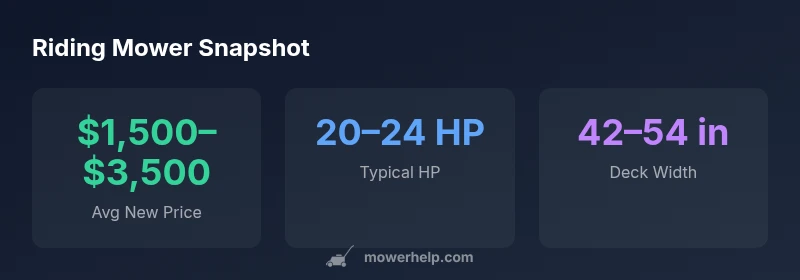
Riding mowers near you typically fall into a broad price range depending on size, features, and region. According to Mower Help Analysis, 2026, most new mid-range riders cost about $1,500 to $3,500, while premium models can exceed $4,000. Used options vary widely with hours and condition. Start by your yard size, fuel preference, and desired attachments, then compare local dealers and rental yards.
Local Availability and Dealer Networks
Finding riding mowers near me starts with mapping out local dealers, big-box retailers, and reputable online marketplaces. The landscape in 2026 continues to favor hybrid availability: in-person showrooms for test drives, plus online catalogs with no-hassle pickup and delivery options. For homeowners, the most practical approach is to start with a yard assessment: what size mower do you need, what fuel you prefer, and how important are attachments like baggers or snow blades. According to Mower Help, the strongest buying signals come from dealers that offer on-site service and a clear parts policy. In many regions, authorized dealers also provide financing, maintenance plans, and extended warranties that add long-term value. When you search for riding mowers near you, use terms like 'riding mower' plus your ZIP code or city to filter results, then cross-check with reviews from other local customers. Test-drive models that fit your yard: test acceleration, turning radius, mower height, and seat comfort. Remember: a local dealer network reduces downtime for service calls and makes routine maintenance more convenient, especially during peak mowing seasons.
Key Features That Matter for Riding Mowers
Modern riding mowers are defined by several core features that determine value and longevity. Start with engine horsepower (HP) and deck width: most homeowners selecting a two-acre lot will lean toward 20–24 HP with a 42–54 inch deck for efficiency. Transmission type matters too: hydrostatic gear trains offer smoother speed control and easier maneuvering on uneven terrain, while direct-gear transmissions can be more rugged and cost-efficient. Fuel type remains mostly gasoline, though electric and diesel options exist in higher-end lines. Other important choices include cutting height range, seat ergonomics, and accessibility of maintenance points (oil filter, air filter, spark plugs). Attachments such as baggers, mulching kits, snow blades, and cart hooks can expand functionality but add upfront cost. As you compare local offerings, prioritize models that provide parts availability and a dealer network for service visits. A comfortable seat, intuitive controls, and clear maintenance intervals are often overlooked but crucial for long-term satisfaction. brand-new models may include comprehensive warranties that cover parts and labor for several years, a meaningful consideration when evaluating 2–5 year ownership plans.
New vs Used: Value Proposition by Region
Choosing between a new and a used riding mower depends on your yard size, maintenance readiness, and budget. New models typically come with full warranties and the latest efficiency features, while used units offer immediate cost savings but require diligent inspection. In many markets, used riding mowers can be found in the $500–$2,000 range, depending on hours, basic condition, and whether critical components like the drive belt and blades have been replaced recently. New mid-range riders commonly sit in the $1,500–$3,500 bracket, with premium models climbing higher due to larger decks, more powerful engines, and advanced features. Regional supply, seasonal promotions, and financing offers can significantly affect final pricing. When evaluating used units, check service history, blade integrity, battery condition for electric variants, and whether attachments (bagger, mulcher, snow plow) are compatible with your model. According to Mower Help Analysis, 2026, the best value often comes from a locally supported model that balances price, wear, and availability of parts.
How to Compare Local Offers: A Step-by-Step Checklist
To effectively compare local offers, follow a structured checklist:
- Define yard size and terrain to set deck width and HP needs.
- Decide on fuel type and maintenance preferences (gas, diesel, or electric).
- List must-have attachments and verify compatibility.
- Visit at least two authorized dealers to test-drive and inspect the mowing deck.
- Request price quotes with available financing, warranties, and service plans.
- Compare after-sales support, including parts availability and turnaround time for service.
- Check for promotions, delivery options, and theft protection or extended warranties.
- Read local customer reviews focusing on service quality and dealer responsiveness.
This approach helps you avoid overspending and ensures you can service your mower locally for years to come. As you evaluate on-site demos, pay attention to ride comfort, steering, visibility, and operator ergonomics. Local conditions—like steep slopes or frequent debris—can affect what specs are truly essential in your area.
Maintenance and Longevity: After Purchase Care
Proper maintenance is the cornerstone of longevity for riding mowers near me. Start with regular oil changes according to the owner’s manual, air filter inspections, and spark plug checks for gasoline models. For cold seasons, prep storage by cleaning the cutting deck, stabilizing fuel, and removing moisture from the engine compartment. Blades should be sharpened or replaced based on cut quality and usage, not on a fixed schedule. Staying on top of belt tension, battery health (for electric variants), and tire pressure prevents common breakdowns. Keeping a log of service visits helps track parts replacements and warranties. Avoid storing a mower in damp or dusty environments, which can accelerate corrosion and wear. The right maintenance plan reduces downtime and maximizes resale value if you decide to upgrade. Local service centers and dealer-backed maintenance plans are valuable assets; confirm their availability and response times when you buy.
Buying Guide: Where to Shop and How to Verify
A solid strategy when searching for riding mowers near you is to start with authorized dealers and major retailers that offer certified pre-owned programs. Compare two to three local outlets to gauge pricing consistency and the breadth of inventory. Verify warranty terms, parts availability, and whether service is included in the purchase price. Ask about delivery options, financing terms, and whether the dealer provides a turnkey maintenance schedule. If buying online, ensure the seller offers local pickup or installation services and has a straightforward return policy. Read customer reviews focusing on service quality, response times, and accuracy of product descriptions. For added confidence, seek models with a published service history and documented maintenance.
Common Pitfalls When Searching for Riding Mowers Near Me
Common mistakes include underestimating yard size, failing to account for slope or terrain, and prioritizing price over service support. Another pitfall is ignoring deck width and turning radius, which can affect mowing efficiency on irregular lots. Some buyers overlook the availability of local parts and trained technicians, a mistake that leads to extended downtime. Finally, skipping a proper test-drive can mask ergonomics issues, such as uncomfortable seating or awkward pedal placement, which affects long-term usability.
2026 Market Trends for Riding Mowers and Your Local Options
The 2026 market shows steady demand for riding mowers, with growing interest in zero-turn options for large flat areas and hydromechanical transmissions for smoother operation on varied terrain. Electric and hybrid models are increasingly common in mid-range lines, offering quieter operation and lower running costs. Consumers increasingly expect robust dealer networks, on-site service, and readily available parts, especially in suburban neighborhoods. In many regions, you’ll find stronger promotions from authorized dealers that bundle warranties with maintenance plans. Keeping an eye on local inventories and service offerings ensures you choose a model that remains economical over its life cycle, not just at purchase.
Closing Thoughts and Smart Local Strategy
When you search for riding mowers near me, prioritize total ownership costs, including maintenance, fuel, and potential downtime. Use local dealer networks to secure timely service and genuine parts, especially in peak mowing seasons. A thoughtful mix of model selection, service coverage, and realistic expectations about price ranges will help you land a mower that performs well for years. Based on the data and field experience shared by the Mower Help team, the smart shopper in 2026 focuses on local availability, genuine warranties, and ongoing support as much as upfront price.
Riding mower price and specs snapshot (Mower Help Analysis, 2026)
| Aspect | Typical Range / Notes | Source |
|---|---|---|
| New rider price | $1,500–$3,500 | Mower Help Analysis, 2026 |
| Used rider price | $500–$2,000 | Mower Help Analysis, 2026 |
| Deck width | 42–54 inches | Mower Help Analysis, 2026 |
| Horsepower | 20–24 HP | Mower Help Analysis, 2026 |
Got Questions?
What should I consider when searching for riding mowers near me?
Start by assessing yard size, terrain, and preferred fuel type. Look for local dealers with service departments and genuine parts, and compare at least two offers. Test-drive models to evaluate comfort and visibility, and confirm warranty terms before purchase.
Begin with yard size and terrain, then compare two local dealers with service options and test-drive models to verify comfort and warranty.
Are used riding mowers a good deal?
Used units can offer substantial savings, but hours, wear, and maintenance history heavily affect value. Inspect the deck, belts, and blades, and ask for maintenance records and recent service work.
Used mowers can be bargains if well maintained; check hours and service history before buying.
Which brands are most reliable for riding mowers?
Brand reliability varies by region, but common names with strong dealer support include Husqvarna, Toro, John Deere, and Mower brands with broad service networks. Check local availability of parts and technicians before choosing.
Look for brands with solid dealer networks and easy access to service and parts.
Should I buy online or from a local dealer?
Local dealers simplify test-drives, warranty service, and parts availability. Online options can offer better prices, but verify delivery, setup, and after-sales support before purchase.
Local dealers win for test-driving and service; online can save money, just check support.
What maintenance tasks are essential after purchase?
Follow the owner’s manual for oil changes, air and fuel filters, and blade maintenance. Regular deck cleaning, belt checks, and battery health (for electric variants) prevent downtime and extend life.
Stick to the manual for oils and filters, clean the deck, and watch belts and batteries.
How can I verify warranty and service in my area?
Confirm coverage length, parts availability, and labor terms with the dealer. Ask about in-network service centers and response times to ensure timely support locally.
Check the warranty details with the dealer and confirm local service availability.
“In most regions, the best value comes from a well-maintained riding mower acquired from an authorized dealer, with a plan for routine service.”
The Essentials
- Define yard size to pick deck width and HP.
- Compare at least two local dealers for service and price.
- Prioritize dealer warranties and maintenance plans.
- Inspect test-drive comfort and control layout before buying.