How to Use a Lawn Mower Blade Removal Tool
Learn how to safely use a lawn mower blade removal tool to remove, inspect, and replace blades. This educational guide covers PPE, tool selection, step-by-step actions, and maintenance tips for DIY homeowners.


Goal: Use a lawn mower blade removal tool to safely remove, inspect, and replace a dull or damaged blade. This guide covers safe setup, tool selection, and step-by-step actions you can perform at home. You’ll learn how to minimize damage, avoid injury, and extend your mower’s life with proper blade care.
Why use a lawn mower blade removal tool
Using a purpose-built blade removal tool minimizes the risk of damaging the blade arbor or bolt and reduces the chance of personal injury during removal. According to Mower Help, selecting the right removal tool for your mower’s blade bolt size is a foundational safety step that pays dividends in the long run. The Mower Help team found that tools designed for mower blades are more likely to fit securely, transfer torque evenly, and prevent strip-outs or slipped bolts. This part of blade maintenance isn’t cosmetic—it protects both your mower and your hands, ensuring a clean, controlled removal and safer reassembly. When you use the correct tool, you also make it easier to assess blade condition and mounting hardware before reinstalling a fresh blade.
Safety first: PPE and setup
Personal protective equipment (PPE) is non-negotiable for blade work. Wear cut-resistant gloves, safety glasses or goggles, and sturdy, closed-toe footwear. Tie back long hair and remove jewelry to prevent snagging. Work on a flat, uncluttered surface and disconnect the mower from any power source or the ignition system before starting. Keep a shallow catch tray or a rag handy to collect debris and splinters. A clean workspace helps prevent slips and ensures you can see the blade mounting area clearly. The initial setup is where most safety incidents are avoided, so take your time and double-check every connection before applying leverage.
Tools, blades, and blade types you might encounter
Blade removal tools come in several sizes to match common blade bolts found on walk-behind mowers. Along with the tool, you’ll need a socket wrench or ratchet that fits the blade bolt, a set of wrenches, and locking pliers as needed. Blades vary by shape (mulching vs. high-lift) and mounting pattern; some use a center bolt, others rely on a flange nut. Before you begin, identify your mower model and blade type from the user manual or the blade itself. If you’re unsure of bolt size, you can measure the nut width or check the arbor specifications. A mismatch between tool and bolt can strip the fastener or cause damage to the blade or spindle.
Inspect blade condition before removal
Do a quick, careful inspection of the blade for cracks, bending, or excessive wear. A dull or chipped blade can be more dangerous to handle and may indicate it needs replacement rather than sharpening. Check the mounting hardware—bolts, nuts, and spacers—for rust, thread damage, or looseness. If anything looks compromised, plan for replacement of the blade and any associated hardware rather than forcing a fix. Cleaning the blade mounting surface helps you identify burrs or burr interference that could hinder reassembly. This prep step reduces surprises during removal and helps you determine whether a replacement blade is warranted.
Step-by-step workflow overview
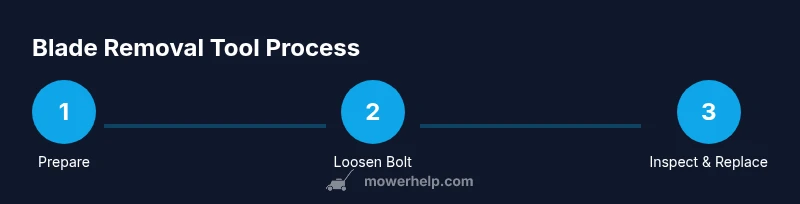
Before you dive into the numbered steps, note that the exact order may vary slightly depending on your mower model. The core principle is to secure the blade, relieve tension, and reassemble with the correct orientation. This section gives you the practical framework for the hands-on steps that follow, including how to verify torque settings and ensure safe testing after reassembly. Remember to keep your workspace tidy and use a magnet or rag to collect small fasteners so nothing is lost or dropped into the mower cavity. The more methodical you are at this stage, the smoother the process will be when you actually perform the blade removal.
Common mistakes and maintenance tips
Common mistakes include neglecting to disconnect power, using an improvised tool that doesn’t fit, and failing to secure the blade during removal. To avoid these issues, always verify tool compatibility and use a locking mechanism to prevent blade rotation while loosening bolts. After removal, clean the spindle and bolt holes to prevent debris from causing misalignment. Lubricating bolt threads lightly can help future removals, but avoid over-lubricating as it may attract dirt. Regular blade maintenance—inspecting for wear, replacing damaged blades promptly, and keeping hardware clean—extends mower life and reduces downtime.
When to replace vs sharpen and final checks
Sharpening is appropriate for blades with even wear and intact edges, but any signs of cracks, severe bending, or missing sections require replacement. If your mower blade shows warping, or if the leading edge is severely chipped, replacement is safer and more effective. After reassembly, perform a low-risk test run on a clear patch of grass to confirm the blade spins true and produces an even cut. If you hear unusual noises or see vibration, pause and recheck fastening torque and blade orientation. Regular upkeep—at least seasonally or whenever you notice reduced performance—keeps the mower operating safely and efficiently.
Tools & Materials
- Lawn mower blade removal tool(Ensure compatibility with your blade bolt size (common sizes are 3/8" and 1/2" sockets).)
- Socket wrench set with breaker bar(Choose the size that fits your blade bolt; a breaker bar helps with stubborn fasteners.)
- Locking pliers (vise grips)(Use to secure the blade once loosened, preventing rotation during removal.)
- Safety gloves (cut-resistant)(Protect hands from sharp edges and debris.)
- Safety glasses or goggles(Eye protection against flying metal shards or debris.)
- Rags and brief solvent(Clean mounting surface and remove built-up grime.)
- Torque wrench (optional)(Use only if your mower manual specifies a torque value for the blade bolt.)
Steps
Estimated time: 25-35 minutes
- 1
Prepare workspace and safety gear
Position the mower on a flat surface and gather all tools. Don the PPE and ensure the area is well-lit and free of obstructions. This upfront preparation reduces risk and speeds up the work.
Tip: Lay a mat or tray under the mower to catch bolts and prevent losing parts. - 2
Power down and secure the mower
If you’re working with a gas mower, disconnect the spark plug wire to prevent accidental starting. For electric mowers, unplug the power cord or remove the battery. Confirm the blade cannot move at all before touching it.
Tip: Double-check that ignition or power is completely isolated before proceeding. - 3
Relieve blade tension and gain access
Use the blade removal tool to approach the central bolt. Loosen the bolt just enough to relieve tension; do not remove it completely yet. If the bolt is stubborn, apply light penetrating oil and wait 2-3 minutes.
Tip: Apply steady, controlled pressure to avoid slipping. - 4
Secure and remove the blade
Reach under the mower, hold the blade with locking pliers or by hand (if safe), and fully loosen the bolt. Lift the blade away from the spindle gradually to avoid pinching fingers.
Tip: Keep the blade angled away from your body as you lift it clear. - 5
Inspect mounting hardware and blade
Check the blade hub, bolt threads, and spacers for wear or damage. If corrosion or deformation is present, replace the hardware along with the blade. Clean debris from the mounting surface before reinstallation.
Tip: If any part looks questionable, replace it rather than reuse. - 6
Install replacement blade or re-sharpen
Align the new or sharpened blade with the arbor and secure with the bolt snugly. If your manual specifies torque, apply it with the torque wrench. Do not over-tighten; overtightening can warp the blade or damage the spindle.
Tip: Always ensure the blade is oriented correctly (cutting edges facing the right direction). - 7
Reassemble and test
Reinstall any guards or covers, reconnect power, and perform a cautious idle test to verify blade spins true without wobble. Then mow a small patch of grass to confirm even cutting and listen for abnormal noises.
Tip: If you hear rubbing or scraping, stop and re-check alignment immediately. - 8
Cleanup and maintenance
Wipe down tools and store bolts securely. Inspect the blade condition after use and note when you’ll next check or replace it. Keeping tools clean extends their life and ensures readiness for the next maintenance cycle.
Tip: Record the blade’s replacement date in a maintenance log for future reference.
Got Questions?
What blade removal tool should I use for my mower?
Choose a removal tool that matches your blade bolt size and arbor design. If unsure, check the mower manual or the blade specification plate.
Use the tool that fits your blade bolt and arbor; consult the manual if you’re unsure.
Can I remove the blade while the mower is hot?
No. Allow the mower to cool completely before starting blade work to prevent burns and reduce the risk of sudden movement.
Let the mower cool before you work on the blade.
Should I sharpen or replace a damaged blade?
If the blade shows cracks, chips, or bends, replace it. Sharpening is suitable for blades with even wear and no structural damage.
Replace damaged blades; sharpen only if the edge is evenly worn and intact.
What if the blade bolt is stuck?
Apply penetrating oil and wait a few minutes. Use the appropriate removal tool and avoid forcing the bolt, which can strip threads or snap the bolt.
Don’t force it. Use oil and the correct tool, then try again.
How often should blades be replaced?
Inspect blades before each season or after heavy usage. Replace when visible wear, cracks, or imbalance exists.
Check blades regularly and replace when they show wear or damage.
Do I need to remove the deck cover or belt to change the blade?
Most mowers allow blade removal with the deck cover in place, but some models require the cover or belt to be removed for access. Refer to the mower’s manual for model-specific steps.
Some models need extra parts removed; always check the manual first.
What safety checks should I perform after reassembly?
Ensure the blade spins freely with no wobble, guards are secured, and the mower starts safely for a test cut on a clear patch of grass.
Make sure everything runs smoothly and there’s no unusual noise after reassembly.
Watch Video
The Essentials
- Secure the mower and wear PPE.
- Use the correct blade removal tool for your bolt size.
- Inspect blade and mounting hardware for wear or damage.
- Torque the bolt to spec and orient blade correctly.
- Test run and store tools properly after maintenance.