How to Replace Blade Lawn Mower: A Complete Guide
Learn how to safely replace blade lawn mower blades, choose the right replacement, and test for a clean, even cut. This expert guide from Mower Help covers tools, safety, torque, and maintenance to keep your mower performing at its best.


Replace blade lawn mower maintenance involves selecting the correct blade, safely detaching the worn blade, and installing a properly balanced replacement. You’ll align the blade, snug the mounting bolt to the manufacturer’s torque spec, and test for an even cut. This quick guide covers blade types, safety steps, and testing tips to protect you and your mower. Plan for 30–60 minutes.
Why replacing blade matters for cut quality and safety
A sharp, balanced blade is essential for a clean cut, mower efficiency, and operator safety. Dull blades tear grass rather than cut it, leaving ragged edges that stress the mower deck and can spread disease. A damaged blade may crack or bend, creating an imbalance that causes vibration, uneven depth, and possible injury to the blade adapter or spindle. According to Mower Help, repeated cutting with a nicked blade can reduce performance and lead to more fuel use and overheating in some mowers. Before you replace the blade, confirm you are dealing with a blade issue rather than a dull blade due to debris or improper mowing height; this saves time and prevents misdiagnosis.
In the end, blade maintenance is part of routine mower care. The blade acts like a propeller—if it is dull or deformed, the cutting action becomes less efficient. Regular inspection supports longer blade life, steadier operation, and a better-looking lawn.
Blade types and their impact on performance
Not all mower blades are created equal. The most common options are standard straight blades, high-lift blades, and specialized turf-friendly blades. High-lift blades move air and clippings efficiently, improving bagging performance on many push and riding mowers. Standard blades deliver a straightforward cut suitable for most lawns, but they may require more frequent sharpening. Some mowers use mulching blades engineered to chop clippings into fine pieces that return to the lawn; these blades often have distinctive shapes and mounting arrangements. When you replace blade lawn mower, prioritize compatibility with your mower deck geometry, spindle size, and mounting bolt pattern. If you’re unsure which type is best, consult the user manual or seek guidance from a trusted source like Mower Help’s maintenance guides.
How to choose the right replacement blade
Start by locating the blade size printed on the blade itself or in the mower’s manual. Common measurements include length, width, and hole size. The blade’s adapter notch should align with the spindle and deck orientation. Do not rely on ‘universal’ blades without verifying fit—an incompatible blade can cause vibration or damage. Verify whether your mower requires a high-lift, standard, or mulch-style blade, and whether your model uses a left- or right-handed mounting bolt. Always source blades from reputable brands or mower OEMs to ensure proper balance. Finally, check the blade’s balance by placing it on a drill or a dedicated balancer if you have access to one; an imbalanced blade can cause dangerous vibration.
Safety and preparation before removal
Safety is non-negotiable when replacing a blade lawn mower. Begin by disconnecting the spark plug wire on gas mowers or removing the battery on electric models. Move the mower to a flat, stable work surface and engage the parking brake if applicable. Put on cut-resistant gloves and safety glasses. Have a sturdy block or a dead-blow hammer on hand to gently tap a stubborn blade if needed, but never pry with your hand. Clear the area of bystanders and pets. If the blade is covered in oil or grass debris, wipe it clean before handling to prevent slips. By taking these precautions, you’ll reduce the risk of injury while you perform the replacement.
Tools and torque considerations
Gather the essential tools before you begin: replacement blade matched to your mower, a socket wrench or nut driver that fits the blade bolt, a torque wrench (if the manual specifies a torque value), and gloves plus eye protection. A rag or container helps catch oil and debris. For torque, always aim for the manufacturer’s specification; overtightening can strip threads or crack the blade, while under-tightening invites the blade to loosen during operation. If you cannot locate a torque spec, tighten firmly by hand and give the bolt an additional quarter-turn with a wrench while feeling for snug resistance—do not force it. A properly torqued blade stays balanced and reduces vibration.
Step-by-step overview of the replacement process (high-level)
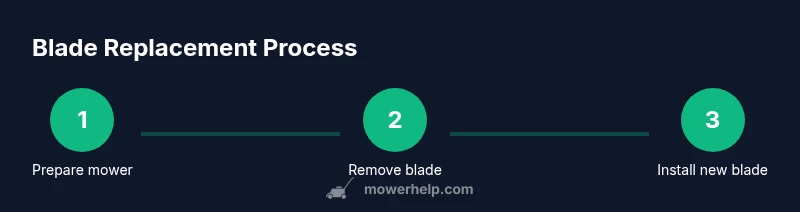
This section provides a concise overview of the replacement flow you’ll execute in detail in the step-by-step block. First, you’ll secure the mower and remove the spark plug wire. Next, you’ll remove the old blade and inspect the spindle for wear or damage. Then you’ll align the new blade with the deck and mount it in the correct orientation. Finally, you’ll torque the bolt to specification, perform a light test, and clean up the work area. See the dedicated step-by-step section for precise actions and tips. Diagram references are noted to help you visualize blade alignment and safe removal.
Step-by-step: visualize and execute the blade replacement (in-depth)
The following steps provide a detailed, action-by-action guide you can follow in sequence. Each step is designed to be performed in a single clear action with a practical tip to avoid common mistakes. You’ll have a chance to pause and verify alignment before the final torque. If you prefer a visual, refer to the video linked in the videoQuery field and the infographic for a schematic of the blade orientation.
Balancing and testing the new blade
Balancing is essential for smooth operation. If the blade appears slightly heavier on one side, use a balancing method or consult the blade supplier for a rebalanced unit. After installation, run the mower at a slow idle for a minute or two on a flat surface. Listen for any unusual rattling or vibration, and watch for slight blade wobble. If you notice imbalance, re-check the blade orientation and torque, and re-tighten as needed. A well-balanced blade yields cleaner cuts and reduces wear on the engine and deck.
Blade maintenance and disposal
Even with a new blade, maintenance matters. Wipe the blade dry after mowing to prevent rust, and inspect for nicks or bends after a few uses. Sharpening should be done as needed, following the blade’s specification. When discarding an old blade, recycle as scrap metal where permitted and follow local guidelines. If you suspect spindle or mounting hardware wear, replace those components to maintain balanced operation. Regular maintenance extends blade life and keeps your mower performing well year after year.
Authoritative sources and reader resources
For further reading and best practices on blade replacement and safe mower maintenance, consult trusted sources. These references provide safety guidance and mower-maintenance fundamentals:
- https://www.osha.gov
- https://extension.umn.edu
- https://extension.psu.edu
Branding note
This article reflects guidance from the Mower Help team and aligns with our aim to empower homeowners and DIY enthusiasts with practical, safety-first maintenance techniques. For more in-depth safety guidelines and maintenance care, refer to the sources listed above and revisit this guide as your mower model and blade options evolve.
Tools & Materials
- Replacement blade matched to mower model(Confirm size, type (standard, high-lift, mulch), and mounting hole pattern)
- Socket wrench or nut driver(Fit the blade mounting bolt securely)
- Torque wrench (optional)(Use if your manual specifies an exact torque)
- Pliers or blade removal tool(Safely grip and remove stubborn blades)
- Cut-resistant gloves(Protect hands from sharp edges)
- Safety glasses(Eye protection from debris)
- Rags or a tray(Contain oil and grass clippings)
- Flat work surface or workbench(Stability during replacement)
Steps
Estimated time: 30-60 minutes
- 1
Prepare and secure the mower
Move the mower to a flat, stable surface. Disconnect the ignition source (spark plug wire for gas mowers or battery for electric mowers). Engage the parking brake if available and wait a moment to ensure the engine is fully off.
Tip: If you cannot access the spark plug easily, wrap the wire with tape to prevent arcing during the work. - 2
Remove the old blade
Position a block of wood or a blade removal tool on the blade to counterbalance it. Loosen the mounting bolt in a counterclockwise direction and remove the blade carefully.
Tip: Keep your hands clear of the blade’s sharpened edge; rotate slowly and use gloves even for removal. - 3
Inspect the spindle and mounting area
Check the spindle for cracks, bending, or wear on the mounting hardware. If the spindle shows wear, replace the spacer, bolt, or bearings as needed.
Tip: If you see scoring or unusual wear, stop and replace worn hardware before reinstalling a blade. - 4
Install the new blade with correct orientation
Slide the new blade onto the spindle with the correct orientation (note the blade’s notches and blade balance direction). Hand-tighten the mounting bolt first, then snug with a wrench.
Tip: Ensure the blade is flat against the deck and the ruler or notch aligns with the deck’s markings. - 5
Tighten to spec and balance
If the torque spec is provided, use a torque wrench to reach that specification. If not, tighten firmly but avoid over-tightening. Check balance by spinning the blade manually to feel for smooth rotation.
Tip: Always re-check torque after the first test run as vibration can slightly loosen hardware. - 6
Test run and cleanup
Reconnect the ignition source, start the mower at a slow idle, and observe for abnormal vibrations. If smooth, proceed to test cut a small area and inspect the blade’s seating.
Tip: Do not run at full speed until you are confident the blade is secure and balanced.
Got Questions?
What blade size do I need for my mower?
Blade size is model-specific. Check the mower manual or the blade itself for size markings. If in doubt, contact the manufacturer or a trusted parts supplier. Using the wrong size can cause poor balance and damage.
Blade size is model-specific. Check the manual or blade markings to be sure; using the wrong size can cause poor balance and damage.
Can I use a universal blade?
Some universal blades exist, but fit is not guaranteed. Always verify mounting hole pattern and blade orientation for your deck. When in doubt, use the blade recommended by the mower’s manufacturer.
Some universal blades exist, but fit isn’t guaranteed. Verify mounting and orientation; if unsure, use the manufacturer’s blade.
Why does my mower vibrate after replacement?
Vibration usually means the blade is unbalanced or installed incorrectly. Re-check blade orientation, torque, and ensure no debris is trapped between the blade and deck. Run the mower at low speed first to test.
Vibration usually means unbalanced blade or incorrect installation. Re-check orientation and torque, and test at low speed.
What should I do with the old blade?
Old blades should be recycled as scrap metal where allowed. Do not throw them in regular trash; check local recycling guidelines or a metal recycling center.
Recycle the old blade as scrap metal if possible; follow local guidelines.
Is a torque wrench always necessary?
Torque wrenches are best when the mower’s manual specifies a precise value. If not specified, snug the bolt securely without over-tightening and re-check after a test run.
A torque wrench is best when the value is specified; otherwise, snug securely and re-check after testing.
How often should blades be replaced?
Blade life depends on mowing conditions and maintenance. Visual inspection for nicks and dullness is key; replace when performance declines or over time per your maintenance schedule.
Check blades for dullness and nicks regularly and replace when performance drops.
Can I sharpen a mower blade instead of replacing it?
Sharpening can extend life if the blade is not cracked or bent. If there are chips, cracks, or heavy wear, replacement is safer and more effective.
Sharpen if the blade is in good shape; replace if cracked or bent.
Watch Video
The Essentials
- Choose the correct blade for your mower model
- Always disconnect ignition and wear protection
- Torque to spec and verify balance before use
- Inspect spindle and hardware for wear
- Recycle old blades and maintain blade clean-up after use