Lawn Mower Blade Balancer: Step-by-Step Balance
Learn how to balance a lawn mower blade with a blade balancer for smoother mowing, longer blade life, and cleaner cuts. This guide covers tools, safety, testing balance, and reinstalling the blade correctly for DIY-ers.


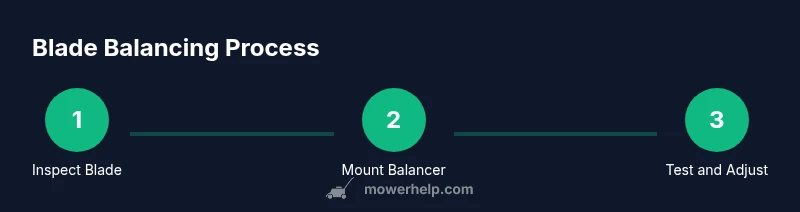
Balancing a lawn mower blade with a blade balancer reduces vibration, improves cut quality, and extends blade life. This guide outlines the exact steps, necessary tools, and safety practices to balance the blade, verify the balance, and reinstall it correctly for optimal mowing performance. By following these steps, DIY enthusiasts can achieve smoother operation and cleaner cuts.
Why a Lawn Mower Blade Balancer Matters
Vibration from an unbalanced blade wastes power, wears bearings, and causes uneven cuts. A blade balancer helps you identify the heavy side and balance the blade so you get a smoother, safer mow. According to Mower Help, balancing a lawn mower blade using a blade balancer reduces vibration, prevents unnecessary wear, and extends blade life. When the blade is balanced, the spindle and engine endure less stress, which translates to more reliable performance and fewer repairs over time. In practice, you’ll test balance with the balancer, adjust by removing material or sharpening the heavy side, and verify stability before reinstalling. This proactive approach saves you time across the mowing season and reduces the risk of damage caused by vibration. Balancing is a foundational maintenance task that pays dividends in cut quality and mower longevity, especially for homeowners who rely on a well-tuned mower for their lawn.
How a Blade Balancer Works
A blade balancer is designed to rest the blade on a central axis. When you place the blade on the balancer, the heavier side will dip while the lighter side remains higher. A true balance means the blade sits level or near level when supported on the balancer's axis. The process is simple in concept: mount the blade on the balancer, spin gently, and observe which edge or hole alignment tilts. If the blade tilts toward one side, that side is heavier and likely needs thinning by sharpening or removing material from the edge. The goal is to achieve a blade that rests balanced on the balancer, indicating even weight distribution around the mounting hole. A properly balanced blade reduces vibration, improves cutting efficiency, and leads to a longer blade life by minimizing stress on the spindle.
Choosing the Right Balancer and Prep
Selecting the right blade balancer starts with compatibility. Most lawn mower blades have a central mounting hole; verify that the balancer hole aligns with your blade’s hole diameter and that the balancer supports the blade’s weight range. Before you balance, prep is essential: remove the blade from the mower, clean off grass and dirt, and inspect for cracks or significant dullness. If you notice damage, address that first since a damaged blade can skew balance readings. Gather gloves, eye protection, and a clean工作 surface. This step also provides a moment to check the blade’s edge for burrs or uneven wear that could affect balance even after reinstallation. Proper prep ensures accurate balancing and safer handling when you later reinstall the blade.
Safety Precautions Before You Start
Safety first is not an empty saying here. Disconnect the spark plug wire (or remove the battery on electric models) before touching the blade to prevent accidental starts. Wear cut-resistant gloves to avoid sharp edges, and use a sturdy workbench or vise to hold the blade securely when removing or sharpening. Keep kids and pets away from the workspace. Have a container for removed bolts and cover the cutting area to prevent injuries. Finally, keep a clear path for movement in case the blade slips while you’re measuring balance. These precautions protect you during every step of blade balancing and maintenance.
In this role, Mower Help emphasizes maintaining a tidy, organized workspace as a safety baseline; it reduces the chance of misplacing tools or dropping the blade while you work.
What to Expect During the Balancing Process
The balancing process is iterative. Start by mounting the blade on the balancer and giving it a gentle spin. If the blade tilts toward one edge, that edge is heavier; you’ll need to remove a small amount of material from that side or sharpen the heavier edge to achieve balance. After every adjustment, re-test on the balancer. Expect to repeat the cycle of spin-and-adjust a few times. Depending on your blade, this can take 20–40 minutes. Keep the work area dry and ensure you do not overheat the blade during grinding. By the end, the blade should rest balanced on the balancer without a pronounced tilt. A properly balanced blade translates to smoother mowing and longer life for the blade and spindle.
Tip: If your balancer includes reference scales, use them to quantify how much material you removed to reach balance. This helps you reproduce the balance reliably in the future.
Common Causes of Imbalance and How to Fix Them
Common causes include a dull edge, a bent blade, or a mounting misalignment. A dull or chipped edge often causes the blade to balance toward the dull side; sharpening or rerunning the edge may restore balance. A bent blade will throw off balance in unpredictable ways and may require replacement. Improper mounting—such as not aligning the blade properly with the spindle bolt hole—can also produce false imbalance readings. If the balancer indicates persistent tilt after adjustments, re-check the blade’s flatness and inspect the mounting surface for burrs or damage. Finally, ensure that the blade is the correct weight and shape for your mower model; mismatched blades tend to balance poorly and wear faster.
Post-Balancing Checks and Reinstallation
After achieving a balanced blade on the balancer, reinstall it onto the mower with the correct orientation and mounting hardware. Always consult your mower’s manual for torque specifications and re-tighten the mounting bolt in a star pattern to avoid warping the blade. Before starting the engine, remove the spark plug wire again to confirm it cannot start accidentally. Perform a slow idle test first on a safe surface to check for vibration. If vibration persists, re-check balance and mounting alignment. A correctly balanced blade will feel steady as soon as you spin the blade by hand and will show minimal wobble when the mower is running at low speed.
Maintenance and When to Re-Balance
Balancing should be part of routine blade maintenance. Re-balance after significant use, after hitting a solid object, or after sharpening. If you notice a sudden rise in vibration, or if the cut becomes uneven again, re-check the balance. Seasonal checks are wise: at the start of mowing season, verify blade balance to ensure optimal performance. Regular maintenance keeps blades sharp, reduces stress on the motor, and prolongs mower life. Keep a log of when you balanced, sharpened, or replaced blades so you can track wear patterns and plan maintenance ahead of time.
Troubleshooting Quick Tips
If you still see a tilt after sharpening, consider re-checking the blade’s mounting surface and the blade’s flatness. A small amount of material removal from a heavy edge can fix a persistent imbalance, but avoid over-shaving. If you have a spare blade, try swapping it to determine whether the issue is blade-specific or related to mounting hardware. Always re-test balance after each adjustment to confirm results.
Tools & Materials
- lawn mower blade balancer(Ensure it matches your blade mounting hole size.)
- socket wrench or ratchet(Size should fit the blade spindle bolt.)
- socket or hex wrench for retaining bolt(Needed to remove and reinstall blade.)
- gloves (cut-resistant)(Protect hands from sharp edges.)
- eye protection(Safety glasses recommended.)
- bench vise or clamps(Hold blade securely during work.)
- clean rag or solvent(Clean blade and balancer surface.)
- marker or chalk(Mark heavy side for tracking adjustments.)
- grinding or sharpening file or grinder(Remove material from the heavy edge if needed.)
- drip tray or container(Catch metal shavings and oil.)
Steps
Estimated time: 60-90 minutes
- 1
Prepare and secure mower
Disconnect the spark plug wire (or remove the battery on electric models) and move the mower to a stable work area. Secure the unit to prevent accidental starts while you work. This is the foundation of a safe balancing process.
Tip: Always wear gloves and eye protection before touching the blade. - 2
Remove the blade
Loosen the blade-retaining bolt with the proper socket, then carefully lift the blade off the spindle. Keep the blade aligned with its mounting orientation to avoid ingesting debris into the blade path. Set the blade on a stable surface for inspection.
Tip: Handle the blade with care; its edges are sharp even after mowing. - 3
Clean and inspect the blade
Remove grass and debris from the blade, and inspect for cracks, bends, or heavy edge wear. If the blade shows damage, replace it rather than attempt to balance a compromised part. A clean, undamaged blade reads balance readings accurately.
Tip: A damaged blade should be replaced; do not attempt to balance a cracked blade. - 4
Mount balancer on the blade
Place the blade on the balancer’s center, ensuring the mounting hole aligns with the balancer axis. The goal is that the blade’s weight is distributed evenly around the axis so the blade can be spun and read accurately.
Tip: If the balancer has alignment marks, use them to ensure proper mounting orientation. - 5
Spin and read the balance
Gently spin the blade on the balancer and observe which edge dips. A balanced blade should rest level or near level with the axis. If there’s tilt, the heavy side is identified for correction.
Tip: Spin smoothly—avoid forced spins that could misread the balance. - 6
Adjust the heavy side
If the heavy side is due to edge wear, sharpen that edge to reduce heaviness. If you remove material, take small amounts and re-test. Repeat until the balancer shows a balanced reading.
Tip: Mark the heavy side after each adjustment to track progress. - 7
Reinstall and torque the blade
Place the blade back on the spindle in the correct orientation. Tighten the retaining bolt to the manufacturer’s torque specification with a star pattern to avoid warping. Reconnect power and conduct a short safety check before mowing.
Tip: Always consult the mower’s manual for torque specs and star-pattern tightening. - 8
Test at low speed
Start the mower on a flat, safe surface and observe vibration. If vibration remains, re-test balance on the balancer and verify mounting integrity. A properly balanced blade will reduce vibration and improve cut quality.
Tip: If vibration persists, stop immediately and re-check alignment and balance.
Got Questions?
Why should I balance my lawn mower blade?
Balancing reduces vibration, protects bearings, and improves cut quality. A balanced blade also lasts longer and helps your mower run more smoothly.
Balancing lowers vibration and makes mowing cleaner, safer, and easier on your mower.
Can I balance a blade without removing it from the mower?
It’s safer to remove the blade and balance off the mower. Balancing off the mower allows for a more accurate reading and reduces the risk of accidental starts.
It’s safer to remove the blade and balance it off the mower.
What tools do I need for blade balancing?
A blade balancer, a socket wrench, gloves, eye protection, and a vise or clamp are essential. A grinder or sharpening file is optional for adjusting the edge.
You’ll need a balancer, a few wrenches, and protective gear.
How do I know when the blade is balanced?
When the blade rests level on the balancer and shows no tilt after a spin, it is considered balanced. Re-test after any adjustment.
If it sits evenly on the balancer after spinning, it’s balanced.
How often should I balance or re-balance a blade?
Balance during routine maintenance or after sharpening, replacing, or hitting debris. If vibration returns, re-check balance and mounting.
Balance during maintenance or after sharpening, and re-check if vibration comes back.
Should sharpening come before or after balancing?
Sharpen or pare the heavy edge first, then balance. If you balance first, you may overcompensate and need retuning.
Sharpen the heavy side first, then balance for best results.
Watch Video
The Essentials
- Identify heavy blade side using a balancer.
- Balance by sharpening or removing material in small increments.
- Torque the blade properly during reinstallation.
- Test vibration at low speed after balancing.