Lawn Mower Blade Craftsman: Step-by-Step Blade Care Guide
Learn blade care like a true lawn mower blade craftsman—identify blade types, inspect for wear, sharpen and balance safely, and reinstall with proper torque. A DIY guide by Mower Help.


By the end, you’ll sharpen and balance your mower blade like a true lawn mower blade craftsman: identify blade types, inspect for wear, sharpen and re-balance the edge, and reinstall with proper torque. You’ll also choose between repair and replacement, apply safety practices, and extend mower life. This guide helps DIY homeowners get professional results with common tools and steps.
What a lawn mower blade craftsman means in practice
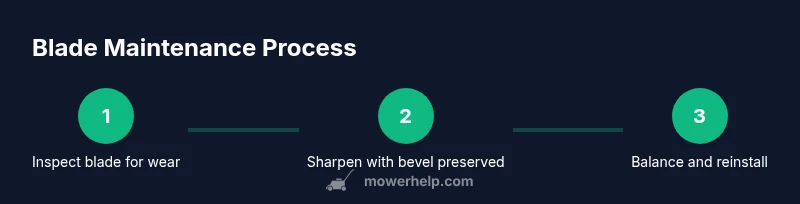
A lawn mower blade craftsman approaches blade care like a skilled tradesperson, focusing on edge geometry, heat treatment, and safe operation. For homeowners, this mindset translates into systematic inspection routines, precise sharpening, careful balancing, and disciplined maintenance. According to Mower Help, proper blade care reduces mower strain, minimizes grass tearing, and lowers fuel consumption by smoothing the cut. The craftsman’s toolkit includes a few essential tools, attention to blade geometry, and a clear plan for when to sharpen versus replace. In practice, it means avoiding quick fixes and instead following repeatable steps that preserve metal hardness, prevent warping, and extend service life. The goal is consistent performance across mowing sessions, even on thick or damp grass. This section lays out the core concepts, so you can adopt a blade-care routine that mirrors a professional approach while staying safe and affordable.
Blade types and what they do
Mower blades come in several shapes and purposes. High-lift blades are designed to collect clippings and improve airflow, while standard blades prioritize a clean cut with minimal tearing. Mulching blades are heavier and feature serrated edges to finely chop and redistribute grass into the soil. Some blades are flat with slight bevels for general mowing, others include thrust surfaces or wing tips to balance airflow. The blade material also varies: common high-carbon steel offers a good balance of strength and cost, while harder alloys resist dulling but can be more brittle. When choosing or maintaining a blade, match the design to your mower’s cutting deck and grass type. The craftsman approach starts with confirming the correct blade type for your mower, which can prevent performance problems and ensure safe operation.
Inspecting blade wear and damage
Begin by removing the blade per safety steps; inspect the edge for nicks, chips, and flattening. Look for cracks near the root or bending along the attachment hole. A healthy blade should retain a uniform thickness along the edge and show a consistent bevel. If you notice cracks, severe chips, warping, or an unbalanced weight distribution, plan a replacement rather than a repair. Even minor distortions can throw off balance and create excessive vibration. Record wear patterns on a note to guide future maintenance. Remember that corrosion or rust can weaken the blade over time. This inspection step is your baseline measure for deciding whether sharpening is worthwhile or a new blade is needed. Regular checks catch problems before they cause damage to the mower or the yard.
Sharpening basics and methods
Sharp blades cut grass cleanly and reduce resistance. The craftsman method preserves the factory bevel and avoids removing metal from the wrong side. Use a flat file, a round file, or a sharpening stone to restore a sharp edge. Maintain the original angle—usually described by the blade's bevel—by making consistent strokes along the edge. Avoid overheating the metal by dipping the blade in water or pausing frequently. If using power tools like a grinding wheel or angle grinder, keep the blade cool and work slowly to avoid altering heat treatment. After shaping the edge, inspect for burrs and remove them with a light pass. This step should leave the edge crisp, symmetric, and ready for balancing. The goal is an even bite into the grass rather than a jagged tear.
Balancing for safe, vibration-free operation
A balanced blade spins smoothly; an unbalanced blade can create vibration, wear bearings, and degrade cut quality. A simple balancing test can be done with a blade balancer or by mounting the blade on a nail and watching for heavier sides. If one edge dips, remove a small additional amount from that side until the blade sits evenly. Rebalance after sharpening to ensure the edge aligns with the centerline of the mower. Keep in mind that slight imbalance is common and can be corrected. If the blade never balances, replace it. Regular balancing is part of a craftsman’s routine and pays off with less strain on the mower and a more even cut.
Safety considerations and PPE you can't skip
Safety is non-negotiable in blade care. Always disconnect power sources, lock off the power switch, and remove the spark plug wire on gas models before touching the blade. Wear cut-resistant gloves and safety goggles, because metal shards can launch during grinding or sharpening. Work in a well-ventilated area and keep bystanders away. Use a sturdy vise or bench to secure the blade during work, and never hold the blade by your hands alone. Clean rags and degreaser will help you remove grass resin that can hide nicks and heat spots. Following these precautions protects you and your mower and supports a professional-feeling result.
Replacement vs repair: making the call
Not every dull edge can be restored. A blade with cracks, deep gouges, or bending near the mounting hole should be replaced. Sharpening a bent blade preserves metal and can worsen the problem. If the blade has been ground unevenly to remove wear, it’s usually safer to replace. Compare the cost of a new blade with your time and risk, especially if your deck is older or you mow challenging terrain. A craftsman mindset helps you decide when to invest in a new part. Remember that even a minor misalignment through improper mounting can cause damage that dwarfs savings from a DIY fix.
Routine maintenance and timing
A steady maintenance cadence keeps your mower performing well. Check blades at the start of mowing season and after heavy use. Clean the blade and deck, remove grass buildup, and verify the blade’s mounting hardware is tight per the torque spec. Keep a sharpening schedule that matches your mowing frequency; more frequent cutting through tough grass will require more frequent sharpening. Document the results of each maintenance session to track wear trends and plan replacements. This habit reflects the craftsman’s disciplined approach and yields consistent results across seasons.
Finding a trusted blade craftsman service
If you prefer professional help, look for a shop with clear safety practices, warranty policies, and transparent pricing. Ask about the blade types they service and whether they offer on-site sharpening. Read customer reviews and verify that technicians carry insurance and use proper PPE. For DIYers, a good shop can provide guidance on which blade to choose for your deck and grass type. The Mower Help team recommends verifying the service's method for re-balancing and testing the blade after service to ensure safe operation.
Common mistakes to avoid
Avoid rushing through blade removal or sharpening; a rushed edge leads to inconsistent bites and more vibration. Do not grind past the factory bevel or heat the blade aggressively, which can weaken the steel. Never reinstall a blade with the wrong orientation or a loose mounting bolt. Finally, skip no safety steps—protective gear and proper power isolation save you from injuries and costly repairs.
Tools & Materials
- Socket wrench set (metric/SAE)(Choose a size matching your blade bolt; 1/2 inch drive is common. Have both metric and standard on hand.)
- Locking pliers or vise(Secure the blade while loosening the bolt to prevent spinning.)
- Heavy-duty gloves(Prevent cuts from sharp blade edges.)
- Safety goggles(Protect eyes from metal chips and debris.)
- Bench vise or sturdy work surface(Keep the blade stable during sharpening.)
- Flat file or round file / sharpening stone(Restore bevel without altering other edges.)
- Angle grinder with guard (optional)(Only if blades are very dull; use caution to avoid overheating.)
- Blade balancer or alternative balancing method(Ensure balanced rotation after sharpening.)
- Replacement blade (if damaged)(Have on hand if the current blade is cracked or warped.)
- Rags and degreaser(Clean surface and remove resin before sharpening.)
Steps
Estimated time: 40-60 minutes
- 1
Power down and prep safety
Before touching the blade, power off the mower and disconnect any power sources. For gas mowers, remove the spark plug wire; for electric models, unplug or remove the battery. Put on gloves and safety goggles, and set up a stable work area. This step prevents accidental starts and protects you from sharp edges.
Tip: Always double-check that the blade cannot rotate before starting work. - 2
Remove the blade
Loosen the mounting bolt with the appropriate socket, while keeping the blade from turning. Use locking pliers on the opposite side if needed to hold the blade steady. Note the blade orientation for proper reinstallation.
Tip: Label the blade and deck orientation with tape to avoid reassembly mistakes. - 3
Inspect the blade
Examine the edge for nicks, cracks, or bending near the mounting hole. If you see cracks or severe damage, plan a replacement rather than sharpening. Minor nicks can be removed with careful filing.
Tip: If in doubt about damage level, replace the blade rather than risk failure. - 4
Clean and secure the blade
Wipe away grass buildup and rust; secure the blade in a bench vise or clamp to prevent slipping during sharpening. Clean tools and the work area to avoid contaminating the blade edge.
Tip: Use a degreaser to remove residue that can hide damage or dull edges. - 5
Sharpen the edge
Maintain the original bevel while applying even strokes with a file or stone. Do not remove excessive metal; small, controlled passes preserve blade hardness. If using an angle grinder, apply light pressure and cool the blade with water to prevent overheating.
Tip: Sharpen in one direction only to keep a uniform bevel. - 6
Balance the blade
After sharpening, test balance on a nail or with a dedicated balancer. If one side dips, remove a little metal from that side and recheck until it sits level. A balanced blade reduces vibration and wear on mower components.
Tip: Even a small imbalance can noticeably affect mowing comfort. - 7
Reinstall the blade
Align the blade so the bevel faces the correct direction for cutting and ensure it is flat against the mount. Secure the bolt to the recommended torque spec, typically found in the mower manual. Reconnect the spark plug or battery.
Tip: Torque specs prevent over-tightening or under-fastening, which can cause blade failure. - 8
Test run and inspect
Start the mower and listen for unusual vibrations; observe for any wobble. Stop immediately if vibration persists and re-check blade mounting and balance. A proper test confirms safe operation and a clean cut.
Tip: If vibration occurs, shut down and re-evaluate the blade setup before continuing.
Got Questions?
Can I sharpen a lawn mower blade while it is still mounted on the mower?
No. Removing the blade gives full access to the edge and prevents accidental starts. It also allows you to check mounting hardware for any wear.
Do not sharpen while the blade is mounted; remove it first and secure it safely.
How do I know when to replace a blade instead of sharpening it?
If you see cracks, warping, severe chips, or a edge that cannot be balanced, replacement is safer and more effective than sharpening.
If there are cracks or warping, replace the blade rather than risk failure.
What blades can be sharpened and which should be replaced?
Most standard blades can be sharpened if undamaged. Some specialty blades or severely worn blades should be replaced. When in doubt, consult the mower manufacturer guidelines.
Most standard blades can be sharpened; if in doubt, replace for safety.
Is using a grinder safe for blade sharpening?
Grinders can be safe when used with caution, proper guards, and adequate cooling. Overheating dulls the steel, so frequent pauses and coolant are important.
Grinders can work, just cool the blade and avoid overheating.
How often should I sharpen my mower blade?
There is no universal schedule; sharpen when you notice tearing, uneven cuts, or increased effort needed. Inspect at the start of each mowing season.
Sharpen when the cut quality declines, not on a fixed timetable.
Can I sharpen a battery-powered mower blade?
Yes, the same edge care rules apply. Ensure the blade is fully powered down, removed, and secured before sharpening.
Yes, same care applies; always remove power before working on the blade.
Watch Video
The Essentials
- Sharpen blades with the original bevel to preserve cutting performance
- Balance every blade after sharpening to reduce vibration
- Always safety-check and torque-mount blades correctly
- Replace damaged blades rather than attempting risky repairs
- Maintain a routine maintenance cadence for consistent results