Ride-On Lawn Mower Blades: Safety, Sharpening, and Replacement
Learn to inspect, sharpen, balance, and replace ride-on lawn mower blades safely. A practical maintenance guide for homeowners and DIY enthusiasts in 2026.


You can safely sharpen or replace ride-on lawn mower blades by first disconnecting the spark plug, then removing the blade, inspecting for damage, and sharpening or replacing as needed. Expect proper balancing and testing before operation. This guide covers tools, steps, and safety precautions to keep your mower cutting cleanly. Always work on a cool engine and secure the mower to prevent unexpected movement.
Understanding ride on lawn mower blades and safety basics
Ride-on mower blades are engineered for efficiency and even cutting, but they require regular attention to prevent uneven turf, vibration, and deck wear. Maintaining ride on lawn mower blades starts with a solid safety routine and a clear plan for inspection, sharpening, or replacement. According to Mower Help, these blades are mounted on a central hub and are designed to balance with the deck to minimize vibration. Start with a basic understanding of blade orientation and how the deck holds the blade; improper installation can cause dangerous kickback or engine issues. In this section, you’ll learn the proper mindset and safety steps before touching any blade, so you can perform maintenance confidently and avoid common mistakes that DIYers encounter when dealing with cutting edges.
From a homeowner perspective, blade care isn’t just about a sharper edge—it’s about predictable performance and longer mower life. Dull blades pull and tear grass rather than cut it cleanly, which stresses the engine and results in an uneven lawn. The Mower Help team notes that keeping blades sharp, balanced, and properly torqued reduces deck strain and improves cut quality. This mindset extends to choosing blades that match your mower’s model and deck width, and to storing blades safely between seasons. The goal is a safe, effective cut every time you mow. In short, blade care is a core maintenance task that pays off in ease of use and lawn health.
Tools and safety essentials
Before you touch a blade, assemble the right tools and follow safety rules. A well-prepared work area on a flat, stable surface reduces the risk of slips or unexpected mower movement. Wear cut-resistant gloves, eye protection, and long sleeves to shield skin from sharp edges. Ensure the engine is cool, the blade is stationary, and the ignition is disconnected. If your mower has a battery, disconnect it as an extra precaution. Having a torque wrench helps you reinstall the blade to the correct specification, while a bench vise or blade-gripping tool prevents the blade from slipping during sharpening. A sharp, clean workspace minimizes the chance of losing small parts and keeps you organized. Finally, keep a bag or container handy for old blades and a spare blade in good condition for quick swaps.
Checklist of essentials:
- Safety gear (gloves, goggles, long sleeves)
- Spark plug disconnect or battery isolation
- Socket wrench set and/or torque wrench
- Blade removal tool or breaker bar
- Blade balancer or simple balance test
- Sharp file or bench grinder (if used carefully)
- Replacement blades (if needed)
- Clean rags and spray lubricant for ease of reassembly
Inspecting blades: wear, cracks, and dullness
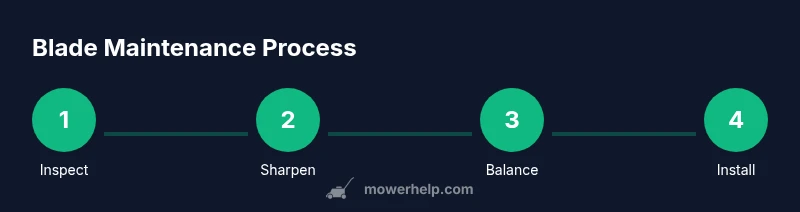
Regular blade inspection is the foundation of blade maintenance. Begin by removing the blade from the mower to inspect both sides for nicks, cracks, or bending. A visual check often reveals cracks near the base, dull edges, or chips that compromise performance. Also examine the blade mounting hole, center hub, and the hardware that holds the blade in place for wear or looseness. If the blade edge is rounded, chipped, or has a noticeable bend, plan for sharpening or replacement. Dull edges create more engine load and can cause uneven mowing; this is a sign that your blade needs attention. A balanced blade is essential for safe operation, so after sharpening or after installing a replacement blade, verify balance with a simple nail test or a blade balancer. If you see excessive wear on both edges, or if the blade is bent, cracked, or heavily corroded, replacement is the safer option. Clues to replacement include unusual vibration or a persistent tug on the deck, which indicate a fuzzy edge or damage that sharpening cannot repair.
Sharpening and balancing blades: methods and considerations
Sharpening ride-on mower blades requires removing the blade to maintain symmetry on both edges. You can use a safe and controlled method: a file or a bench grinder with a gentle touch to preserve the original bevel. Avoid overheating the blade, which can dull the edge or change temper. After sharpening, balance the blade to ensure there’s no heavy side. A balanced blade prevents vibration and uneven mowing, protecting the deck and engine. If you don’t have sharpening equipment, consider having blades professionally sharpened or replaced to ensure proper geometry and blade balance. When balancing, you can lay the blade on a nail or use a dedicated balancer; adjust until the blade remains level. For safer sharpening, work on a flat surface, never grind while the blade is mounted, and check for any damage after sharpening. Remember: a sharp blade delivers a clean cut with less fuel burn and better turf health.
Replacing blades: when and how to swap in a new edge
Replacement is often the best option when blades show cracks, severe bends, or chronic dullness that cannot be corrected by sharpening. Choose blades that match your mower’s model, deck width, and mounting hardware. When removing a blade for replacement, follow the reverse of the removal steps: disconnect power, remove the blade mounting bolt, carefully extract the blade, and inspect the mounting hardware for wear. Install the new blade with the same orientation and ensure the mounting bolt is torqued to the manufacturer’s specification. If the blade has a specific directional face, verify it is oriented correctly relative to the mower’s deck or belt path. After installation, test the balance and perform a cautious idle test on a clear, open area to confirm there is no unusual vibration. Replacement blades are a reliable way to restore cutting quality and protect the mower’s drivetrain.
Installing and testing on your ride-on mower: final steps and safety checks
Once the blade is sharpened or replaced, reinstall with care. Use the correct torque spec for the mounting bolt to avoid loosening, and reattach any guards and shielding. Before mowing, perform a slow, stationary test: start the engine briefly and listen for unusual noise or vibrations. If you notice any wobble, stop immediately and recheck the blade alignment and balance. On the first ride, mow a small, flat area to gauge cut quality and noise levels. If the cut is clean and you don’t hear grinding or clattering, you’re ready for regular mowing. Document maintenance in your mower log to track when you sharpened or replaced blades and when the next check is due.
Pro tip: always carry spare blades if your mower supports easy quick-change blades; this minimizes downtime and ensures you can keep a sharp edge ready for use.
Authority sources and further reading
For additional guidance, consult reputable sources that cover mower blade safety and maintenance. These references provide model-agnostic best practices and safety standards that apply to most ride-on mowers.
- Cornell University Extension on lawn mower safety and blade care: https://extension.cornell.edu
- University of Minnesota Extension on mower maintenance and blade care: https://extension.umn.edu
- Penn State Extension on safe blade removal and maintenance: https://extension.psu.edu
These resources emphasize disconnection of power, proper blade removal, safe sharpening practices, and the importance of blade balance. Always follow the manufacturer’s instructions for your specific mower model.
Pro tips & warnings
- Pro tip: balance every blade after sharpening or replacement to reduce vibration and deck wear.
- Warning: never sharpen a bent or cracked blade; it can fail catastrophically during operation.
- Note: use a blade balancer or hang on a nail to verify balance; a slight tilt indicates slight weight imbalance that needs adjustment.
- Pro tip: keep the blade sharp only for mowing; avoid grinding heat buildup that can temper the edge. Always cool the blade during any sharpening session.
Key takeaways for blade care and maintenance
- Inspect blades regularly for cracks, bends, and dull edges to prevent engine strain.
- Use proper tools and safety gear; disconnect power before any blade work.
- Balance blades after sharpening or replacement to minimize vibration.
- Replace blades when damage is present or when sharpening no longer improves performance.
- Follow the mower’s torque specifications and manufacturer recommendations for installation.
Tools & Materials
- Spark plug wrench or battery disconnect tool(Disconnect power source to ensure the engine cannot start)
- Socket wrench set (sizes fit mounting bolt) or torque wrench(Used to remove and torque the blade mounting bolt)
- Blade removal tool or breaker bar(Helps loosen stubborn mounting bolts without slipping)
- Bench vise or blade holder(Keeps blade secure during sharpening)
- Flat file or bench grinder(Optional for sharpening; avoid overheating the blade)
- Replacement blades(Select blades designed for your mower model and deck width)
- Blade balancer or nail for balance check(Ensure balanced edge to prevent vibration)
- Safety gloves and eye protection(Protect hands and eyes from sharp edges)
- Rags and solvent for cleanup(Keep the workspace clean and dry)
Steps
Estimated time: 60-90 minutes
- 1
Prepare and secure the mower
Park on a level surface, apply the parking brake, and lower the deck. Disconnect the spark plug wire or remove the battery to ensure the engine cannot start. If available, unplug the mower’s electrical system and secure the mower against movement.
Tip: Always work on a cool engine; sharp blades can still nick skin even if the engine is off. - 2
Access the blade mount
If needed, tilt the mower’s deck slightly to access the blade mounting area. Clear debris from around the blade to prevent foreign objects from causing injury.
Tip: Keep track of all loose parts as you remove them; a misplaced bolt can damage the deck upon reinstallation. - 3
Remove the blade
Loosen and remove the blade mounting bolt. Carefully lift the blade away from the deck and inspect the mounting hardware for wear.
Tip: Support the blade with a glove or rag to prevent it from slipping during removal. - 4
Sharpen or replace
If sharpening, use a file or grinder to restore a uniform edge on both sides, keeping the original bevel. If replacing, prepare the new blade and inspect it for defects before installation.
Tip: Do not overheat the blade during sharpening, which can ruin temper and edge retention. - 5
Balance the blade
Test balance by laying the blade on a nail or using a balancer. If the blade tilts to one side, remove a small amount from the heavier side and retest until level.
Tip: A balanced blade runs smoother and reduces deck vibration. - 6
Reinstall blade and torque
Install the blade with the correct orientation as indicated by the mower’s manual. Tighten the mounting bolt to the manufacturer’s torque specification using a torque wrench.
Tip: Torque settings prevent the blade from loosening during operation. - 7
Test safety and performance
Reconnect power, test run the mower in a clear area to listen for unusual sounds or vibrations. Check for proper cutting, and feel for any deck drag or misalignment.
Tip: If you notice vibration or misalignment, stop and recheck blade balance and installation. - 8
Clean up and record
Wipe down the blade edge and deck, store the old blade separately, and log the maintenance date in your mower notebook.
Tip: Regular maintenance records help schedule future sharpenings and replacements.
Got Questions?
Should I sharpen ride-on mower blades while they are mounted on the mower?
No. Remove the blade from the mower to sharpen or replace it. Sharpening on the mower can be unsafe and may damage the blade alignment.
Always remove the blade before sharpening or replacing it to stay safe and ensure proper alignment.
Can I use a bench grinder to sharpen blades?
Yes, a bench grinder can be used, but apply light pressure and avoid overheating the blade. Let the blade cool between passes.
A bench grinder is fine if used gently and with breaks to prevent overheating.
How often should blades be sharpened?
Sharpen blades when they noticeably dull or when cut quality declines. Avoid excessive sharpening that removes too much metal.
Sharpen when the cut becomes ragged or uneven.
What if the blade is cracked or bent?
Do not sharpen a cracked or bent blade. Replace it to avoid dangerous failures during mowing.
If cracked or bent, replace the blade rather than attempting to sharpen it.
Is balancing necessary after sharpening?
Yes. Balancing ensures smooth operation and reduces deck wear. Use a balancer or a nail test.
Balance every time you sharpen to prevent vibration.
What should I do with old blades?
Dispose of old blades safely in a puncture-resistant container and recycle where possible. Keep old blades out of reach of children.
Safely dispose of old blades in a puncture-resistant container.
Watch Video
The Essentials
- Inspect blades for cracks and dullness before every season
- Balance blades after sharpening or replacement
- Follow torque specs to secure blades safely
- Replace blades when damaged or beyond sharpening
- Always prioritize safety and proper storage