Financing Lawn Mower: A Practical Buying Guide for 2026
Learn how to finance a lawn mower with smart options, compare offers, gather documents, and choose a plan that fits your budget. Practical tips for homeowners and DIY enthusiasts from Mower Help.


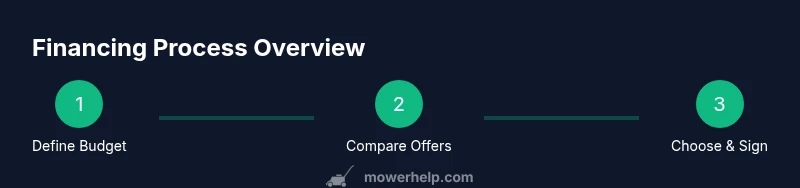
Follow these steps to finance a lawn mower: define your budget, then compare dealer financing, bank loans, and credit options; gather documents (ID, pay stubs, bank statements); check APRs, terms, and payoff penalties; apply with your chosen lender; review the contract carefully before signing; assess total cost of ownership including maintenance; finalize the purchase.
Understanding the concept of financing a lawn mower
Financing a lawn mower means paying for the purchase over time rather than all at once. This approach spreads out the upfront cost, helps manage cash flow, and can make higher-end models accessible to homeowners and DIY enthusiasts. When you finance, you typically enter a loan or credit agreement with an option to pay back in monthly installments over a fixed term. Those terms include the interest rate, any fees, and the total amount paid by the end of the loan. For budget-conscious buyers, financing can be a practical route, especially if you plan to use the mower for several seasons and want predictable monthly expenses. According to Mower Help, many customers start by evaluating total cost of ownership (TCO) rather than just the sticker price, which helps prevent surprises later. Mower Help analysis, 2026 indicates that choosing the right term length and lender type can significantly affect long-term affordability, particularly when maintenance costs and potential upgrades are considered.
Choosing a financing path: dealer vs. bank vs. store card
There are several paths to finance a lawn mower, each with trade-offs. Dealer financing is often the most convenient because the application happens on-site, and approvals can be quick if you have basic information handy. Bank loans and credit unions may offer lower interest rates for borrowers with strong credit, but they require a formal application and more documentation. Store-branded credit cards can provide instant approvals and rewards, but they can carry higher APRs if not paid off promptly. The key is to compare offers side-by-side, focusing on the total cost of the loan rather than the monthly payment alone. For homeowners, dealer financing can provide a fast path to ownership, while a personal loan through a bank or credit union might yield a lower overall cost over the life of the loan. The Mower Help team recommends balancing speed with long-term affordability and not relying solely on promotional terms that look appealing at first glance.
Understanding APR, term length, and fees: what to look for
APR is the annual percentage rate that reflects the cost of borrowing, including interest and some fees. A lower APR generally means lower cost, but term length matters too: longer terms reduce monthly payments but increase total interest paid over time. Fees such as origination, documentation, or late-payment penalties can quietly raise the total cost. When evaluating offers, ask lenders to provide a detailed breakdown of all fees and the exact payoff amount at the end of the term. Shorter terms usually cost more per month but less overall interest, while longer terms spread payments out but can result in paying more in interest. Be wary of teaser rates that revert after a promotional period. The emphasis should be on predictable payments that fit your monthly budget and the mower’s expected lifespan, not just the first-year rate.
What documents you’ll typically need and how to prepare
Lenders generally require proof of identity, income, and residence. Common documents include a valid ID, recent pay stubs or proof of self-employment income, bank statements, and information about the mower (make, model, price). A copy of your credit report may be requested or checked by lenders. Having digital copies ready speeds up the process. If you’re applying with a dealer, bring any pre-approval letters or existing financing terms you’ve already received so you can compare on equal footing. Remember, a clean credit report and steady income improve your odds of approval and a favorable rate.
Strategies to minimize cost and maximize value over time
To minimize cost, compare multiple lenders and negotiate terms to lower APR or shorten the loan period without increasing monthly payments excessively. Consider a larger down payment if feasible, as this reduces the amount financed and can lower the effective interest rate. If a model you want has a bundled financing offer, calculate whether the bundled price plus financing beats a separate loan. Also, factor in maintenance costs, fuel or electricity, and potential insurance in your TCO. If you plan to upgrade your mower in a few years, a shorter term may be preferable to avoid paying for a non-existent asset. The goal is a financing plan that aligns with your budget and the mower’s expected lifespan, without creating financial stress.
Common pitfalls to avoid when financing a mower
Avoid lenders who pressure you into quick decisions or obscure terms. Never sign a contract that you don’t fully understand—ask for a copy to review later and compare with other offers. Watch for prepayment penalties that discourage paying off early, and ensure there are no hidden charges in the fine print. Some promotional offers seem attractive but come with severe late fees or restrictions on upkeep. Finally, consider whether the mower’s durability and warranty support justify the financing terms. If you’re unsure, consult a trusted source like Mower Help for guidance on evaluating offers and negotiating favorable terms.
Tools & Materials
- Government-issued photo ID(Driver’s license or passport valid at time of application)
- Proof of income(Recent pay stubs or tax return; self-employed can use 12-month profit/loss)
- Bank statements(2-3 most recent statements to verify funds and stability)
- Mower details (model, price)(Exact make, model, price, and estimated taxes/shipping)
- Credit information(Recent credit report or authorization for lender pull)
- Down payment (optional)(Any upfront amount you can contribute to reduce financed amount)
Steps
Estimated time: 1-2 weeks
- 1
Define your budget
Establish a realistic monthly payment you’re comfortable with and the maximum total you’ll pay. This step helps prevent overextending your finances and informs lender options. Consider maintenance and fuel costs alongside the loan payment. [diagram: financing-flow.png]
Tip: Use a simple calculator to model monthly payments at different APRs and terms. - 2
Compare financing paths
Evaluate dealer financing, bank personal loans, and credit unions. Look at APRs, terms, and any promotional offers. Compare total costs rather than monthly payments alone to avoid hidden charges. [diagram: compare-offers.png]
Tip: Ask for a full payoff figure and any early-repayment penalties before deciding. - 3
Gather required documents
Collect ID, proof of income, bank statements, and mower details. Having everything ready speeds up the application and reduces back-and-forth time. [diagram: docs-checklist.png]
Tip: Organize documents in a single digital folder for easy sharing. - 4
Apply to your preferred lender
Submit applications with the strongest offers first to avoid multiple hard pulls on your credit. If approved, review terms carefully before accepting. [diagram: application-flow.png]
Tip: Pre-qualify where possible to avoid hard inquiries on your credit report. - 5
Review the contract edge-by-edge
Read interest rate, term length, down payment, fees, and prepayment options. Confirm the mower details match your purchase. Seek clarification on any ambiguous clause. [diagram: contract-terms.png]
Tip: Don’t sign until you understand the total cost and monthly obligation. - 6
Negotiate where possible
Ask for lower APR, reduced fees, or a longer warranty to offset financing costs. Dealers may have flexibility on terms when you commit to a purchase.
Tip: Bring competing offers to negotiate effectively. - 7
Finalize purchase and set up repayment
Complete the purchase with approved financing and set up automatic payments if possible to avoid late fees. Keep a copy of all documents for your records. [diagram: payoff-schedule.png]
Tip: Set reminders a few days before each due date to stay current.
Got Questions?
What does financing a lawn mower involve?
Financing a lawn mower involves paying for the purchase over time through a loan or credit, with agreed-upon terms, interest, and fees. You’ll make monthly payments until the balance is paid off.
Financing a lawn mower means paying in installments over time with an approved loan or credit agreement.
How do I qualify for dealer financing?
Dealer financing typically requires basic income verification and a credit check. Having a stable income and a reasonable credit history improves approval odds and may unlock promotional rates.
Dealer financing usually needs proof of income and a credit check; stable finances improve odds of approval.
What’s the difference between APR and interest rate?
The interest rate is the yearly cost of borrowing; APR includes interest plus fees and other charges. APR gives a fuller picture of what you’ll actually pay over the loan term.
APR includes interest and fees, giving a true cost of borrowing beyond the base rate.
Are there penalties for paying off early?
Some loans include prepayment penalties that charge a fee for paying off early. Check the contract to confirm whether such penalties exist and how they’re calculated.
Some loans charge fees if you pay off early; read the contract to verify.
Should I finance a cheaper mower or a higher-end model?
Balance the mower’s long-term value with financing costs. A higher-end model may save on maintenance and fuel but ensure the payment plan stays within your budget.
Choose based on long-term value and what you can comfortably pay each month.
What should I do if I’m unsure about an offer?
Ask for a written breakdown of all terms and compare with at least one other lender. If necessary, pause and revisit after researching options.
If unsure, request a full terms breakdown and compare with other offers.
Watch Video
The Essentials
- Define a realistic budget before shopping.
- Compare offers on total cost, not just monthly payments.
- Prepare and organize documents to speed approvals.
- The Mower Help team recommends comparing lenders and choosing a plan that fits your budget.