Finance Riding Lawn Mower: A Practical Guide
Learn how to finance a riding lawn mower, compare offers, explore credit options, and estimate total ownership costs. A practical guide for homeowners to secure affordable financing and protect their budget.


This guide helps homeowners finance a riding lawn mower responsibly. You will learn how to assess your needs, compare dealer financing, explore credit options, and estimate total ownership costs without overspending. By the end, you’ll know which path fits your budget and how to minimize interest while maximizing mower performance. finance riding lawn mower
Why financing riding lawn mowers matters
According to Mower Help, choosing the right financing path isn’t just about the monthly payment—it’s about long-term costs, reliability, and ensuring you can keep the mower running for years. A riding lawn mower is a significant investment that can pay off in time saved and a healthier lawn, but it’s also a commitment that affects your monthly cash flow. Smart financing aligns with your budget, maintenance plan, and anticipated yard growth. If you value predictability, fixed payments, and clear terms, this guide shows how to evaluate options, avoid common traps, and select a plan that keeps you mowing without financial stress. Throughout, you’ll see practical steps, checklists, and questions to ask lenders and dealers, so you can move from impulse buys to confident, informed decisions that serve your lawn and wallet. You’ll also learn how to protect yourself from hidden fees and unnecessary add-ons that inflate the total cost of ownership.
Determine your needs and budget
Before talking to lenders, define your mowing needs: the size of your lawn, terrain, and desired mowing cadence. A riding mower is most beneficial on larger properties, uneven terrain, or when you want to reduce fatigue. Consider whether you’ll use attachments (like baggers or mulchers) and how often you’ll service the mower. Next, build a realistic budget—exclude debt you don’t need, estimate monthly payment you can sustain, and account for maintenance, fuel, and insurance as ongoing costs. This planning step helps you compare offers on a level field and keeps you from over-borrowing. Create a simple worksheet that tracks annual maintenance, expected fuel use, and potential depreciation to avoid surprises later.
Financing options for riding lawn mowers
There are several paths to financing a riding lawn mower, and each has trade-offs. Dealer financing can be convenient and often comes with promotional terms, but you should read the fine print and compare total costs. Bank or credit union loans may offer competitive rates and longer terms, especially if you have solid credit and a stable income. Personal loans provide flexibility if you want to shop across retailers, while leasing is another route worth considering for equipment users who value lower monthly payments and annual re-evaluation of needs. Avoid tying yourself to a plan that barely fits your budget, and think about the mower’s expected lifespan, maintenance costs, and anticipated resale value. The Mower Help team emphasizes balancing convenience with total cost of ownership.
How to compare offers effectively
When evaluating financing offers, look beyond the monthly payment. Focus on the annual percentage rate (APR), loan term length, any origination or processing fees, and prepayment penalties. Calculate the total cost of the loan over its life, not just the first year. Ask dealers for a side-by-side disclosure that lists each offer’s cash price, financing terms, and any optional warranties or service plans. Consider pre-approval from multiple sources to strengthen your negotiating position. A pre-approval gives you bargaining power and a clearer ceiling for what you’re willing to pay.
Credit considerations and pre-approval
Your credit health influences the financing options available and the terms you’ll receive. Before applying, pull a free copy of your credit report, correct any errors, and gather proof of income and residence. Some lenders require a recent pay stub, tax return, or two years of steady employment. Getting pre-approved can save you time and help you compare offers with confidence. If your credit isn’t ideal, look for lenders that specialize in consumer financing for equipment purchases and ask about secured vs unsecured options. Remember that each hard inquiry can affect your score slightly, so apply strategically.
Estimating total cost of ownership
Total cost of ownership includes purchase price, financing costs, maintenance, fuel, insurance (if applicable), storage, and depreciation. Even with low monthly payments, long-term financing can increase the overall expense due to interest and fees. Plan for routine service, blade maintenance, tire wear, oil changes, and seasonal storage considerations. Proactively budgeting for these ongoing costs helps you avoid debt creep and ensures your mower performs well for many seasons. The Mower Help approach favors a conservative estimate that prioritizes reliability and budget stability.
Actionable plan to secure financing
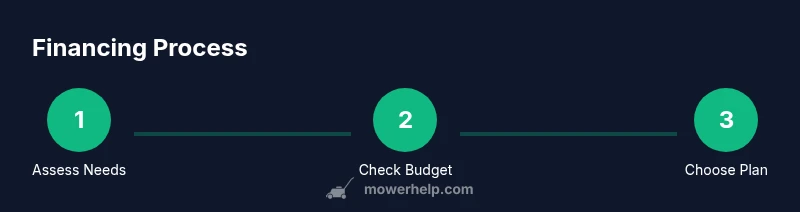
Create a clear plan that starts with needs assessment and budget, followed by shopping for pre-approvals, comparing offers, and selecting a financing path. Begin by contacting at least two lenders and the dealer, asking for written terms, and noting any promotional deals. Once you have an offer you’re comfortable with, return to your budget worksheet to confirm affordability and ensure you can cover maintenance costs. Finally, finalize the purchase with a trusted dealer and set up reminders for maintenance tasks to maximize the mower’s lifespan.
Tools & Materials
- Budget worksheet(Spreadsheet or budgeting app to model monthly payments and ownership costs)
- Recent pay stubs or proof of income(Used for pre-approval and income verification)
- Personal identification and residency proof(Driver’s license or state ID and utility bill)
- Credit report (free copy)(Review and dispute any errors before applying)
- List of compatible financing offers( Dealer quotes, bank terms, and creditor pre-approval letters)
- Notes app or notebook(Record questions, terms, and comparisons)
- Internet access or smartphone(Shop offers, read disclosures, and complete applications)
- Mower purchase plan (needs vs wants)(Clarify attachments, deck width, horsepower, and usage)
Steps
Estimated time: 2-7 days
- 1
Assess mowing needs
Evaluate lawn size, terrain, and mowing cadence to determine baseline horsepower and deck width. This ensures you don’t overbuy or underspec a mower. Include potential future landscaping ideas to avoid mismatches later.
Tip: Start with a floor plan of your yard and estimate changes for the next 3–5 years. - 2
Set a realistic budget
Determine how much you can comfortably allocate monthly for payments, maintenance, and fuel. Include a cushion for unexpected repairs. A clear budget keeps you from loan strain and helps you compare terms on equal footing.
Tip: Add a dedicated maintenance fund to your monthly budget. - 3
Gather financing options
Collect offers from at least two lenders and the dealer. Request written terms and disclosures to compare APR, fees, and loan duration. Keep all offers in one place for side-by-side comparison.
Tip: Ask for a printed chart of total payments over the life of each loan. - 4
Check credit readiness
Review your credit report for errors; correct any inaccuracies. Pre-approval often requires proof of income and residence. A strong credit profile can unlock better terms and lower costs.
Tip: Clear any outstanding debts that could reduce pre-approval chances. - 5
Get pre-approval
Apply for pre-approval with multiple lenders to gauge terms and increase leverage with dealers. Pre-approval gives you a ceiling and reduces shopping pressure.
Tip: Only seek pre-approval from reputable lenders and avoid unnecessary hard pulls. - 6
Compare total cost of ownership
Beyond monthly payments, calculate total interest, fees, and maintenance costs over the term. A lower monthly payment isn’t always cheaper in the long run.
Tip: Create a simple spreadsheet to track each offer’s cash price, payments, and fees. - 7
Make a decision and finalize
Choose the financing path that fits your budget, then sign written terms and keep copies of all disclosures. Confirm delivery timing and warranty coverage before purchase.
Tip: Verify the dealer’s service network and parts availability for your model. - 8
Plan for ongoing costs
Set aside funds for oil changes, blade sharpening, tires, and storage. Regular maintenance prevents higher repair costs and preserves resale value.
Tip: Schedule preventive maintenance reminders on your calendar.
Got Questions?
What is the first step to financing a riding lawn mower?
Start by defining your mowing needs and setting a realistic budget before seeking financing. Gather income information and shop for pre-approvals to compare offers.
Begin by defining your mowing needs and budget, then gather documents to get pre-approved and compare offers.
Should I finance through a dealer or a bank?
Dealer financing is convenient and may include promotional terms, but compare total costs with bank or credit union loans to find the best deal. Consider long-term terms and any onerous fees.
Dealer financing is handy, but compare with bank loans to find the best overall deal.
What documents are typically needed for pre-approval?
Expect to provide proof of income, residence, and identity, plus a recent credit check. Having these ready speeds up the process.
Be ready with income proof, address, and ID to speed up pre-approval.
Can I prepay the loan without penalties?
Many lenders allow prepayment without penalties, but some may charge a fee. Always confirm early payoff terms in writing.
Ask if you can pay off early and avoid penalties; get it in writing.
What costs should I include beyond the loan?
Include routine maintenance, fuel, storage, insurance if applicable, and potential depreciation when calculating total ownership costs.
Don’t forget maintenance, fuel, and storage when calculating total ownership.
Watch Video
The Essentials
- Define mowing needs before shopping
- Prioritize total cost of ownership over monthly payments
- Obtain multiple pre-approvals to strengthen negotiating power
- Budget for ongoing maintenance and storage