Finance a Zero Turn Lawn Mower: Smart Budgeting and Buying Guide
Learn how to finance a zero turn lawn mower with smart budgeting, financing options, and buying strategies. This guide from Mower Help helps homeowners compare plans, manage costs, and maintain value.


According to Mower Help, you can finance a zero turn lawn mower by selecting a budget-friendly plan, comparing interest rates, and evaluating total cost over the term. Begin with a realistic monthly budget, gather loan quotes, and compare dealer financing against banks or credit unions. Include potential maintenance costs and insurance into the monthly payment to avoid surprises.
Why financing a zero turn mower makes sense
For many homeowners, a zero turn lawn mower is a big investment that pays off through time saved and improved lawn quality. Financing can make this equipment affordable without sacrificing other priorities. According to Mower Help, the approach should balance monthly affordability with total cost and reliability. Start by aligning the purchase with a realistic monthly budget and a plan to handle ongoing expenses such as maintenance, fuel, and insurance. When you think about financing, consider not just the sticker price but the bigger picture: depreciation, expected usage, and potential resale value. If you live in an area with high mowing frequency, a zero turn mower's speed and maneuverability can translate into real labor savings and a quicker payoff. On the other hand, if you only need light-duty trimming, a smaller machine or a used model might meet your needs at a lower entry cost. The objective is to choose a financing path that keeps payments predictable and within your comfort zone while preserving cash flow for seasonal upkeep.
Understanding the total cost of ownership
Total cost of ownership for a financed zero turn mower includes more than the upfront sticker price. You must account for financing charges, maintenance, fuel, insurance, and possible parts replacement. Mower Help analysis shows that knowing these components helps prevent sticker shock after the loan closes. Start by estimating annual maintenance like blade replacements, belt wear, and routine service, then consider fuel efficiency and expected mower lifespan. If you expect heavy use, a more durable model may save money over time, even if the purchase price is higher. Also factor potential depreciation and resale value; a mower with higher reliability often retains more value. Use this broader view to compare offers that seem cheap per month but lead to higher total costs over the term.
Financing options and what to compare
There are several ways to finance a zero turn mower, and each has trade-offs. Dealer financing can be convenient and may offer promotional rates, but you should compare the total cost with bank or credit union loans. When evaluating offers, look at the annual percentage rate (APR), the loan term, any down payment requirements, and all fees (origination, documentation, and prepayment penalties). Some buyers consider leasing, though this is less common for equipment like lawn mowers. The key is to translate monthly payments into the true cost over the life of the loan so you don’t confuse a low payment with a low price.
How credit affects your loan terms
Your credit profile largely determines the interest rate you’ll be offered. Lenders also consider the loan term, down payment, and whether you’ll secure the loan with collateral like the mower itself. A higher credit score generally yields a lower rate, while a small down payment may raise the rate or require a shorter term. To strengthen your position, request a free copy of your credit report, fix any errors, and ask for pre-approval before visiting dealers. Pre-approval gives you negotiating power and a clear ceiling for monthly costs.
Down payments, terms, and payoff strategies
A larger down payment reduces the principal and can dramatically lower monthly payments, even with a similar APR. Shorter terms typically cost more per month but reduce total interest, while longer terms lower monthly costs but raise total interest and the payoff time. Develop a payoff strategy that aligns with your seasonal income (for example, paying extra during peak months). Ask lenders about flexible payment options, like biweekly schedules or skipping occasional payments in exchange for a fee waiver.
How to shop: quotes, warranties, and fine print
The shopping phase is about apples-to-apples comparison. Gather quotes from multiple lenders and compare APR, fees, and prepayment penalties. Read the fine print on warranty coverage and service plans; some bundles add value if you plan on heavy usage. Confirm whether insurance or accident coverage is required and if it transfers with the loan. A well-documented application and organized quotes make negotiations smoother.
Smart budgeting example
Imagine you’ve set a comfortable monthly budget and are evaluating three options: dealer financing with a promotional rate, a bank loan with a longer term, and a credit union loan with a down payment. The goal is to translate any monthly figure into the total cost of ownership over the term. With careful comparison, you’ll likely choose the option that balances an affordable monthly payment with a reasonable total cost and minimal risk of penalties. This approach reflects the principles outlined by Mower Help for responsible financing.
Maintenance and insurance: protecting your investment
Financing a mower is only part of the journey. Menu items like routine maintenance, blade care, and insurance add to annual costs. Build a maintenance budget into your plan and select a warranty or service plan that matches your expected use. Keeping the machine well-maintained protects your investment and can preserve resale value, which helps you recover a higher portion of your initial outlay when you upgrade or trade.
Tools & Materials
- Driver's license or ID(Needed to verify identity for financing)
- Recent pay stubs or proof of income(Shows ability to repay)
- Bank statements(Helpful for loans with cash flow verification)
- Credit report or score(Influences interest rate)
- Quotes from multiple lenders(Compare APR, fees, terms)
- Mower purchase details (model, price)(Needed for accurate financing quote)
Steps
Estimated time: 90-120 minutes
- 1
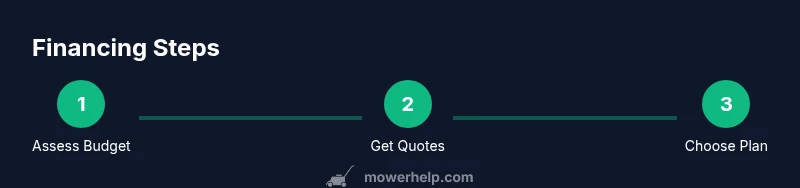
Assess your budget and needs
Calculate how much you can reasonably allocate to a monthly mower payment without stretching other essential expenses. Identify the mowing tasks you perform most often and the blade sizes you require. This upfront analysis prevents overpaying for features you won't use.
Tip: Record all monthly expenses and debt obligations to set a realistic ceiling. - 2
Gather quotes from multiple lenders
Request loan quotes from dealer financing, banks, and credit unions. Compare APR, term lengths, down payment requirements, and any fees. Consider pre-approval to know your ceiling before you shop.
Tip: Get quotes in writing and note the effective rate after all fees. - 3
Check your credit and fix issues
Pull your credit report, dispute any inaccuracies, and address negative items where possible. A clean report improves your chances of a lower rate and more favorable terms. Don’t wait until you’re faced with a negotiation deadline.
Tip: Document discrepancies and attach supporting letters when you apply. - 4
Estimate true ownership costs
Add maintenance, fuel, insurance, and potential parts replacement to your loan cost. A low monthly payment isn’t useful if it’s paired with high ongoing costs. Use a simple spreadsheet to compare scenarios side by side.
Tip: Back-of-the-envelope estimates are fine first; refine with quotes. - 5
Make a meaningful down payment
A larger down payment lowers principal and can reduce your rate. Even a modest down payment demonstrates commitment and improves financing terms. Decide a down payment amount you’re comfortable with in advance.
Tip: Aim for at least 10–15% if possible. - 6
Read the contract carefully
Review all loan terms, fees, penalties, and the warranty requirements. Confirm what happens if you miss a payment or if the mower is damaged before delivery. Ask the dealer to explain any unfamiliar terms in plain language.
Tip: Highlight penalties and prepayment rules in the contract. - 7
Choose the best overall offer
Choose the option that minimizes total cost while meeting your budget and risk tolerance. Consider whether the lender provides responsive service and convenient payment options. Make your final decision before signing.
Tip: Trust your budget, not just the monthly payment. - 8
Finalize and protect your investment
Complete the paperwork, arrange delivery, and set up reminders for maintenance and insurance renewals. Keep all documents in one organized folder. A well-maintained mower reduces the chance of unexpected costs.
Tip: Set up auto-pay or calendar reminders.
Got Questions?
Can I finance a used zero turn lawn mower?
Yes, some lenders offer financing for used mowers, but terms may be stricter and require a dealer-certified pre-owned unit. Expect higher interest and shorter terms. Always verify the mower’s condition and maintenance history.
Yes, some lenders finance used mowers, but terms are usually stricter; verify condition and maintenance history.
What affects my financing rate for a zero turn mower?
Rates depend on credit score, payment term, down payment, and lender policies. A larger down payment often reduces the rate, while longer terms may increase total interest. Shop around for the best APR.
Rates depend on your credit, down payment, and term. Compare offers for the best APR.
Should I buy extended warranties with financing?
Extended warranties can provide peace of mind but add to the total cost. Compare coverage, deductibles, and exclusions with the financing terms before deciding.
Consider value vs cost; compare coverage and exclusions before buying.
Is dealer financing always cheaper than a bank loan?
Not always. Dealer offers may include promotional rates, but banks can provide lower long-term costs. Get quotes from both and compare total cost over the term.
Dealer offers aren’t always cheaper; compare total cost with banks too.
What happens if I miss a payment?
Missing a payment can trigger penalties, late fees, and potential default. Contact the lender early to discuss options like a payment deferral or restructuring.
If you miss a payment, call the lender to discuss options and avoid default.
Watch Video
The Essentials
- Define a realistic monthly budget before shopping
- Compare multiple financing sources for true cost
- Factor maintenance and insurance into the payment plan
- Read every loan term and penalty before signing