Garden Tractors for Sale: A Comprehensive Buying Guide
Learn how to shop for garden tractors for sale with this data-driven buying guide from Mower Help. Discover features, price ranges, attachments, and maintenance tips to choose the right riding lawn tractor for your yard.


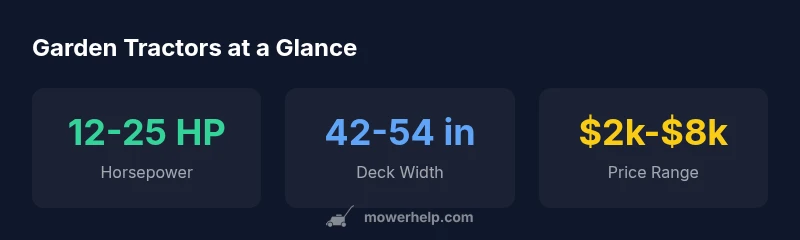
Garden tractors for sale describe mid-size riding lawn tractors built for homeowner tasks, including mowing, tilling, and hauling. When shopping, expect 2-4 speed options, power ranging 12-25 HP, and attachments such as plows or baggers. Prices typically range from $2,000 to $8,000 depending on brand, deck size, and added features.
What is a garden tractor?
Garden tractors for sale are mid-size riding lawn tractors designed to handle not just mowing but a range of yard tasks with expandable attachments. They sit between compact lawn tractors and full-size tractors in terms of power, deck width, and weight. According to Mower Help, most garden tractors offer 12-25 HP engines, a wide deck (usually 42–54 inches), and a sturdy frame that supports front or rear attachments. This versatility makes them popular for homeowners who want one machine to mow, haul, till, and snow-blade when seasons change. When shopping, assess your yard size, terrain, and the likelihood of using attachments to avoid overpaying for capabilities you won’t use.
How to size garden tractors for your yard
Start by mapping your property: overall acreage, slope, and obstacles. For yards under 1/4 acre mostly flat, a low-end model with a 42-inch deck and basic transmission can suffice. For medium yards 1/4 to 1 acre with modest hills, a mid-range model with hydrostatic drive, a 42-54 inch deck, and optional four-wheel drive provides smoother operation. For properties larger than an acre or with steep terrain, high-end garden tractors with larger decks (50-54 inches or more) and robust power deliver the best performance. When selecting horsepower, consider tasks beyond mowing, such as bagging leaves or pulling a cart; attachments and drive systems usually scale with the power and deck size. Always test the turning radius and seat comfort, since frequent operation across varied terrain highlights operator ergonomics. Finally, plan for maintenance access; easier service areas save time over years of ownership.
Key features to prioritize in garden tractors
Transmission choice (hydrostatic versus manual) affects ease of use. Deck width determines how quickly you mow and how much coverage per pass. Consider four-wheel drive for sloped terrain and improved traction. Power steering can reduce fatigue during hours of mowing. Attachment compatibility matters most for versatility: baggers, snow plows, tillers, and front-end weights expand the machine's calendar. Look for sturdy frames, easy access to service points, and a reliable warranty. Noise levels, vibration damping, and seat ergonomics also impact daily comfort. Finally, verify compatibility with common brands of attachments; cross-compatibility avoids locked-in costs if you expand tasks later.
Attachments and versatility for year-round use
Attachments extend the utility of garden tractors beyond mowing. A bagger or mulch kit helps keep lawns tidy with less effort. A front or rear blade makes winter snow clearing faster; a snow thrower can be a valuable addition in regions with heavy snowfall. A tiller can prepare garden beds, while a cultivator helps in weed management. A ballast kit improves traction when pulling heavy loads. Consider a hitch for towing carts and aerators for soil health. Keep in mind that each attachment adds weight, alters balance, and can impact fuel consumption. When evaluating garden tractors for sale, identify a core set of extensions you know you will use, and verify dealer availability, warranty coverage, and mounting hardware compatibility.
Budgeting and price expectations for garden tractors
Budgeting starts with your yard size, desired capabilities, and long-term ownership goals. Garden tractors in the market typically range from entry-level to luxury, with price bands that reflect deck size, horsepower, and attachments. For many homeowners, a mid-range model with a 42- to 54-inch deck and hydrostatic transmission delivers the best balance of performance and value. Expect to pay in the lower thousands for basic packages, and closer to the upper end for machines that include four-wheel drive and multiple attachments. Remember that the upfront price is only part of the cost; plan for ongoing maintenance, replacement parts, and occasional service visits. For 2026 shopping, compare dealer-installed options versus bundled packages to maximize warranty coverage and total cost of ownership. A careful approach helps you avoid overpaying for capabilities you won't use while ensuring you have gear to tackle all seasons.
Safety and maintenance basics for new buyers
This section covers essential safety practices and a practical maintenance routine. Before each use, inspect the mower deck, tires, and belts for wear. Check fluid levels, battery condition, and fuel quality; a simple ethanol-free fuel reduces varnish buildup in cold months. Follow the manufacturer's maintenance schedule for oil changes, air filters, and spark plugs if applicable. Replace worn blades or dull edges promptly to prevent ragged cuts and uneven wear. Store attachments correctly to prevent rust and ensure quick mounting later. Keep a fire extinguisher and protective gear on hand while operating, and train all family members in safe starting and stopping procedures. Regular maintenance preserves performance and resale value for garden tractors for sale over many seasons.
How to compare brands and models effectively
Create a comparison checklist that includes power, deck size, drive type, warranty length, and attachment ecosystem. Read the specification sheets carefully and verify real-world performance reviews. If possible, arrange a hands-on test drive to gauge operator comfort, visibility, and ease of mounting. Check service networks and part availability in your region; a strong dealer support system reduces downtime. Compare financing offers and total cost of ownership, not just sticker price. Documentation should cover bolt patterns for attachments and any required maintenance intervals. By building a side-by-side comparison, you can identify the model that best fits your yard, climate, and budget. This is how to navigate garden tractors for sale with confidence.
Buying channels: dealers vs private sellers
Dealers typically offer new machines with warranties, part support, and financing options; they may also provide demonstrations and delivery. Private sellers can present lower upfront prices, but you risk missing factory warranties and lacking post-sale support. When buying used, request service records, inspect for oil leaks, check tires tread, examine wear on the mowing deck, and test engine start. In either channel, insist on a thorough inspection and a test run in your yard conditions. Finally, verify title, registration (where applicable), and any transfer of warranty terms. Your approach should balance price with reliability, maintenance costs, and after-sales support when choosing garden tractors for sale.
The buying checklist: week-one tasks after purchase
This practical checklist helps you hit the ground running in the first week. Create a maintenance log noting oil type, filter changes, and blade replacements. Schedule a deck alignment, belt inspection, and a tire pressure check. Mount any required attachments and verify compatibility. Practice safe operation with family members and rehearse starting and stopping steps. Set up a regular cleaning routine to remove grass and debris that can degrade performance. Finally, register warranties and keep dealer contact information handy for quick troubleshooting. With these steps, you’ll maximize value from your garden tractors for sale and enjoy reliable yard work throughout the season.
Garden tractors for sale pricing and features by tier
| Tier | Typical Features | Ideal Yard Size | Notes |
|---|---|---|---|
| Low-end | Simpler decks, basic transmissions | ≤ 1/4 acre | Entry-level options for small yards |
| Mid-range | Hydrostatic drive, 42-54 inch decks | 1/4–1 acre | Best balance of power and features |
| High-end | Premium transmissions, larger decks (54 in+), added attachments | >1 acre | Top-tier performance and durability |
Got Questions?
What is the difference between a garden tractor and a riding mower?
A garden tractor is a mid-size, higher-powered machine designed for mowing plus yard tasks, with attachments like plows or tillers. A riding mower is typically lighter, with fewer attachment options and less versatility. Both are useful, but garden tractors excel in multi-tasking for bigger yards.
Garden tractors are bigger and more versatile, while riding mowers focus mainly on mowing.
Is a garden tractor suitable for very large properties?
Yes, for properties larger than a half acre, a garden tractor with hydrostatic drive and a wide deck can improve efficiency. For steep terrain, consider four-wheel drive and a durable frame.
Yes, for large properties, look for more power and a wider deck with sturdy drive.
What maintenance should I budget for?
Plan for routine oil changes, filter replacements, belt inspections, and battery checks. Regular maintenance reduces breakdowns and extends the life of your garden tractor.
Regular oil changes and belt checks keep it running smoothly.
What attachments are essential for year-round use?
A bagger or mulch kit for mowing, plus a snow blade or plow for winter work. A tiller or cultivator expands gardening capabilities. Ensure compatibility with your model.
Bagger and snow plow are common essentials for year-round use.
Where can I buy garden tractors for sale?
Dealers offer new machines with warranties and service; private sellers can be cheaper but risk lacking support. Compare prices and inspect the unit carefully before buying.
Dealers give warranties; private sellers may be cheaper but risk missing service.
How do I choose horsepower for my yard?
Choose horsepower based on yard size and tasks; typical garden tractors offer 12-25 HP engines, with higher power needed for hills or heavy attachments. Balance with deck size and weight.
Match horsepower to yard size and tasks, with a comfortable margin for hills.
“Garden tractors for sale represent a long-term investment in yard productivity; prioritize deck size, drivetrain, and attachment compatibility to maximize value.”
The Essentials
- Define yard size before shopping.
- Compare horsepower, deck size, and drive type.
- Check attachment compatibility early.
- Test-drive models for comfort and visibility.
- Plan for maintenance and warranty coverage.