Is a Trimmer the Same as a Shaver? A Practical Guide
Explore the differences between trimmers and shavers, when to use each, and how to choose the right grooming tool for beard, body, and skin care.


No. A trimmer and a shaver serve different grooming purposes. A trimmer uses guard attachments to cut hair to a defined length, giving you controlled shaping and a tidy beard or body hair look. A shaver removes hair very close to the skin, delivering a clean, smooth finish. Your choice should hinge on grooming goals, skin sensitivity, and maintenance needs.
Is a Trimmer the Same as a Shaver? A Practical Distinction
When you first ask is a trimmer the same as a shaver, the quick answer is that they are not interchangeable tools. The difference matters for the final appearance, skin feel, and routine maintenance. Think of a trimmer as a length-control device with guards that limit how short the hair is cut. A shaver, by contrast, aims for near-perfection close to the skin, using a head designed to shear hair away rather than simply trim it. This distinction influences what you can comfortably wear on your face or body, how often you sharpen or replace parts, and how you care for sensitive skin.
The most practical takeaway is to map your grooming goals to the tool’s core function. If you want a precise beard length or body hair kept at a consistent height, a trimmer is your ally. If you want ultra-smooth skin with no visible stubble, a shaver is your go-to. Budget, maintenance, and personal comfort all play into the decision. For many DIY enthusiasts, owning both tools offers the most flexibility, allowing you to switch between long, medium, and short lengths and then finish with a close shave when desired.
Design and Mechanism: How They Cut
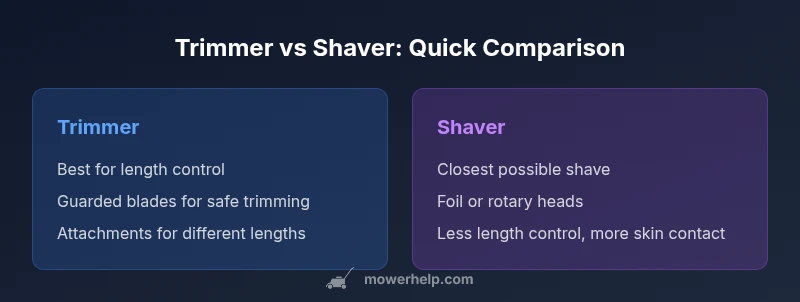
Trimmers are built around guarded blades or comb attachments. The attachment length determines how far hair is cut, and most devices offer a range of guard sizes. The result is predictable: you control the hair length, not the skin contact. Trimmers also tend to be more forgiving for beginners because guards reduce the chance of nicks and cuts. Shavers fold all hair away with minimal length—some models use foil heads, others rotary heads. The design prioritizes skin contact, enabling the closest possible shave but requiring more precision to avoid irritation. Battery life, motor speed, and the availability of waterproof features vary by model, but the fundamental difference remains about how much hair is removed and how close the final result is to the skin.
Use Cases: When to Reach for Each Tool
Beard and facial grooming: For shaping beards, mustaches, and goatees, a trimmer with multiple guard sizes is ideal. You can dial in a precise length for the cheeks, chin, and neck, then use a detailing comb for edges. Body grooming: A trimmer helps maintain a conservative, even length on chest, abdomen, and arms without exposing skin to close cuts. Nose and ear hair: Dedicated trimmers designed for trimming hairs in sensitive areas reduce the risk of pulling or scraping.
Close shaving needs: If your goal is an ultra-clean face, legs, or neck, a shaver is the better option. Shaving heads are designed to maintain skin contact and remove hair at the surface, producing a smoother look with fewer strokes. Skin sensitivity: People with sensitive skin often tolerate a trimmer first, then switch to a shaver with a gentle approach and appropriate aftercare.
Maintenance: Keeping Tools Effective Over Time
Guarded blades in a trimmer require regular cleaning to prevent hair clogging. Detachable guards should be rinsed or brushed out after use, and many trimmers benefit from a drop of clipper oil on the blades every few weeks to maintain smooth operation. Shaver heads also need cleaning, but the focus shifts to preventing buildup on foil or rotary heads. Depending on usage, blades can wear down or heads can become less effective, necessitating part replacements. Most modern devices offer washable designs and charging indicators to help you plan maintenance without guesswork.
Storage matters too. Keep your devices dry and away from humid environments to extend battery life. If your trimmer uses replaceable guards, store them with the device so you don’t lose size options. Battery health depends on your charging habits; avoid leaving devices plugged in at full time after they’re fully charged, if the manufacturer recommends it.
Buying Considerations: What to Look For
Key questions to guide your purchase: Do you need multiple guard sizes for length control, or is a simple one-guard solution sufficient? Is the device waterproof or splash resistant, and can you rinse it under running water? How long does the battery last, and can you recharge quickly? Consider the weight and grip—comfort matters for longer grooming sessions. Look for ease of cleaning and whether the device uses standard attachments you can replace later. Finally, check the warranty and available spare parts, because good support reduces long-term ownership stress.
Practical Comparison: Real-World Scenarios
In practice, a mid-range trimmer with several guard lengths allows you to master hair length with predictable outcomes. If you frequently trim facial hair to different lengths, invest in a model with a wide guard range and a reliable motor. For occasional close shaves, a workhorse shaver with a sturdy head and a gentle finish may be more satisfying. The right combination often includes both a trimmer and a shaver—each used in its optimal context. Budget models deliver value, but for frequent use or sensitive skin, prioritizing build quality and replacement parts becomes important.
Common Mistakes and How to Avoid Them
One common error is using the wrong guard for a given area, which can result in an uneven look or irritation. Another pitfall is pressing too hard against the skin to speed up cutting; this increases the risk of nicks. Skipping cleaning or oiling the blades leads to tugging and inconsistent cuts. Finally, not replacing worn blades or heads on schedule reduces performance and can cause skin irritation. A simple routine—clean after use, oil if recommended, and replace attachments when needed—saves time and keeps results predictable.
Comparison
| Feature | Trimmer | Shaver |
|---|---|---|
| Grooming goal | Length control and shaping with guards | Close shave near the skin |
| Cutting mechanism | Guarded blades/guards for defined lengths | Foil or rotary heads for skin contact |
| Best for | Beards, moustaches, body hair at defined lengths | Clean facial/shaving finish and skin smoothness |
| Power and maintenance | Removable guards; regular cleaning; battery-powered | Head replacements; cleaning; battery-powered |
| Water resistance | Many models are splash-resistant; check rating | Water-resistant options exist but varies by model |
| Price range | Typically $20-$150 depending on features | Typically $20-$180 depending on head type and model |
| Replacement parts | Guards readily available; blades may wear | Heads/blades require replacement over time |
| Best for | Versatility and length control | Closest finish and skin comfort |
Benefits
- Versatile grooming with length control and shaping
- Guard options reduce risk of nicks and cuts
- Typically lower upfront cost and broad availability
- Widely available accessories and replacement parts
Cons
- Not designed for an ultra-close shave on the first pass
- Guarded cuts rely on proper technique and guard selection
- Some maintenance tasks (blades/guards) require replacements
- Shaver heads can be more expensive to refresh when needed
Trimmer and shaver are not the same tool; choose based on grooming goals, or own both for maximum flexibility
If you want length control and shaping, pick a trimmer. For a close, skin-contact shave, choose a shaver. For top-tier versatility, many users benefit from having both tools available.
Got Questions?
Is a trimmer the same as a shaver?
No. A trimmer trims hair to a defined length using guards, while a shaver removes hair close to the skin. Both serve different purposes and can complement each other in a grooming routine.
No. Trimmers trim to length with guards, while shavers cut hair very close to the skin. They serve different grooming needs and can work together.
Can I use a trimmer to shave my beard?
You can use a trimmer to shape and maintain the beard before a final shave, but it will not deliver the same ultra-close result as a dedicated shaver. Use it to achieve the desired length first, then finish with a shaver if a close finish is required.
You can trim first for shaping, then finish with a shave if you want a very close result.
Are trimmers suitable for body grooming?
Yes, trimmers are commonly used for body grooming because they offer controlled length without scraping skin. Choose models with waterproof design and guard options for different areas.
Yes, they work well for body grooming with guards and waterproof options.
How long do trimmer batteries last?
Battery life varies by model, but most modern trimmers offer several charging cycles on a full charge. Check the manufacturer's stated run time and charging time before buying if you plan extended grooming sessions.
Battery life varies by model; look for one with enough run time for your routine and reasonable recharge time.
What maintenance do trimmers require?
Regular cleaning after use, oiling blades if recommended, and periodic replacement of guards or blades will keep performance consistent. Dry storage and avoiding moisture help extend the device life.
Clean after use, oil if needed, and replace worn parts when required.
The Essentials
- Identify your primary grooming goal before buying.
- Prioritize guard options and length ranges on a trimmer.
- Check head type and skin suitability for a shaver.
- Look for water resistance and easy cleaning features.
- Consider owning both tools for comprehensive grooming.