Is a Trimmer the Same as a Weed Eater? A Practical Guide
A detailed, objective comparison clarifies whether a trimmer and weed eater are the same tool, examining power sources, attachments, maintenance, and yard-ready choices for homeowners and DIYers.


Is a trimmer the same as a weed eater? In most homes, yes. The terms usually describe the same tool: a handheld device that uses a spinning nylon line to cut grass and weeds. The main differences come from naming conventions, attachments, and power sources. When choosing, focus on the shaft type, weight, and available blades or lines, rather than the label alone. This approach keeps decisions grounded in function over branding.
Terminology and misconceptions
Is a trimmer the same as a weed eater? In everyday use, yes; the two terms describe the same class of lawn tool, typically a string-trimmer. According to Mower Help, most homeowners see the terms as interchangeable for routine edging and trimming tasks. However, naming varies by region and by brand, and some models are marketed as weed eaters due to branding. To avoid confusion, focus on the tool's function, cutting head, power source, and attachments rather than the label. This clarification helps homeowners purchase confidently. The core idea remains: you need a device that spins a line to cut grass and weeds, not a different instrument.
How trimming technology has evolved
From early push-pull gas units with simple fixed lines to today’s cordless, brushless electric designs, trimming technology has evolved significantly. Modern models use lighter materials, more efficient motors, and auto-feed systems that minimize line breaks. The question of is a trimmer the same as a weed eater still lingers, but the evolution is more about performance and ergonomics than function. You'll find models optimized for quiet operation, longer run times, and easier maintenance. For DIYers, this means choosing between corded, battery, or gas power based on yard size, accessibility, and tolerance for noise and emissions. As you compare, remember that the fundamental task remains trimming and edging; the tool’s identity is less important than how you apply it.
Core differences in power sources, design, and attachments
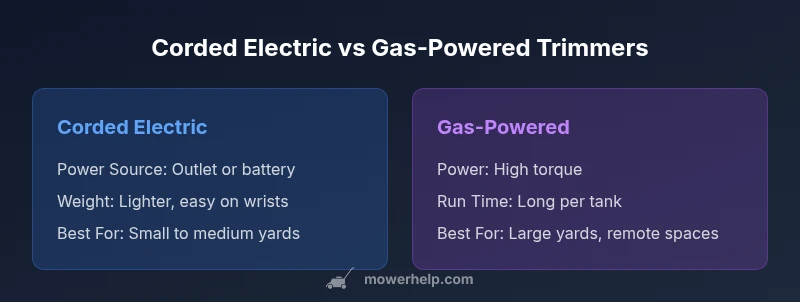
The primary differences lie in power source and how attachments interact with the shaft. Corded electric and battery-powered units offer predictable power, lighter weight, and lower emissions, making them ideal for small to medium yards and close edging. Gas-powered trimmers deliver high torque, longer run times, and the ability to work far from outlets, but at the cost of more weight and greater maintenance. The cutting head options also matter: nylon line for most day-to-day trimming, or metal blades for tougher growth and thicker weeds. Consider the length of the shaft (straight vs curved) for reach, and whether the model supports edging wheels or dual attachments. In sum, weigh power, reach, and versatility against cost and noise.
Attachments and ergonomic considerations
Attachments can transform a trimmer into a multi-tool. A bump-feed or automatic-feed head keeps line supply consistent, while edging wheels enable clean borders along sidewalks. Blade attachments expand capability for thicker vegetation, but require caution and protective gear. Ergonomics matter: a well-balanced tool reduces wrist strain, and adjustable handles or harnesses can make long sessions more comfortable. The topic is often framed as is a trimmer the same as a weed eater, but the real driver is how attachments align with your tasks—edging, trimming, or clearing along fences may require different heads and guards.
Maintenance, safety, and operating costs
General maintenance for both categories includes cleaning the head, checking guards, and replacing the line or blades as needed. Gas models add fuel management, oil mixing (if applicable), spark plug servicing, and carburetor cleaning. Electric and battery-powered units require less routine maintenance, but batteries eventually wear out and chargers need to be considered. Safety cannot be overstated: always wear eye and hearing protection, keep bystanders away, and inspect the area for obstacles before starting. Based on Mower Help analysis, proper maintenance reduces downtime and extends tool life; this is a critical factor in the total cost of ownership. Budget for occasional replacements rather than surprises.
How to choose for yard size and style
For small yards with tight edges, an electric corded or lightweight cordless model is usually best: easy to handle, quiet, and inexpensive to repair. For larger yards or remote spaces without easy access to power, a gas-powered trimmer offers longer runtimes and greater mobility, albeit at higher cost and weight. If you need detailed flexibility, seek models with interchangeable heads, shoulder straps, and ergonomic grips. Evaluate run-time vs recharge time for batteries, and consider the space you have for storing fuel and spare line. Remember that the is a trimmer the same as a weed eater distinction fades when you select a tool that fits your workflow.
Common mistakes and expert tips
To avoid common issues, store tools correctly, replace line before it breaks, and never force the trimmer into thick growth. Start with lower speeds and gradually increase as needed, and keep the cutting head parallel to the ground for even trims. Use the edging feature when possible to prevent wear on the guard, and prioritize safety gear: eye protection, gloves, and sturdy footwear. A final tip: test balance in your hands before buying; a comfortable grip saves fatigue and improves control.
Comparison
| Feature | Corded Electric Trimmer | Gas-Powered Trimmer |
|---|---|---|
| Power Source | Corded electric or battery-powered for steady, plug-in or rechargeable power | Gas-powered engine for mobility and long run-time |
| Run Time/Limitations | Unlimited by a cord or determined by battery capacity | Long continuous run-time per tank, but refueling interrupts use |
| Weight & Handling | Typically lighter and easier for beginners | Often heavier; balance is crucial for comfort |
| Noise & Emissions | Quieter with no emissions (electric) | Louder and more emissions (gas) |
| Maintenance | Lower maintenance; fewer moving parts | Fuel system maintenance and routine tune-ups |
| Best For | Small to medium yards, edging near obstacles | Large yards or remote spaces, no outlets |
Benefits
- Versatile with extensions and attachments
- Electric models offer quiet operation and cleaner running
- Gas models deliver maximum power and run-time for big jobs
- Lightweight corded options exist for easy handling
- Attachment compatibility can broaden tool usefulness
Cons
- Gas models require fueling and more maintenance
- Electric/corded models limit range unless you have outlets
- Cordless batteries add weight and cost, plus charging time
- Noise and emissions for gas-powered units
Electric trims are the default best choice for most homes; gas-powered models excel for very large yards or remote spaces.
For typical suburban yards, choose electric or cordless options for balance of weight, noise, and maintenance. Reserve gas-powered units for large, remote properties that lack easy access to outlets.
Got Questions?
Is a trimmer the same as a weed eater?
In practice, yes—the terms describe the same class of lawn tool used for trimming grass and weeds. The difference is mostly branding or regional language; functionally they are similar. Always verify attachments and power source to suit your yard.
Yes. In most cases, a trimmer and a weed eater refer to the same tool; the name varies by brand or region.
What is the difference between a string trimmer and a blade trimmer?
A string trimmer uses nylon line to cut vegetation, while a blade trimmer uses a metal blade for tougher growth. Blades are more aggressive but require careful handling and replacement costs.
String trimmers cut with line; blade trimmers cut with blades for thick vegetation.
Can I use a trimmer for edging?
Yes, most trimmers offer an edging option or wheel accessory to cut along borders. Use the edging mode and keep the guard in place to protect you.
Yes, you can edge with many trimmers using the edge feature.
What maintenance does a trimmer require?
Regular maintenance includes cleaning the head, replacing line, inspecting guards, and servicing fuel systems for gas models. Clean air filters and spark plugs as needed on gas engines.
Keep the head clean, replace line, and service fuel parts if you have gas.
Gas vs electric: which is cheaper to run?
Electric trims generally have lower operating costs due to no fuel handling and fewer moving parts, while gas models incur fuel and maintenance costs. Total cost depends on yard size and usage.
Electric usually costs less to run day-to-day; gas costs depend on fuel and maintenance.
Are batteries a good choice for cordless trimmers?
Cordless batteries offer portability and quiet operation, but runtime and charge times matter. Look for higher amp-hour ratings and the ability to swap packs for longer jobs.
Cordless is great for mobility; just check runtime and recharge times.
The Essentials
- Define your yard size before choosing a power source
- Prioritize weight and balance for comfortable use
- Check attachments to expand functionality
- Consider noise, emissions, and maintenance in total cost
- Test a model's grip and reach before buying