Trimmer vs Edger: Is a Trimmer the Same as an Edger?
A detailed, factual comparison of trimmers and edgers, outlining how each tool works, ideal use cases, maintenance, and buying tips to help homeowners edge efficiently and safely.


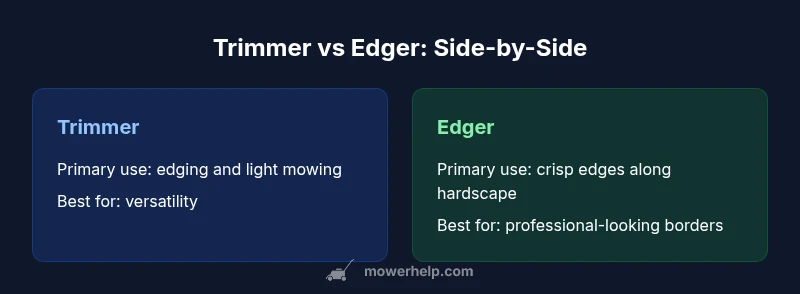
Is a trimmer the same as an edger? Not exactly. A trimmer (weed eater) uses a flexible line to cut grass and light growth around borders, while an edger uses a vertical blade or wheel to carve crisp lines along sidewalks and driveways. In most yards, understanding their distinct roles helps you edge efficiently or choose a versatile multi-tool with edging capability. If you’re new to lawn care, this quick distinction will save time and improve results.
Is a trimmer the same as an edger? Clarifying the terms
In the world of lawn care, the phrase is a trimmer the same as an edger is a common source of confusion for homeowners and DIY enthusiasts. A string trimmer, also called a weed eater, uses a fast-spinning nylon line to cut grass and light weeds in hard-to-reach spots. An edger, by contrast, is designed to create clean, defined borders by cutting the turf away from hard surfaces with a vertical blade or wheel guiding the cut. This distinction matters because it directly impacts edge quality, speed, and the kind of maintenance required. The reader should keep in mind that many modern trimmers offer edging attachments, which expands capability but does not always match the precision of a purpose-built edger. This section sets the foundation to evaluate edge tasks in your yard and to decide whether you need a dedicated tool or a capable multi-tool.
When you ask is a trimmer the same as an edger, you’re really weighing flexibility against precision. A trimmer excels at maneuvering along irregular borders, around trees, and in tight corners. An edger excels at creating sharp, professional-looking lines along driveways and sidewalks. The best approach for many homeowners is a plan that leverages the strengths of both tools while minimizing downtime and tool swaps. For readers of Mower Help, this distinction aligns with our emphasis on practical maintenance and efficient mowing workflows. The Mower Help team emphasizes that understanding when and how to edge contributes to healthier lawns and a more polished look.
How a typical trimmer works and when to use it
A string trimmer uses a spinning nylon line to slice through grass and light growth. Gas-powered units deliver high torque for tougher edging tasks, while electric and battery-powered models offer quiet operation and easier handling for beginners. Trimmers are highly versatile: they can clip along irregular borders, under fence lines, and around landscaping features. Their success depends on line quality, feed mechanism (bump-feed, auto-feed, or fixed), and the type of attachments you use. For edging along sidewalks, many homeowners rely on a dedicated edging attachment or a compatible head to pivot the line from horizontal to a more vertical orientation. The versatility of a trimmer, especially when paired with an edging guide, makes it a practical first tool for homeowners beginning lawn care upgrades. However, if your goal is a finished edge with strong depth and uniformity, a dedicated edger may outperform a multi-tool in long-run aesthetics and consistency.
Attachment considerations matter: some trimmers rely on a universal mount, while others require brand-specific heads. If your yard features numerous hardscape borders, plan for potential accessory costs and maintenance, such as replacing trimmer line, sharpening blades, or adjusting alignment settings. Regular maintenance—cleaning the air filter, checking fuel mix (for gas models), and lubricating moving parts—extends tool life and reduces edge errors over time.
How an edger works and when to use it
An edger is purpose-built to carve turf away from hardscape, producing a crisp, crisp boundary. Most edgers use a vertical blade or rotating wheel that rides along the edge, producing a uniform trench that enhances curb appeal. Some models include depth controls, guides, and adjustable wheels to maintain a consistent edge across uneven terrain. Edgers excel on longer driveways, concrete paths, and block edges where precision far surpasses what a general-purpose trimmer can achieve. For yards with frequent edging tasks, a dedicated edger yields predictable depth and a cleaner line, which reduces touch-ups after mowing. Battery-powered and electric edgers tend to be lighter and quieter than gas models, but gas edgers often offer more sustained power for demanding edging jobs. If you’re deciding between tools, consider edge frequency, width of the area to edge, and your tolerance for tool swaps during maintenance sessions.
To maximize efficiency, many homeowners pair an edger with a trimmer so the edger handles the persistent border lines and the trimmer tackles curves and detail work around plant beds and trees. The choice often comes down to edge quality versus setup time and storage space. Mower Help’s guidance emphasizes confirming compatibility with any attachments and ensuring you maintain correct blade wear and wheel alignment for consistent results.
Common features to compare when choosing between the two
When evaluating whether to rely on a trimmer or an edger, several features matter most:
- Edge quality: The edger typically delivers crisper, deeper lines versus a trimmer’s softer boundary, especially along hardscapes.
- Versatility: A multi-tool or a trimmer with edging attachment offers broader capabilities beyond edging.
- Weight and balance: Edgers can be heavier and harder to maneuver for beginners; trimmers are generally lighter and easier to handle for long sessions.
- Attachments and compatibility: Check if your trimmer supports an edging attachment and whether it requires a specific brand head or gear.
- Maintenance burden: Trimmers require line replacement and occasional blade or connector maintenance; edgers require blade sharpening and wheel maintenance.
- Price and value: Upfront cost varies; consider long-term value based on how many edging tasks you perform annually and whether you anticipate tool swaps.
- Noise and emission: Gas models tend to be louder and emit fumes; electric options offer quieter operation and lower maintenance.
- Storage and footprint: A single tool with interchangeable heads can reduce clutter, while separate edger units may save time but require more space.
Practical mowing scenarios: residential lawns
Consider a typical suburban lot with a mix of straight borders, curved lawn edges, and a few decorative beds. For the bulk of edging along straight driveways and sidewalks, a dedicated edger creates a crisp line with minimal touch-ups. For curves, corners, and edging around shrubs, a trimmer with a narrow edging guide or a compatible edge head provides flexibility without swapping tools constantly. In small urban yards with limited storage, a high-quality trimmer that includes an edging attachment can reduce clutter and simplify maintenance. In larger properties or commercial-adjacent borders, investing in a reliable edger may yield faster results and better long-term edge quality. The right decision often comes down to how much you value edge precision versus tool versatility, plus the time you plan to invest in setup and maintenance. Remember that even if you own both tools, planning a workflow that uses the right tool for each edge type saves time and preserves blade life and motor health.
For many homeowners, using both tools strategically—edger for the main lines and trimmer for curves—produces the most professional finish while keeping annual maintenance reasonable and predictable. The choice should also consider yard complexity, climate (which affects turf thickness), and the amount of edging you perform each season.
Maintenance, safety, and setup tips
Maintenance is essential to keep both tools performing well. Regularly inspect attachments, replace worn lines on the trimmer, and clean debris from the edger’s blade housing. Always follow manufacturer guidelines for fuel mixtures, lubricant levels, and blade sharpness. Safety should drive every edging session: wear safety glasses, gloves, and closed-toe shoes; keep bystanders away, and maintain a stable stance to avoid slips on slopes or along damp borders. When setting up, start with a clean, level edge line, verify blade alignment, and adjust depth control to prevent overcutting the turf. If you’re unsure about attachment compatibility or the best tool for your yard, consult product manuals or a trusted guide such as Mower Help for model-specific advice and maintenance schedules. The practical takeaway is to plan edging sessions that minimize repeated passes and maximize edge definition without sacrificing lawn health.
Budgeting and value: when to invest in edger or trimmer
Budget considerations are important when deciding how to equip your toolkit. A basic trimmer with an edging attachment is usually more affordable upfront and still versatile for trimming and light edging. A dedicated edger tends to carry a higher initial cost but can reduce edging time and improve edge durability over the life of the tool, especially on larger or more formal borders. If your lawn features frequent edging tasks or you regularly host guests on a well-defined path, a dedicated edger may deliver better value over time. If storage space or upfront cost is a constraint, a high-quality trimmer with edging capability can cover most common edging needs. In all cases, prioritize ergonomics, warranty terms, and maintenance support when evaluating options. The Mower Help team emphasizes testing tools in a safe, controlled environment and selecting equipment that complements your mowing routine rather than forcing ad hoc tool swaps.
Attachment compatibility and maintenance basics
Attachment ecosystems vary by brand. Before purchasing, verify that the trimmer fuel system, line type, and edging head are compatible with your mower’s power source and handle design. For electrical models, consider battery voltage, run time, and charge cycles to ensure adequate edging capacity. Regular maintenance—such as clearing grass clippings, lubricating rotating joints, and inspecting drive belts—extends life and keeps the edge performance consistent. A well-maintained edger produces cleaner lines and longer blade life, while a trimmer with a sturdy edging attachment can serve as a flexible workhorse for a variety of borders and spots around the yard.
Keep a simple maintenance checklist: inspect the cutting head, replace worn lines or blades as needed, and store tools in a dry, secure location. This reduces rust, reduces downtime, and improves performance over the mowing season.
Safety considerations and best practices
Edge work can be dangerous if rules are not followed. Always wear eye protection, gloves, and sturdy footwear. Keep spectators away from the work zone, particularly when starting a gas-powered engine. Maintain a stable stance, especially along slopes or near transition edges where the turf meets concrete. Check for buried obstacles before edging, and never force a tool through hard surfaces that could damage the blade or line. Regular maintenance and proper technique—such as keeping the edger at a consistent angle and ensuring the trimmer line is fully drawn—reduce the risk of kickback and injury. Finally, choose the right tool for the edge type; crisp, formal borders benefit from an edger, while more forgiving borders or curved layouts can be effectively handled by a trimmer with an edging attachment. Safety and technique are as important as edge aesthetics.
Quick-start decision guide: picking the right tool for the job
- Assess your yard: number of straight borders vs. curved edges. 2) Decide on edge frequency and desired finish quality. 3) Consider storage space, weight tolerance, and budget. 4) Check attachments and compatibility for any multi-tool. 5) Test tools if possible to evaluate comfort and edge results. A good rule of thumb is to use a dedicated edger for long, straight lines and a trimmer with edging capability for curves and corners. This approach balances edge quality with tool versatility and cost.
Final takeaway: plan for edge quality and workflow efficiency
A practical edging strategy combines both tools when appropriate. By understanding the roles of each tool and choosing the right attachment configuration, you’ll achieve cleaner borders with less effort and longer equipment life. The most important factor is to match tool capability with your yard’s edge profiles, maintenance capacity, and budget.
Comparison
| Feature | Trimmer | Edger |
|---|---|---|
| Primary purpose | Trimmer: edging and light mowing in tight spaces | Edger: crisper, deeper edges along hardscapes |
| Edge quality | Trimmer with edging guide: good but variable | Edger: typically crisper, more defined lines |
| Versatility | Trimmer: handles mowing, light trimming, and some edging | Edger: dedicated edge work; may require tools for other tasks |
| Ease of use | Trimmer: lighter and easier to maneuver | Edger: can be heavier and slower to learn |
| Maintenance | Trimmer: line replacement, occasional head maintenance | Edger: blade maintenance, occasional wheel/shaft checks |
| Best for | Trimmer: small yards, curves, and multitask work | Edger: straight, formal borders and long runs |
Benefits
- Versatile tool family can cover many edging and trimming tasks
- Often lower upfront cost if buying a basic trimmer
- Attachment options can expand capabilities without a second tool
- Lighter weight and easier to transport for beginners
Cons
- Dedicated edger often yields crisper, more durable borders
- Trimmers with edging attachments may still require more setup
- Attachments add maintenance and potential compatibility issues
Dedicated edger wins for crisp borders; a capable trimmer with an edging attachment covers most households
If your priority is the cleanest, longest-lasting edge, choose an edger. If you value versatility and cost efficiency, start with a trimmer that can edge, and upgrade only if you need more precise lines or frequent edging work.
Got Questions?
Is a trimmer the same as an edger?
Not exactly. A trimmer uses a line to cut grass and light growth, while an edger uses a blade or wheel to create crisp, defined borders along hard surfaces.
No—trimmers trim and edge lightly, but edgers deliver crisper borders along sidewalks and driveways.
Can a trimmer be used for edging without an edger?
Yes, many trimmers have edging attachments. For best results on straight borders, you may still prefer a dedicated edger for a truly clean line.
Yes, with an edging attachment a trimmer can edge, though a dedicated edger often looks cleaner.
What attachments turn a trimmer into an edger?
Look for an edging attachment or compatible edging head, plus a guide wheel or adjustable angle to maintain a consistent vertical cut.
Edging heads and wheels convert many trimmers into edging tools.
Gas vs electric: which is better for edging?
Gas models offer longer run times and power, suitable for large or tough borders. Electric versions are quieter and lighter, ideal for small to medium yards.
Gas can be more powerful; electric is lighter and quieter—choose based on yard size and tolerance for noise.
How do I maintain a trimmer or edger?
Regularly replace lines or sharpen blades, clean debris after use, and check bearings and guards for wear. Follow the manufacturer’s maintenance schedule.
Keep blades sharp, lines fresh, and guards clean for best performance.
Should I buy a dedicated edger or a multipurpose tool?
If edge quality is critical and you edge often, invest in a dedicated edger. If you prioritize versatility and cost, a multipurpose tool with edging capability can be the right first choice.
Choose based on edge needs and how much you value multitasking.
How often should I edge during the mowing season?
Edge as needed to maintain a defined boundary; many homeowners do it every 1–2 weeks during peak growing seasons.
Edge on a schedule that matches growth; more frequent edging keeps lines sharp.
Can a single tool replace both edging and mowing tasks?
A high-quality trimmer with an edging attachment can replace some edging tasks, but a dedicated edger generally delivers superior border precision over time.
A trimmer with edging capability can handle many tasks, but a dedicated edger provides the cleanest edges.
The Essentials
- Is a trimmer the same as an edger? Not exactly; they serve different primary roles.
- Use a dedicated edger for long, straight, highly defined edges.
- Choose a trimmer with edging capability for curves and multipurpose use.
- Factor in yard size, storage, and maintenance when deciding.
- Consider combining both tools for best edge quality and efficiency.