Lawn mower or grass trimmer: A practical comparison
Compare lawn mowers and grass trimmers to decide what fits your yard: coverage, maintenance, cost, noise, and attachments for homeowners and DIY enthusiasts.


According to Mower Help, the choice between a lawn mower or grass trimmer hinges on yard size, terrain, and the primary tasks you face. For wide, flat lawns, a mower delivers faster, cleaner cuts; for edging, borders, and hard-to-reach spots, a grass trimmer shines. In most homes, the smart approach blends both tools, depending on the job. This quick answer frames the dilemma as a complementary pairing rather than a single “winner” for every situation.
The core distinction: lawn mower vs grass trimmer
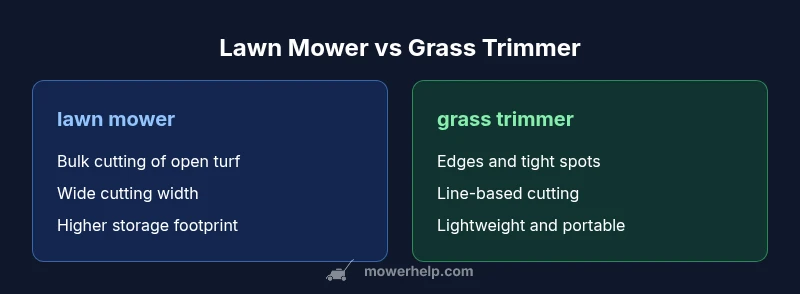
When you ask, what should I buy, the best starting point is to separate the two tools by their intended scope. A lawn mower or grass trimmer pair isn’t about one tool replacing the other; it’s about deploying each where it shines. The lawn mower is designed to handle bulk cutting across open turf efficiently, delivering an even height with predictable speed. A grass trimmer, meanwhile, excels at edging along sidewalks, borders, and around obstacles where a broader deck can’t reach. For homeowners evaluating a single purchase, the question becomes: what is the primary area to cover, and where do you need precision in tight spaces? The Mower Help team notes that most yards benefit from a blended toolkit—one tool for broad mowing and another for finishing touches along fences, driveways, and flower beds. If you expect frequent touchups, plan for a second tool to keep edges sharp and avoid scalping.
Decision drivers: yard size, terrain, task mix (and seasonality)
The size of your yard remains the foremost determinant in choosing between a lawn mower and a grass trimmer. For small lawns with tight borders, a capable trimmer can tackle most edging, but bulk cutting still favors a mower. Medium-sized yards with gentle slopes benefit from a hybrid approach: a mower for the main swathes and a trimmer for the edges. Large, flat properties often justify the investment in a reliable mower to reduce overall mowing time. Terrain matters too: uneven ground, roots, and planted beds increase the value of a flexible trimmer for precise edging. Seasonal factors—like spring growth bursts or dry mid-summer conditions—affect maintenance needs and runtime. In the end, the choice hinges on matching the task profile to tool capabilities, a principle echoed in the guidance from Mower Help on scenario planning and equipment selection.
Cost of ownership and long-term value (no numbers, just sense)
Cost considerations for the lawn mower vs grass trimmer hinge on several levers: purchase price, fuel or electricity costs, maintenance intervals, and the long-term durability of the engine and components. Based on Mower Help analysis shows that the total cost of ownership is driven by how often you use each tool, the quality of attachments, and the resale value of the equipment when you upgrade. A mower used for the bulk of the lawn can reduce overall mowing time, potentially lowering labor costs in larger yards. A trimmer’s lighter weight and edge precision can cut down on manual edging and trimming labor. The upshot: invest in the tool that minimizes time spent per job while maximizing reliability and ease of maintenance over several seasons. Avoid assuming the cheaper option always wins; consider your typical workload and how often you’ll need to replace parts like blades or lines.
Performance in practice: mowing efficiency vs edge precision
In daily use, a lawn mower’s strength is coverage speed. A single pass across a typical open lawn can produce a uniform cut that requires little touch-up. Conversely, a grass trimmer excels where a mower fails: along fence lines, around trees, and in tight corners where the deck can’t reach. For hills or irregular terrain, the lighter weight and nimble handling of a trimmer help prevent fatigue and provide clean finish along edges. The practical takeaway is that performance is not about which tool is stronger, but about which task is assigned to each tool. A well-balanced workflow uses the mower for primary turf removal and reserves the trimmer for finishing work that keeps the lawn looking manicured and well-defined.
Power sources, weight, and ergonomics: choosing the right drive
Power options matter for both tools. Lawn mowers run on gasoline, electricity (corded or cordless), or sometimes propane, with trade-offs in runtime, noise, and emissions. Grass trimmers also offer gas and electric variants, with lighter models easier to move but sometimes offering less sustained power. Ergonomics, including handle design, vibration management, and overall weight, influence comfort during long sessions. A heavier mower can tire you out on a large job, while a lighter trimmer’s balance reduces fatigue when edges require frequent passes. For repetitive edging or long runs along borders, test the balance and grip to ensure you can maintain precision without strain.
Attachments, consumables, and future-proofing your setup
Attachments and consumables separate high-value tools from one-season purchases. Mowers benefit from blade upgrades, mulching kits, and proper height adjustments to control clipping height. Grass trimmers rely on line feeds, heads, and optional edger attachments to broaden their utility. When planning a purchase, look for compatibility across brands and the availability of spare parts. A future-proofed setup often means choosing a mower with a modular deck height and a trimmer with easy-to-replace lines and a robust head. This flexibility makes it easier to adapt as your lawn grows or as seasonal needs change, reducing the likelihood of needing an entirely new system within a few seasons.
Weather, storage, and environmental considerations
Weather and climate influence maintenance decisions and running costs. Wet conditions affect mowing speed and risk of clogging, while dry spells increase the importance of efficient deck design and edger performance. Storage space can determine which tool you realistically can own; a bulky mower may require a dedicated shed or garage, while a trimmer can often be tucked into a corner with attachments. Environmentally, electric models tend to have lower emissions and noise profiles, while gas engines supply more runtime but demand more maintenance. The environmental footprint varies with fuel type, battery chemistry, and charging habits. When evaluating lawn mower or grass trimmer options, weigh not only upfront costs but also end-of-life and recycling considerations, as this can impact long-term sustainability.
Scenarios and decision framework: when to pick which tool
Use a mower when you have a large, open lawn with uniform turf and flat or gently rolling terrain. If your yard includes fences, flower beds, trees, or other obstacles, a grass trimmer becomes essential for finishing touches and edge work. For very small yards, a high-quality trimmer may suffice for light mowing, but the time spent on edging and alignment often makes the mower more efficient overall. A practical decision framework starts with listing the tasks you perform most often, estimating the time each task takes with each tool, and evaluating storage and maintenance labor. In many cases, homeowners benefit most from a blended approach: rely on the mower for bulk mowing and reserve the trimmer for precision edging and problem areas.
Buying guide: features, models, and buying decisions
When evaluating models, prioritize power source compatibility, cutting width or line length, weight and ergonomics, and the availability of attachments. Consider warranty length and service networks for both tools. Check whether the mower offers adjustable deck height for different grass types and seasons, and whether the trimmer includes a robust head and easy-to-replace line. Reading user reviews and hands-on demonstrations can help identify models with reliable starting performance and steady maintenance costs. Finally, map out a basic maintenance plan—sharpening blades for the mower, replacing lines for the trimmer, and cleaning air filters or spark plugs as needed. This structured approach helps you select a durable setup that serves you across multiple seasons.
Myths, tips, and best practices to maximize efficiency
A common myth is that one tool can perfectly replace the other in every yard. The reality is that both tools have strengths that complement each other. A practical tip is to schedule mowing on cooler days to reduce heat stress on engines and improve blade performance, and to perform edge work after mowing to keep edges crisp. Regularly check fasteners and hoses, and store tools in a dry area to prevent rust and degradation. By following a thoughtful maintenance and usage plan, you’ll extend the life of both tools and keep your lawn looking its best across the seasons.
Comparison
| Feature | lawn mower | grass trimmer |
|---|---|---|
| Power source | Lawn mower: Gasoline or electric (corded or cordless) | Grass trimmer: Gasoline or electric (corded or cordless) |
| Primary use | Bulk cutting of open turf with uniform height | Edging, borders, and tight spots |
| Cutting width/line length | Wide cutting deck on the mower | Narrow cutting line on the trimmer |
| Maintenance focus | Blade, deck height, air filter (varies by model) | Trimmer line, head, and engine components |
| Best for | Large lawns with flat to gently rolling terrain | Edges, fences, around obstacles, uneven ground |
Benefits
- Lawn mower offers fast coverage for large areas
- Grass trimmer excels at edges and hard-to-reach spots
- Attachments expand capabilities (edger, dethatcher, etc.)
- Potentially lower long-term labor time for bulk mowing in big yards
- Balanced tool setup reduces time spent on maintenance and edging
Cons
- Mower requires more storage space and can be heavy to maneuver
- Trimmer has limited bulk mowing capability and may require more passes along open turf
- Maintenance costs can add up with multiple attachments
- Quality performance often relies on good blade/line upkeep and replacement costs
Hybrid approach wins: use a mower for bulk cutting and a grass trimmer for edges and tight spots.
The Mower Help team recommends a blended setup for most homes. Start with a mower for the main area and pair it with a trimmer for finishing touches and problem edges; this combination saves time and improves overall lawn quality.
Got Questions?
What are the main differences between a lawn mower and a grass trimmer?
A lawn mower handles bulk cutting across open turf, providing uniform height and faster coverage. A grass trimmer focuses on edging, borders, and tight spaces where a mower cannot reach. Each tool plays a distinct role in a complete lawn care workflow.
A mower covers wide areas; a trimmer handles edges and tight spots.
Can I replace a lawn mower with a grass trimmer for a small yard?
For very small yards, a trimmer may handle light mowing, but it will be slower and more labor-intensive. Most homeowners still rely on a mower for bulk cutting to save time.
A trim-only setup might work in tiny spaces, but it’s usually slower.
What maintenance does each tool require?
Both tools require routine maintenance: keep blades sharp, clean debris, and inspect safety features. Mowers may need spark plug checks, air filters, and blade balancing; trimmers require line replacement and head maintenance.
Keep blades sharp and clean; check parts regularly.
Are electric models quieter than gas models?
Electric models tend to be quieter with lower emissions, though power and runtime vary. Gas engines offer longer run times for large yards but are louder and require more maintenance.
Electric is usually quieter and cleaner; gas runs longer but louder.
What features matter most when buying either tool?
Look for compatibility of power source, cutting width or line length, weight, handle ergonomics, and attachment options. Consider warranty and the availability of replacement parts and accessories.
Check power, weight, attachments, and warranty.
The Essentials
- Assess yard size to determine primary tool
- Edge work is the trimmer’s forte
- Blended tool setups offer best efficiency and finish
- Plan for storage and maintenance to maximize lifespan