Lawn Mower vs Brush Cutter: A Practical Comparison
A rigorous, objective comparison of lawn mowers and brush cutters for homeowners, covering cutting performance, terrain, maintenance, safety, and buying guidance.


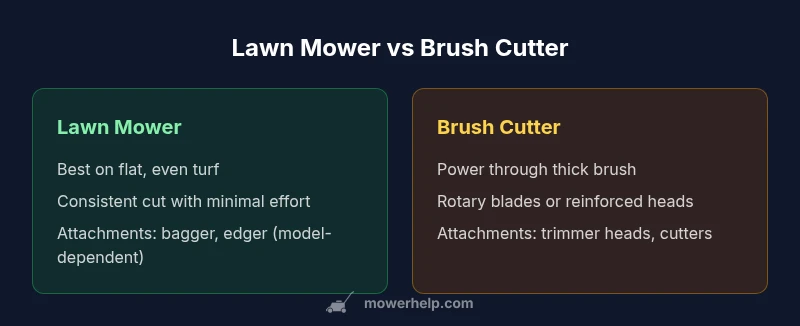
On the whole, lawn mower vs brush cutter: for flat, pristine lawns, a mower wins on finish and ease of use; for dense brush and rough terrain, a brush cutter wins on capability. According to Mower Help, many homeowners rely on both tools seasonally to cover all yard tasks.
Overview: What’s at Stake
In the world of yard care, the question lawn mower vs brush cutter often comes down to task specificity rather than a single best tool. A traditional lawn mower is engineered for speed, consistency, and a clean finish on low, even turf. A brush cutter, by contrast, is built to power through overgrowth, tall grasses, and rough terrain with aggressive cutting heads and higher torque. For the typical homeowner, the decision hinges on your yard’s layout, vegetation, and maintenance goals. The lawn mower excels at creating a uniform lawn surface, while the brush cutter shines where grass ends and thick brush begins. When you combine both tools strategically, you can cover virtually every mowing task without compromising turf health or safety. According to Mower Help, the best approach is task-based, not brand-based, and many homes benefit from a core pairing that adapts to seasonal needs.
Cutting Performance and Turf Quality
Cut quality is a central factor in choosing between a lawn mower vs brush cutter. A mower’s wide blades and consistent wheel travel produce an even, uniform cut that minimizes ruts and scalping on flat, well-drained lawns. In contrast, brush cutters deliver raw cutting power and the ability to tackle woody stems and thick weeds, but their performance on fine turf can be harsher if misused. The goal is to balance efficiency with turf health: avoid scalping, which can stress young grass blades; opt for a mower for regular maintenance and reserve the brush cutter for edge work and clearing encroaching growth. The right mix preserves soil structure and reduces the risk of compacted soil or bare patches.
Terrain and Vegetation Handling
Terrain and vegetation drive the fundamental difference between the two tools. Flat, open areas with primarily grass respond best to a lawn mower, delivering speed and an even finish with less operator effort. For slopes, uneven ground, or rough patches where weeds and brush invade, a brush cutter provides the leverage and control needed to reach into dense growth without multiple passes. While a mower may navigate gentle slopes with care, a brush cutter’s high torque and blade geometry can handle brambles, tall grasses, and invasive species that stump the mower. In mixed landscapes, homeowners often segment tasks: mowing the compact turf with a mower and using a brush cutter for the rougher edges and overhead growth.
Attachments and Versatility
A core advantage of understanding lawn mower vs brush cutter is the attachment ecosystem. Lawn mowers commonly support baggers, mulching blades, and edging kits, plus occasional compatible dethatching or aeration modules. Brush cutters offer brush blades, line trimmers, and sometimes surface edging or cultivator heads, depending on the model. The versatility matters when your yard includes hedges, saplings, or uneven banks. When shopping, check attachment availability and compatibility for the specific model family you’re considering. Attachments can swing the overall value significantly, sometimes more than the base engine power.
Ease of Use and Safety
Ease of use and safety are major considerations in the lawn mower vs brush cutter decision. Mowers are typically straightforward for routine mowing: push or self-propelled units with predictable geometry and lower kickback risk. Brush cutters demand careful handling, robust PPE, and improved balance to manage added vibration and kickback risk from blade and line heads. Operators should wear eye and ear protection, cut-resistant gloves, and sturdy boots. Safety means maintaining proper blade depth, securing chaps, and following manufacturer guidelines for fueling, starting, and stopping. When used correctly, both tools deliver productive results without compromising user safety.
Maintenance and Longevity
Maintenance is a decisive factor in the lawn mower vs brush cutter equation. Lawn mowers typically require routine blade sharpening or replacement, air filter cleaning, spark plug checks, and fuel maintenance for gas models or battery health checks for electric ones. Brush cutters demand more frequent inspection of blades or heads, throttle control, and caution around fuel quality since they often run at high RPM and carry more vibration. Regardless of choice, perform regular maintenance: clean after use, replace worn parts promptly, and follow proper storage practices to extend longevity. A well-maintained unit preserves performance and resale value.
Cost of Ownership and Value
Cost of ownership for a lawn mower vs brush cutter varies with duty cycle and features. Mowers generally range from entry-level, compact electric models to mid-range gas units with power-assisted drives, while brush cutters span similar price bands but emphasize heavy-duty cutting heads and rugged build quality for long-term use. Over time, fuel or battery costs, blade replacements, and head maintenance accumulate, so it’s important to estimate annual operating costs based on yard size and vegetation: open lawns tend to favor a mower, while properties with thick brush often justify a brush cutter investment. The best approach is to quantify annual tasks and compare long-term value, not just upfront price.
Weather, Noise, and Emissions
Weather constraints and noise considerations influence the lawn mower vs brush cutter decision. Gas-powered tools emit pollutants and generate notable noise, so consider local regulations and neighbor tolerance for operation timing. Electric options can reduce emissions and noise, albeit with runtime limits. On very damp soil or after rain, a mower can leave tracks, whereas a brush cutter can keep cutting through damp, dense growth with proper caution. For many homeowners, choosing electric or battery-powered options for routine mowing can reduce environmental impact while preserving performance for light-duty tasks.
Selecting Based on Yard Size and Growth
Your yard size and growth patterns should guide the choice between lawn mower vs brush cutter. For small to medium-sized lots with well-managed turf, a conventional mower provides speed and aesthetic appeal. For larger properties with mixed growth, consider a two-tool approach: a mower for daily maintenance and a brush cutter for seasonal clearing around fences, hedges, or slopes. If space is limited, efficient models with mulching capability and a compact brush cutter/head kit may cover most needs. In any case, evaluate the maintenance burden and storage requirements before purchase.
Buying Guide: How to Choose
Start by outlining your yard tasks: frequency of mowing, average vegetation height, slopes, and accessibility. Then compare engines (gas vs electric or battery), weight, balance, and control layouts. Check attachment ecosystems, warranty length, and service networks; a model with widely available parts reduces downtime. Finally, weigh safety features such as blade guards, start safeguards, and vibration dampening. When you balance performance with maintenance and cost, the lawn mower vs brush cutter decision becomes actionable rather than daunting.
Common Mistakes and How to Avoid Them
A common mistake is treating a brush cutter as a substitute for mowing. They serve different purposes, so misapplication can damage turf and increase risk. Another pitfall is neglecting safety gear or ignoring maintenance schedules, which can shorten tool life. Failing to test attachments for compatibility when buying can lead to suboptimal performance. Avoid overworking your equipment in one session; break tasks into shorter, safer intervals to protect equipment and your lawn.
Quick Start Checklist
- Identify your yard zones: lawn, edges, and rough patches.
- Decide on core tools: one mower for flat turf, one brush cutter for overgrowth.
- Check engine type, weight, and balance for comfortable handling.
- Verify compatibility of attachments for each tool.
- Establish a maintenance routine: clean blades, inspect heads, and store properly.
- Schedule seasonal tasks and allocate time for safety checks.
- Practice safe starting and cutting techniques on gentle slopes first.
- Keep PPE handy and follow manufacturer guidelines at all times.
Comparison
| Feature | lawn mower | brush cutter |
|---|---|---|
| Ideal use | Flat, well-maintained lawns with uniform cut | Dense brush, tall weeds, rough terrain |
| Cutting width / reach | Wide cutting deck; slower maneuvering | Narrow working width; high reach on tough growth |
| Power source | Gas, electric, or battery-driven models | Gas-powered typically; some cordless variants |
| Terrain suitability | Best on even ground and slopes with care | Excels on irregular terrain and thick vegetation |
| Maintenance complexity | Generally simpler; frequent blade checks | Higher maintenance with heads and protective guards |
| Safety considerations | Low kickback risk with proper use | Higher kickback risk; requires PPE and training |
| Noise and emissions | Varies; electric models quieter, gas louder | Gas-focused emissions; higher noise levels |
| Best for | Routine lawns and neat finishes | Overgrowth clearance and edge work |
| Cost of ownership | Moderate to high depending on model | Moderate to high; head wear and fuel impact |
Benefits
- Delivers a clean, uniform cut on flat turf
- Handles routine mowing quickly with less physical effort
- Wide availability of attachments and parts
- Good resale value and durability on well-maintained units
Cons
- Less effective on overgrown brush and uneven terrain
- Attachment options may add to upfront cost
- Gas models require fuel, maintenance, and regular servicing
Lawn mower is best for routine, manicured lawns; brush cutter excels for overgrowth and rough terrain
Choose a mower for everyday mowing to achieve a neat look and efficiency. Add a brush cutter for seasonal clearing or challenging vegetation. A hybrid approach often provides the best overall yard coverage and flexibility.
Got Questions?
What is the main difference between a lawn mower and a brush cutter?
A lawn mower is designed for mowing grass on flat, conditioned turf, delivering a uniform finish with minimal turf damage. A brush cutter is built to cut through thick vegetation, hedges, and uneven terrain, but may cause more wear to turf if not used carefully.
The main difference is the job they’re built for: mowing flat lawns versus cutting through dense brush.
Can I use a brush cutter on a lawn without damaging it?
Using a brush cutter on a lawn is generally discouraged because the high torque and blade can scalp or unevenly cut turf. It’s better suited for edge work and clearing overgrowth in non-turf areas.
Brush cutters aren’t ideal for regular lawn mowing—use them for rough patches and edges instead.
Are brush cutters safe on slopes?
Brush cutters can be used on slopes, but they demand careful technique, proper stance, and protective gear due to kickback and loss of balance risk. Always work slowly and avoid steep angles.
Yes, but only with caution and safety gear on slopes.
What maintenance tasks are common for these tools?
Regularly inspect blades or heads, replace worn parts, check air filters and spark plugs on gas models, and store tools properly to prevent rust. Clean after use to extend blade life and performance.
Keep blades sharp, clean after use, and follow the manufacturer’s maintenance schedule.
How should I choose attachments?
Look for attachments that are widely compatible with your model, including edging kits, baggers, and trimmer heads. Ensure the attachments meet your task needs and are rated for the tool’s power level.
Check compatibility and task needs when picking attachments.
The Essentials
- Choose mower for flat, tidy lawns.
- Have a brush cutter for thick growth and rough areas.
- Assess terrain before buying; consider two-tool flexibility.
- Invest in quality attachments for enhanced value.
- Prioritize safety gear and maintenance to maximize lifespan.