Lawn Mower or Weed Eater: A Practical Comparison for Homeowners
An analytical, data-driven comparison of lawn mower vs weed eater to help homeowners choose the right tool for yard size, terrain, budget, and maintenance in 2026.


Between a lawn mower and a weed eater, the best choice depends on yard size, terrain, and maintenance preferences. A lawn mower quickly handles broad grassy areas, while a weed eater excels at edging and tight spots. For many homes, a two-tool setup delivers the fastest, cleanest result: mower for bulk mowing and weed eater for borders and rough edges. Also consider noise, storage, and fuel when deciding.
Understanding the Core Roles of Lawn Mower vs Weed Eater
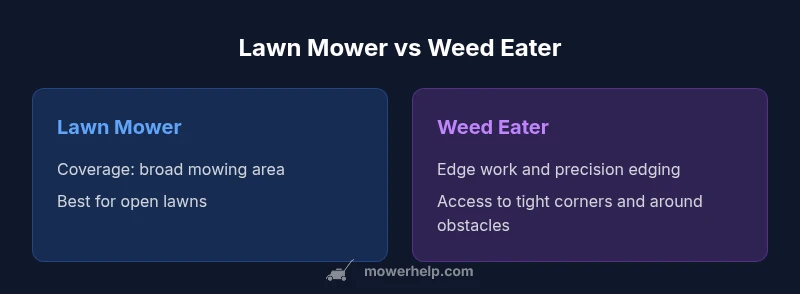
The decision between a lawn mower or weed eater starts with understanding what each tool is primarily designed to do. A lawn mower is built to remove large amounts of grass quickly, delivering a uniform cut and a well-manicured lawn surface. A weed eater (also called a string trimmer) specializes in edging, trimming along fences, mulch beds, and hard-to-reach corners. According to Mower Help, homeowners often find the most practical approach is to possess both tools and use each for the tasks it performs best. This is especially true in mixed-yard environments where open lawns meet dense borders or slopes. The key is to map your yard's dominant zones and assign the tool that fits each zone. In many cases, the lawn mower or weed eater choice isn't exclusive; rather, the optimal setup combines both tools to achieve a professional-looking result with less fatigue. The lawn mower or weed eater decision becomes a matter of segmenting jobs rather than forcing one tool to do everything.
Quantifying the Core Differences: Power, Cut, and Practical Limits
When comparing the two tools, the most important factors are how much area you need to cover, the type of terrain, and the kind of cut you expect. A lawn mower generally offers a wide cutting deck, higher ground clearance, and faster coverage over flat to gently sloped lawns. A weed eater, by contrast, uses a line-based cutting head that excels at precision edging and trimming around obstacles. Power options can include gas and electric (corded or battery), with trade-offs in run-time, weight, and maintenance. For smaller yards, a weed eater may suffice for most edging tasks, while larger properties benefit from a mower’s efficiency. Always consider fuel type, weight, and ergonomics, because a heavy, hard-to-maneuver tool may negate any cutting-time savings on a busy weekend. This section sets the stage for a yard-by-yard decision framework.
Yard Size and Terrain: When to Use Each
Yard size and terrain heavily influence tool selection. For open, flat, or gently rolling lawns up to a quarter acre, a mower typically delivers rapid, uniform coverage with less manual effort per pass. If your lawn includes irregular borders, sidewalks, driveways, or trees with root zones, a weed eater becomes invaluable for clean edges and spot-trimming. Hilly or uneven terrain often benefits from the lighter weight and greater maneuverability of a weed eater on slopes, but you must follow safety guidelines when operating on inclines. The ideal approach for most homeowners is a hybrid workflow: mow the larger, flat zones first, then switch to edging and edging-related detail work with the weed eater. This strategy reduces fatigue and improves overall lawn aesthetics while keeping maintenance reasonable.
Time, Cost, and Maintenance Considerations
Total time spent mowing or trimming translates directly into labor costs and weekend time savings. A lawn mower tends to require periodic blade sharpening, air filter changes, and routine oil checks for gas models; electric mowers may have fewer moving parts but require battery management and charging cycles. A weed eater needs string replacement, head maintenance, and occasional carburetor adjustments on gas models. Over a multi-year horizon, the upfront price difference between a basic mower and a basic weed eater tends to balance with the ongoing costs of fuel, replacement parts, and maintenance tasks. Mower Help analysis shows that homeowners who use both tools strategically often achieve lower overall labor costs and better yard aesthetics than relying on a single tool alone.
Power, Fuel, and Environmental Considerations
Power delivery affects performance, run-time, weight, and emissions. Gas-powered options are widely available for both mowers and weed eaters, offering strong cutting power but higher ongoing fuel costs and maintenance. Electric options—corded or battery—offer lower noise and emissions, with trade-offs in run-time and charging needs. If you have a smaller yard or strict noise restrictions, an electric mower and electric weed eater can be a practical pairing. For larger properties or frequent cutting, gas models may be more convenient, provided you have storage space and access to fuel. This section helps you weigh the environmental impact, cost of ownership, and practical use together.
Edge Work and Aesthetics: Borderlines and Precision
Edges, fences, and garden beds demand precision that a mower cannot easily provide. A weed eater shines along borders, around stepping stones, and near tightly spaced features. The aesthetic result—uniform turf height from the mower combined with clean, defined edges from the trimmer—often defines perceived lawn quality. If edging is a frequent weekend task, plan to allocate time and operator effort accordingly. Ergonomics also matter: a lighter weed eater is easier on the back during long edging sessions, while a larger mower can reduce grip strain through longer mowing sessions.
Storage, Noise, and User Experience
Storage space, noise levels, and ease of use influence long-term satisfaction. Mowers generally occupy more storage space but offer straightforward operation and fewer tool-swaps during a mowing session. Weed eaters are lighter or available in lighter configurations but require line changes and tool swaps for edges, which can add time to a complete yard job. For urban or HOA settings with noise restrictions, electric models provide a smoother experience. Plan a storage solution that keeps fuel and batteries secure, and invest in a basic maintenance kit to address blades, lines, and air filters as needed. Both tools warrant responsible handling and protective gear to minimize risk while trimming and mowing.
Budgeting and Buying Guide: Upfront vs. Long-Term Value
The upfront cost gap between a basic lawn mower and a weed eater can influence the initial purchase decision, but total ownership costs over several seasons are driven by fuel, maintenance, and replacement parts. Buyers should consider the typical annual mowing load, yard layout, and future plan for yard expansion when budgeting. A well-chosen two-tool setup may reduce fatigue, save time, and extend the life of each tool by avoiding overuse of one single device. Review warranties, parts availability, and local service options to ensure you have reliable support. A practical approach is to forecast one to two weekend maintenance cycles per season and align them with seasonal yard tasks.
Brand and Model Considerations: How to Choose
There is no one-size-fits-all answer when selecting brand or model for either tool. Prioritize reliability, ergonomic fit, and local service options. Check blade type and compatibility for mowing decks, as well as string head design and replacement ease for weed eaters. Start with models that balance weight, power, and ease of maintenance; reading user reviews can illuminate real-world performance and durability. The goal is a setup that minimizes downtime and keeps yard tasks enjoyable, not a catalog of the latest features. Remember that a well-thought-out combination of a mower and a weed eater often outperforms a single-tool strategy.
Safety and Storage Best Practices
Safety cannot be overstated when operating lawn care equipment. Always wear eye and hearing protection, gloves, and sturdy footwear. Check fuel stability, keep blades sharp, and inspect cords and battery packs before use. When storing, empty fuel from gas-powered units, detach batteries, and secure tools in a dry, well-ventilated space. Store spare parts like extra strings, blades, and guards in an organized kit. Following safety guidelines reduces injury risk and extends the life of both tools.
Practical Pairing: When to Invest in Both
For most suburban yards, the optimal setup is a lawn mower plus a weed eater. The mowers handle bulk mowing quickly across larger areas, while weed eaters address edging, corners, and near obstacles. If you find yourself frequently paying for professional edge work, a two-tool setup will pay for itself in time saved and aesthetic improvements. Evaluate your yard profile, seasonal workload, and storage capabilities to decide the right mix. With thoughtful budgeting, you can achieve professional-like results without sacrificing convenience or safety.
Comparison
| Feature | lawn mower | weed eater |
|---|---|---|
| Cutting width / reach | 18-22 in per pass (mower) | N/A; line-based edging (weedeater) |
| Power options | Gas and electric options available | Gas and electric options available |
| Maintenance frequency | Moderate (blade, oil, air filter) | Higher (string head, line replacement) |
| Ideal yard size | Medium to large (0.25 acre and up) | Small to mid-size with edges (0-0.25 acre) |
| Best for edges | Limited; mainly bulk mowing | Excellent; precise edging around obstacles |
| Storage footprint | Medium to large shed or garage | Smaller footprint; easy to store on wall or shelf |
| Noise level | Moderate to high; depending on model | Moderate to high; often more noticeable due to attachment use |
| Typical price range | $250-800 | $80-250 |
Benefits
- Lawn mowers cover large areas quickly, reducing overall mowing time
- Weed eaters provide precise edging and access to tight spaces
- Both tools offer gas or electric options for flexibility
- Using both tools in tandem increases yard quality and reduces fatigue
- Electric models can offer quieter operation and lower emissions
Cons
- Mowers require more storage space and fuel management
- Weed eaters demand ongoing line maintenance and occasional head service
- Battery-powered options may have limited run-time for large yards
- Gas models require regular maintenance and can be heavier to handle
Two-tools beat one-tool for most yards
A mower handles bulk mowing efficiently; a weed eater completes edging and precision tasks. Together, they deliver speed, accuracy, and flexibility for varied landscapes.
Got Questions?
Can I completely replace a lawn mower with a weed eater for a typical suburban yard?
For most suburban yards, a weed eater cannot fully replace a lawn mower when you need to cover large open areas quickly. A mower provides bulk cutting and uniform height, while a weed eater excels at edging and reaching tight spaces. A two-tool setup often yields the best overall result and efficiency.
Usually not; use the weed eater mainly for edging and tight spots, while the mower handles bulk mowing.
Which tool is better for hills or uneven terrain?
Mowers can handle gentle slopes when the deck and traction suit the terrain; weed eaters offer better maneuverability around irregularities and edges on slopes. Safety is key on hills, so operate at safe angles and reduce speed. For some terraced yards, a hybrid approach provides the best balance.
Mowers work well on moderate slopes; weed eaters are easier to maneuver on rough edges. Always prioritize safety.
What maintenance tasks are common to both tools?
Gas models require periodic oil changes, filter checks, and blade maintenance; weed eaters need string head upkeep and line replacement. Electric models generally have fewer moving parts but depend on battery health or cord integrity. Regular inspections and following the manufacturer’s schedule extend tool life.
Regular checks keep both tools running smoothly; blades and lines wear at different rates.
Are electric models a good choice for beginners?
Electric mowers and weed eaters are a solid choice for beginners with smaller yards. They’re quieter, easier to start, and often cheaper to operate, but may require planing for run-time and charging needs. For larger yards, gas models may be more convenient despite higher initial costs.
Yes for small yards; consider run-time limits for larger spaces.
How do I edge with a weed eater without damaging plants?
Use the guard and shield, keep the trimmer at a controlled angle, and guide the line parallel to edges to avoid plant contact. Start from clear areas and work toward plant borders, taking small passes. Wear eye protection and gloves to stay safe while edging.
Angle the line, keep a steady pace, and protect plants and yourself.
The Essentials
- Start with yard size and terrain to pick primary tool
- Pair a mower for bulk mowing with a weed eater for edges
- Consider storage, noise, and fuel in total cost
- Electric options offer lower maintenance and emissions
- Always follow safety guidelines and proper maintenance