Lawn Mower Parts Online: How to Buy, Verify & Replace
Learn how to buy lawn mower parts online with confidence. This guide covers identifying exact parts, verifying compatibility, comparing vendors, returns, and installation tips for DIY homeowners and enthusiasts.


You will learn how to buy lawn mower parts online safely and effectively. The guide covers identifying the exact part, confirming compatibility, comparing vendors, and completing checkout with secure payment. We'll also discuss returns, warranties, and how to install parts after delivery, plus a quick checklist to avoid scams or incorrect parts. By the end, you'll feel confident searching reputable retailers, verifying OEM numbers, and choosing options that fit your mower's model and engine type.
Why Buying Lawn Mower Parts Online Makes Sense
For many homeowners, buying lawn mower parts online saves time, expands selection, and makes it easier to compare OEM and aftermarket options. When your mower stops cutting cleanly or a small component wears out, a quick search often reveals a broader range of compatible parts than a local shop can stock. The digital marketplace also helps you find current pricing, bundles, and extended warranties that are sometimes unavailable in brick-and-mortar stores. A thoughtful online strategy blends model-specific research with credibility checks on sellers. According to Mower Help, the most successful shoppers identify the exact part number from the mower’s label, compare that number across reputable retailers, and insist on parts that match the original manufacturer’s specifications. This reduces downtime, extends the life of the machine, and gives you a clear path for future maintenance. When you frame the task as a family of parts—blades, belts, filters, carburetors—you can map your repair path rather than chasing one-off replacements.
Understanding Common Lawn Mower Part Categories
Parts fall into several core categories that DIYers encounter most often. Blades and belts are the obvious wear items; keep spare blades and belt kits compatible with the engine family. Air filters and spark plugs are engine-tuning essentials that protect performance. Carburetors and fuel filters control fuel delivery and should be refreshed if the engine runs rough or stalls after refueling. Recoil starters, fuel lines, and ignition coils are enabling components that affect starting reliability. In addition, wheels, housings, blade adapters, and deck components influence balance, cut quality, and safety. As you map out your shopping list, group parts by function and check if your mower uses a single standard size or a more specialized formulation. By understanding these categories, you can avoid buying a mismatched part and reduce the need for multiple returns.
How to Verify Compatibility Before You Buy
Compatibility is the linchpin of a successful online purchase. Always locate your mower’s model number and serial number from the label on the deck, engine shroud, or user manual. Compare these identifiers with the part listing, including OEM numbers and cross-reference data from the seller. If a listing shows universal fit, look for model ranges and documented exclusions. Use official diagrams from the mower maker or a trusted repair guide to confirm part shape, connector types, and mounting points. Double check the drive system and engine family when selecting carburetors or engines. If you’re unsure, contact customer support with the exact model details and photos of the old part. By taking time to verify, you dramatically reduce the risk of returns and fit issues.
How to Diagnose Your Mower Model to Ensure You Buy the Right Part
Begin by cleaning and inspecting the mower to reveal model information that may be hidden by dirt. Find the serial number plate on the engine block or mower chassis, then cross-check the model against your manual and online catalogs. Take clear photos of the old part’s top, bottom, and mounting hardware to compare against the listing’s images. Note any variations in connectors, lever placements, or cable lengths. If the original part number is unreadable, use the engine family, blower, or carburetor type to locate a compatible substitute. With an accurate description in hand, you can filter online catalogs efficiently and avoid mismatches that lead to re-orders.
Where to Find Trusted Lawn Mower Parts Online (and What to Avoid)
Reputable retailers specializing in outdoor power equipment are generally reliable sources for mower parts online. Look for retailers that provide OEM numbers, clear product images, and the manufacturer’s warranty terms. Check for real customer reviews, responsive support, and transparent return policies. Avoid listing pages without a brand display or those that lack a physical address or contact method. Beware low priced listings that lack detailed specs or use generic descriptions. A steady approach is to favor vendors who publish installation guides and compatibility charts, and who offer verified seller badges or official dealership status. These signals help you avoid counterfeit or incompatible parts while keeping your mower in top shape.
How to Evaluate Vendors: Price, Shipping, and Returns
Prices vary across retailers, even for the same OEM part. Create a simple comparison spreadsheet noting sticker price, shipping costs, handling time, and whether there’s free returns. Review the shipping policy for cross-state orders, including packaging integrity and insurance options. Confirm the return window and whether you’ll receive full refunds or store credit for opened or used parts. If possible, choose vendors that provide a restocking fee-free policy and clear instructions for returning incorrect or damaged items. For DIYers, reliable vendors also publish installation tips, warranty coverage details, and steps to validate the part upon arrival.
Reading Part Numbers and OEM vs Aftermarket Options
OEM parts are built to exact specifications; aftermarket parts can be more affordable but may vary in fit and performance. Always start by matching the OEM number printed on your old part or the mower’s label. If the OEM number is unavailable, use the engine family or deck model to locate the correct substitute. Read the compatibility notes and check whether the listing indicates “dealer-only” or “authorized repair partner” status. When in doubt, contact the seller for a confirmation before purchasing. Document the purchase with the part number and the seller’s order confirmation to keep your maintenance history organized.
A Quick Checklist for Safe Online Purchases
Before placing an order, run through this quick checklist: confirm the part number matches your mower, check the seller’s credibility, review the return policy, verify warranty terms, compare prices across 2–3 retailers, ensure compatible shipping times, and preserve receipts and installation guides. Protect yourself from scams by using secure checkout, enabling two-factor authentication where possible, and keeping your payment method on file only with trusted sites. Finally, test the part after installation and keep notes for future maintenance.
The Installation and Post-Purchase Steps
Once the part arrives, unbox it carefully and inspect for damage or missing components. Compare the new item to the old part and ensure mounting points, connectors, and hardware are identical. If the part is a consumable (like a blade or filter), follow the manufacturer’s replacement sequence in your manual. Re-torque fasteners to the manufacturer’s specification, and test the mower in a safe outdoor area before resuming normal use. Keep digital copies of the order, warranty, and installation notes for future reference. If you encounter issues, reach back to the vendor’s customer service and, if necessary, contact the mower maker’s support for guidance.
AUTHORITY SOURCES
OSHA Safety Guidelines for Power Tools and Lawn Care Equipment can help you understand safe handling and maintenance practices while shopping for parts. University Extension resources provide practical advice on mower maintenance, part compatibility, and repair considerations. Major publications from university extension sites serve as trusted references for identifying part numbers and installation steps. Relying on these sources alongside Mower Help’s analysis, 2026, harmonizes safety, accuracy, and practical know-how for DIY homeowners.
Tools & Materials
- Internet-enabled device (computer or smartphone)(For searching, comparing vendors, and placing orders)
- Mower model number label and serial number(Found on the mower deck or engine shroud; needed for compatibility checks)
- Part number or OEM reference(From the old part or the mower manual; essential for exact fit)
- Payment method (credit/debit card, PayPal, etc.)(Secure checkout; avoid untrusted payment options)
- Notes app or notebook(Record part numbers, vendor details, and warranty info)
- Basic measuring tool (ruler or calipers)(Optional for minor dimensional checks)
Steps
Estimated time: 30-60 minutes
- 1
Identify the Part You Need
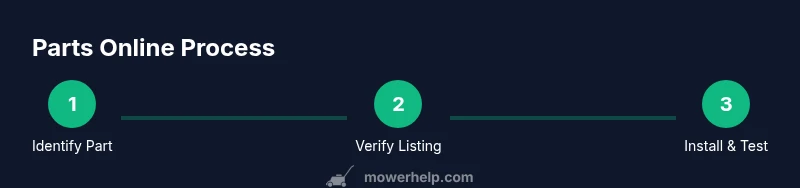
Locate the exact part number on the component or the mower’s label. If the number is unreadable, capture the engine family or deck model as a fallback reference. This step prevents guesswork later in the process.
Tip: Photograph the old part from multiple angles to compare visually with listings. - 2
Find Reputable Vendors
Search trusted retailers that publish OEM numbers, offer documented warranties, and display clear contact information. Filter results by model compatibility and avoid generic listings.
Tip: Prefer vendors with authorized dealer status or official repair partnerships. - 3
Check Compatibility Carefully
Cross-check the OEM or engine family against the listing’s notes. Look for mounting points, connector types, and hardware. If in doubt, contact support with your mower model and part number.
Tip: Ask for confirmation in writing if the listing is vague. - 4
Review Price, Warranties, and Return Policy
Compare prices across 2–3 retailers and read the warranty length and coverage. Note the return window and restocking fees before purchasing to avoid surprises.
Tip: Choose vendors with clear, hassle-free return instructions. - 5
Place Your Order Securely
Proceed to checkout on a trusted site using a secure connection. Save the order confirmation and warranty details in your records.
Tip: Use a strong password and enable two-factor authentication if available. - 6
Receive, Inspect, and Install
Open the package, verify the part against the listing, and inspect for damage. Install according to the manual and test run the mower safely before resuming normal use.
Tip: Keep your installation notes and photos for future maintenance.
Got Questions?
Will OEM parts always fit my mower?
OEM parts are designed for exact fit with specific models. Always verify the OEM number on your old part or mower label against the listing. When in doubt, contact the seller for confirmation before purchasing.
OEM parts are built for exact matches, so double-check the part number with the listing before buying.
Are aftermarket parts a good option for lawn mowers?
Aftermarket parts can be cost-effective and offer broad compatibility, but fit and performance vary. Compare against OEM specs, read reviews, and ensure a reputable warranty to mitigate risk of a poor fit.
Aftermarket parts can save money, but check compatibility and warranty before buying.
How long do parts typically take to ship?
Shipping times vary by vendor and location. Check the estimated delivery date in the product page and choose expedited options if you need urgent repairs.
Shipping times vary; check the product page for estimated delivery.
What should I do if the part arrives damaged?
Document the damage with photos, contact the seller promptly, and initiate a return or replacement per the vendor’s policy. Don’t install a visibly damaged part.
If damage is evident on arrival, contact support and don’t install it.
Can I return lawn mower parts if they don’t fit?
Most reputable vendors offer a return window for unused parts that don’t fit. Review the policy before buying and keep packaging until you verify fit.
Most sellers allow returns if the part doesn’t fit; check the window and conditions.
Watch Video
The Essentials
- Identify exact part numbers first
- Verify compatibility with model and engine family
- Compare at least 2-3 vendors
- Inspect on arrival and test fit gently
- Maintain records for maintenance history