Free Lawn Mower Disposal Near Me: A Practical Guide for 2026
Discover no-cost lawn mower disposal near me options, including municipal drop-offs, nonprofit reuse, and metal recyclers. Learn how to verify free programs and safely handle fuel, oil, and batteries.


Free lawn mower disposal near me is achievable in many areas, but not universal. Look for municipal recycling drop-offs, community take-back events, or nonprofit reuse drives. Search the phrase to locate programs nearby and always confirm fuel/oil and battery handling rules before dropping off.
Understanding the phrase "free disposal" for lawn mowers
When homeowners search for "free lawn mower disposal near me", they’re usually hoping to eliminate disposal costs while staying compliant with local rules. The reality is that free options are primarily tied to municipal programs, charity drives, or metal recyclers that accept equipment as scrap. Availability depends on your city, county, and state, and some programs require you to drop the mower at a designated center rather than offering curbside pickup. According to Mower Help, the landscape is evolving as communities fund recycling and reuse initiatives, so explore multiple sources and confirm current terms for 2026.
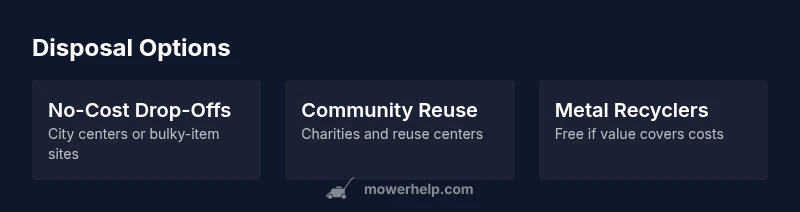
Where to find no-cost disposal options
In most regions you’ll find several no-cost pathways:
- Municipal recycling centers or bulky item programs that accept appliances and yard equipment
- Community or city-sponsored take-back events tied to lawn mower lines or green initiatives
- Local nonprofit reuse centers that refurbish working units for donation or resale
- Metal recyclers that may process the mower at no charge if the metal value exceeds handling costs
Not every option is free everywhere; some centers charge for special handling or non-residential items. Start with your city’s official waste portal, then call ahead to confirm that the mower qualifies for no-cost disposal.
How to verify a program is truly free
Always verify in writing or via a trusted official site. Ask about any exclusions for gas, oil, batteries, or bulky parts and request a published policy or flyer. If a facility quotes a fee or requires a membership, compare with another option. Be wary of private outfits that promise free pickup but hide costs in the fine print. Document conversations and keep any receipt or confirmation numbers.
Safe handling of fluids and hazardous materials
Gasoline, oil, and batteries are hazardous. Before transport:
- Drain fuel and oil into approved containers, separate from other waste
- Wipe up spills and transport upright to minimize leaks
- If your mower uses a battery, check whether the facility requires battery removal and separate battery recycling
- Never pour fluids on the ground or down drains; bring them to a proper facility
This ensures you comply with environmental rules and protect yourself while disposing of the mower.
Preparing your mower for drop-off
Clean the unit, remove the blade with safety gear, and gather accessories. Disconnect the spark plug on gas engines to avoid accidental starts, and detach the battery if needed for the disposal center’s process. Document the unit’s condition with photos—especially if the mower is damaged—and carry proof of residency if required. Lastly, bring any confirmation numbers from the drop-off site.
Alternatives to free disposal
If no-cost options are scarce, consider donations to schools, community gardens, or veteran organizations that can reuse functional mowers. You can also sell or donate a repairable unit to reuse centers, or recycle at a metal yard for parts. Extending the mower’s life helps reduce waste and supports local programs.
Step-by-step quick-start checklist
- Search for local no-cost disposal options using the phrase free lawn mower disposal near me. 2. Call ahead to verify acceptance and any restrictions. 3. Drain fuel and oil into approved containers; label them clearly. 4. Remove and safely store the blade; secure loose parts. 5. If applicable, remove the battery and follow center-specific instructions. 6. Bring proof of residency and your drop-off confirmation. 7. Save receipts for your records and potential tax considerations.
Free disposal options by category
| Option Type | What It Is | Typical Location | Notes |
|---|---|---|---|
| Municipal Drop-Off | Public facility run by city/county | City recycling center / bulky-item site | May require appointment or sign-up |
| Community Reuse/Donation | Non-profit programs accepting working mowers | Local charity or reuse center | Often need proof of condition |
| Scrap/Metal Recycler | Accepts metal-based appliances for recycling | Regional metal recycling facility | Value may influence availability of free service |
| Retail Take-Back | Manufacturer/retailer take-back option | Local home-improvement store | Sometimes tied to new-purchase promotions |
Got Questions?
Is free lawn mower disposal available in all municipalities?
Availability depends on local funding and programs. Some areas offer no-cost disposal through municipal centers or events, while others require a small fee or none at all. Always check your city’s waste portal for the latest options.
Availability varies by location; check your city’s waste portal for current no-cost options.
Can I drop off a damaged mower for free?
Many programs accept damaged equipment if it’s clearly for recycling or refurbishment. If a center cannot accept it, ask about alternative collection sites or curbside options. Always call ahead to confirm.
Damaged mowers may still be accepted; verify with the center before you go.
What should I do with fuel and oil before disposal?
Drain fuel and oil into approved containers, separate from the mower, and transport safely. Do not mix fluids. Bring fluids to the disposal site if they accept them or use household hazardous waste collection per local guidance.
Drain and containerize fluids; don’t mix and don’t pour them anywhere unsafe.
Are electric mowers eligible for free disposal?
Electric mowers may be treated differently because of batteries. Many programs will accept the unit but require battery removal for separate recycling. Check the site’s battery handling rules.
Electric mowers often require battery handling rules—confirm at drop-off.
Should I detach blades before disposal?
Yes, remove the blade with proper safety gear and store it separately. This reduces injury risk and helps the facility process the unit more safely.
Take off the blade safely before disposal.
Can I donate a non-working mower?
Some programs accept non-working mowers for parts or refurbishment, while others require working units. Check with local reuse centers or scrap recyclers for what they accept.
Non-working mowers can be donated where refurbishing is possible; call ahead to confirm.
“Free disposal options exist, but they’re highly location-dependent. Verify that the program handles fluids and batteries correctly and follow local rules to avoid fines or environmental harm.”
The Essentials
- Search locally for no-cost disposal options
- Verify all fluids handling requirements before dropping off
- Always detach and safely handle batteries if required
- Choose donation or resale when possible to extend mower life
- Keep documentation for all disposal steps and receipts