Is Electric Lawn Mower Better Than Gas? A Comprehensive Comparison
A thorough comparison of electric and gas lawn mowers, focusing on cost, performance, maintenance, and environmental impact to help homeowners choose the right mower.


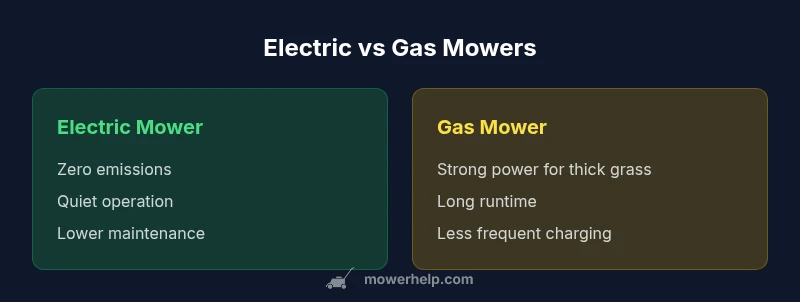
Is electric lawn mower better than gas? For many homeowners, the question 'is electric lawn mower better than gas' is answered by yard size, maintenance goals, and noise tolerance. Electric mowers offer low upkeep, quiet operation, and easy starts, while gas models excel on large lawns or thick growth. This comparison helps you decide which fits your needs.
Overview: Framing the Decision Framework
Deciding between an electric and a gas lawn mower starts with understanding how you use your mower, where you live, and what you value most in a tool. According to Mower Help Team, the core decision factors are yard size, terrain, storage space, maintenance tolerance, and willingness to manage charging or refueling. In practice, most homeowners want a balance of reliability, cost, and convenience. This section maps the decision framework you can apply before you shop, including three practical questions to guide your choice. We will compare upfront costs, ongoing expenses, performance on typical lawns, and environmental impact so you can choose with confidence.
How Electric and Gas Mowers Actually Work
Understanding the underlying differences helps explain why the two types behave differently in the yard. Electric mowers rely on rechargeable batteries that power a motor and blade. Gas mowers burn fuel inside a small engine, which drives a crankshaft and blades with almost instantaneous torque. Battery chemistry and charger speed influence run time and performance, while gas engines rely on spark ignition. From a maintenance perspective, electric mowers typically require less routine service, while gas engines demand oil changes, air filter replacements, and occasional carburetor cleaning. The upshot is that each design has strengths suited to different mowing scenarios. Based on Mower Help Analysis, 2026, most suburban lawns can be served well by either system, provided the user selects the right model and battery strategy.
Upfront and Ongoing Costs: What It Really Means
Price is a common first hurdle. Electric mowers often cost more upfront, but they save money over time through lower fuel costs and reduced maintenance. Gas mowers usually have lower initial price, but ongoing expenses add up from fuel, routine maintenance, and potential repairs. A fair comparison also considers charging equipment, replacement batteries, and warranty coverage. From a homeowner's perspective, the total cost of ownership matters more than sticker price alone. The Mower Help Team notes that the break-even point depends on yard size, usage frequency, and local electricity rates, making a personalized calculation essential.
Performance and Cut Quality: Do You Sacrifice Power?
Most modern electric mowers deliver a cut that is on par with many gas models for typical lawns. For taking on tall grass or dense patches, torque and blade design matter more than engine displacement. Battery-powered mowers offer instant torque at start, which helps on uneven terrain, while gas mowers maintain consistent power for long sessions. Real-world testing shows that height adjustments, blade sharpness, and deck design influence perceived performance more than the fuel source alone. The key tradeoff is runtime vs. power; plan for shorter sessions or extra batteries if you have a large property or heavy growth. The Mower Help Team emphasizes that a well-chosen electric mower can rival gas for most homeowners, especially with the latest battery technology.
Maintenance, Durability, and Worry Factor
Maintenance and reliability differ in meaningful ways. Gas engines require routine oil changes, air filters, spark plugs, and fuel system attention. Electric mowers reduce those maintenance tasks to battery care, charger upkeep, and occasional blade sharpening. Battery performance degrades with cycles and heat, and replacement costs should be planned for. Durability needs also vary: gas engines have proven long-term durability in harsh environments, while modern lithium ion packs offer many years of service with proper charging. The overall takeaway is that maintenance expectations depend on how you use the mower, and choosing the right model with a solid warranty can keep both options reliable.
Noise, Emissions, and Environmental Impact
Electric mowers operate with very low noise and zero tailpipe emissions during use, reducing noise pollution and air emissions in residential areas. Gas mowers emit fumes and noise, contributing to air quality concerns and community noise. Lifecycle considerations, such as manufacturing and disposal of batteries, should be part of the conversation. The Mower Help Analysis, 2026 notes that many homeowners perceive electric options as greener, though battery production and end of life still matter. If your priorities include a quiet, neighborhood-friendly mower, electric has clear advantages.
Battery Technologies, Charging Realities, and Range
Battery chemistry matters. The most common format uses lithium ion cells with varying voltage and capacity. Range depends on deck size, cutting height, and battery health, with charging time influenced by charger power and battery temperature. For effective performance, plan for spare packs or fast-charging options when you have larger properties. Mower Help Team suggests evaluating the number of batteries you would need for your yard, and matching charging time to mowing sessions so you can complete a part of the yard without interruption.
Real World Scenarios: Yard Size and Terrain
Small yards: Electric is often ideal; medium yards: Electric is still compelling with proper planning; large yards: Gas remains practical if you frequently rely on long sessions and minimal downtime. Terrain matters: slopes, thick patches, and uneven ground may favor gas in very challenging conditions, though advanced electric models can handle moderate slopes with good torque.
Storage, Portability, and User Experience
Weight distribution, handle comfort, and deck size affect the daily experience. Electric mowers tend to be lighter in overall weight but carry heavy battery packs, which can shift the balance. Gas mowers bring more weight too but offer a familiar multi-year service life. Storage needs include keeping batteries or fuel in proper containers and away from children, plus safe charging setup.
Safety Considerations and Best Practices
Both types require safety care: keep hands away from blades, ensure proper maintenance, and follow user manuals. Gas engines pose burn risk and exhaust exposure; electric mowers have lower risk in this regard, though battery packs can overheat if damaged. Always disconnect power before servicing, store fuel properly, and use appropriate protective gear.
How to Decide: A Quick Decision Framework
To decide, answer three questions: yard size and mowing frequency, tolerance for maintenance and refueling or charging, and storage capabilities. If you mow small to mid sized lawns and value quiet operation, an electric mower is likely the better fit; if you maintain a large property with tough growth and long sessions, gas may be preferable. Start with a test run if possible and compare models with similar deck sizes and warranty terms.
Buying Guide Tips: What to Look For
Key buying criteria include battery capacity and runtime, charge time, blade quality, deck size, weight, ergonomics, warranty length, and spare parts availability. Also consider the ecosystem: can you easily swap batteries among tools? Look for certified safety features and reputable brand support. A well thought out buying plan reduces post purchase regret.
Common Misconceptions Debunked
Electric mowers are always weaker than gas; not true for many models. Gas is always cheaper in the long run; not necessarily. Batteries will fail quickly; modern packs hold up well under normal use. Real world outcomes vary by usage pattern.
Final Decision Factors and Next Steps
Summarize the key decision factors and advise next steps: measure yard area, check local electricity rates, test models, assess installation and storage constraints, plan for battery replacement if needed, and decide based on overall ownership cost and lifestyle fit. The Mower Help Team recommends leaning electric for most homeowners unless yard size or terrain clearly benefits gas.
Comparison
| Feature | Electric mower | Gas mower |
|---|---|---|
| Upfront price | higher | lower |
| Running costs | lower (electricity) | higher (fuel) |
| Maintenance frequency | lower | higher |
| Runtime for large yards | adequate for most yards | excellent for large areas |
| Noise level | low | moderate |
| Emissions | zero tailpipe emissions | on-site emissions |
| Storage and portability | battery pack and modular storage | fuel container and space for fuel |
| Lifespan considerations | battery life depends on cycles | engine life depends on maintenance |
| Best for | small to mid sized yards | large yards or tough growth |
Benefits
- No fuel handling or spill risk
- Lower ongoing maintenance in many cases
- Quiet operation and easy start
- Zero emissions during use
- Simplified storage with batteries
Cons
- Higher upfront cost for many electric models
- Battery life and replacement costs can add up
- Longer mowing sessions require multiple charges or extra batteries
- Cold weather can reduce battery performance
Electric mowers win for most home yards; gas remains superior for very large or rugged lawns
For small to mid sized lawns, electric mowers provide cost and maintenance advantages. Gas mowers offer longer runtime and power for large areas or dense growth. Your best choice depends on yard size, terrain, and how you plan to use the mower.
Got Questions?
Is an electric lawn mower suitable for large yards?
Electric mowers can handle many large yards with proper battery strategy, such as multiple batteries or longer charging plans. For very large properties, gas may be more practical due to longer continuous run time. Consider your yard's shape and access to charging.
Yes, for many large yards you can use an electric mower with multiple batteries or extended charging time.
Do electric mowers perform well on thick grass?
Electric mowers have improved power and blade design, but extremely thick or tall growth can strain any mower. Uprated models with larger batteries and high torque perform better, and you may need to mow more often.
Electric mowers perform well on most lawns, but very thick grass may require more passes or a higher torque model.
How long does a battery last and how often to replace?
Battery life depends on usage, climate, and charging habits. Expect cycles to degrade over time and plan for eventual replacement, typically aligned with the warranty window and usage intensity.
Battery life depends on use and climate; replacement is a normal consideration over time.
Are there cost differences to consider between electric and gas?
Electric mowers often have lower operating costs due to electricity being cheaper per hour than fuel, plus reduced maintenance. Gas mowers may have lower upfront costs but ongoing fuel and maintenance add up.
Electric tends to cost less to run, while gas costs more over time due to fuel and maintenance.
What should I look for when buying an electric mower?
Look for battery capacity, runtime, charge time, blade quality, warranty, and compatibility with spare batteries. Also assess weight and ergonomics for your yard layout.
When buying, check battery life, charge time, weight, and warranty to match your yard.
The Essentials
- Choose electric for lower upkeep and quiet use
- Evaluate yard size to confirm battery/runtime needs
- Be prepared for battery replacement costs in the long term
- Gas mowers excel on large properties and dense growth
- Plan storage and charging infrastructure before buying