Gas vs Electric Lawn Mowers: Which Is Best in 2026?
A detailed, objective comparison of gas and electric lawn mowers, focusing on yard size, power needs, maintenance, cost, and practicality to help homeowners decide which fits their lawn best.


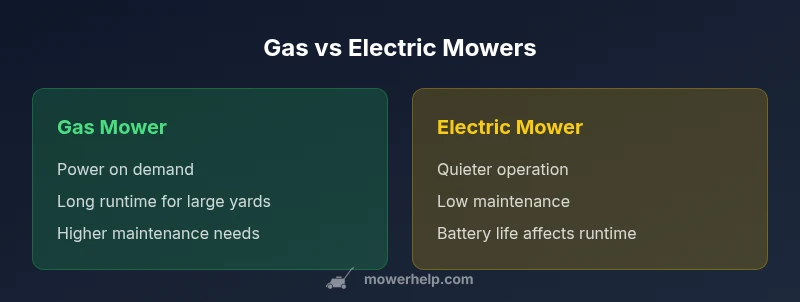
Gas vs electric lawn mowers each have distinct strengths. For most homes, the choice hinges on yard size, power needs, and maintenance tolerance. If you’re asking which lawn mower is best gas or electric, gas shines for large areas and tough grass, while electric excels in small to mid-sized lawns with quieter, lower-maintenance operation.
The Gas vs Electric Dilemma
Choosing between gas and electric mowers is a classic homeowner question, especially for those new to lawn care or upgrading from an older model. If you’re asking which lawn mower is best gas or electric, the decision hinges on how you use your mower, your yard size, and how much time you want to spend on maintenance. According to Mower Help, the core differences revolve around energy source, torque delivery, and ongoing upkeep. Gas mowers rely on a combustion engine that delivers strong, sustained power for larger properties and tougher grass. Electric mowers, whether corded or battery-powered, offer simpler starting, quieter operation, and lower emissions at the point of use. The best-fit choice is the one that minimizes downtime while keeping your lawn looking neat and healthy. In practice, evaluate your yard, your tolerance for maintenance, and your available charging or fuel options to reach a solid conclusion on which mower type serves you best.
Gas Mowers: Strengths and Limitations
Gas-powered mowers bring raw power to large lawns and uneven terrains. The engine torque responds instantly to challenging spots, and there is no need to be near an outlet or wait for a battery to recharge. For homeowners with expansive yards, hilly sections, or thick, stubborn grass, gas mowers often deliver the performance needed to finish quickly. On the downside, they require regular maintenance—oil changes, air filter cleanings, spark plug checks—and you’ll manage fuel storage and exhaust. Start-up can be noisy, and routine servicing costs can add up over time. If you own a property where mowing is a multi-hour task, the reliability and runtime of gas will generally outperform lighter electric options.
Electric Mowers: Strengths and Limitations
Electric mowers shine in quiet operation, lower maintenance, and clean emissions at the point of use. They are ideal for small to mid-sized lawns and are typically easier to start than gas units. Battery-powered models offer substantial range for urban yards, and corded variants remove battery concerns altogether. However, runtime is limited by battery capacity or cord length, and some hills or thick grasses can drain power quickly. Replacement batteries or higher voltage systems can raise upfront costs, though ongoing fuel and maintenance costs are lower. If your lawn is small to medium, flat to gently rolling, and you value speed and convenience, electric can be a strong match.
Power and Runtime: What Actually Matters
Power matters, but it is not everything. Gas engines provide steady torque that remains available during long sessions, making them less sensitive to battery charge states or extension cords. Electric mowers deliver sufficient power for typical suburban lawns when equipped with a good battery or a reliable cord, and most modern models can handle routine lawn chores without frequent interruptions. For the homeowner evaluating which lawn mower is best gas or electric, consider how often you mow, the density of your turf, and whether you’re near a power source. The longer you intend to mow on a single session, the more you’ll notice the difference in runtime between gas and electric.
Noise, Vibration, and Comfort
Noise and vibration influence user satisfaction, especially for weekend mowing or shared property lines. Gas mowers tend to produce louder sound and more vibration due to the internal combustion engine, which can cause fatigue over time. Electric mowers operate with significantly lower noise levels and less vibration, contributing to a more comfortable mowing experience, particularly for people with sensitive neighbours or equipment near living areas. Weight also factors in; some electric models can feel lighter, but heavier battery packs on certain configurations may offset that advantage. Consider your tolerance for noise and the physical effort involved when choosing which lawn mower is best gas or electric.
Maintenance and Operating Costs
Gas models require routine maintenance, including oil changes, air filter replacements, and spark plug checks, plus fuel management. Electric mowers have far fewer moving parts to service, with battery health, blade sharpness, and occasional motor checks representing the majority of maintenance concerns. Over the long term, electric mowers typically incur lower fuel costs and fewer service visits, while gas mowers incur costs for fuel, parts, and professional tune-ups. If you are budget-conscious and prefer a low-maintenance option, electric is often more attractive, particularly in dry, temperate climates where battery life remains robust.
Cost and Value Over Time
Upfront price is only one dimension of total cost. Gas mowers may come in at a lower initial price, but ongoing fuel costs, frequent oil changes, tune-ups, and potential repairs can accumulate. Electric mowers, especially mid- to high-end models, tend to cost more upfront due to battery packs, but savings appear through reduced fuel expense, fewer maintenance appointments, and potential tax or incentive programs in certain regions. If your lawn requires frequent mowing and you prioritize predictable costs, the long-term value of an electric mower can be compelling. When evaluating which lawn mower is best gas or electric, total cost of ownership over several mowing seasons is more informative than sticker price alone.
Yard Size, Terrain, and Accessibility
Yard size and terrain often determine the practical choice. Large properties with uneven surfaces benefit from the sustained power and longer runtimes of gas mowers. Small or mid-sized lawns with flat to mildly uneven terrain are often well-suited to electric mowers, which provide quick results and easier storage. Accessibility matters too: electric mowers offer easy handling for those with limited storage space or who need to maneuver around obstacles in tight spaces. In many suburban settings, the decision reduces to whether you prioritize maximal runtime and raw torque (gas) or ease of use and minimal upkeep (electric).
Battery Considerations and Fuel Types
Battery technology has grown significantly, expanding the viability of electric mowers for a larger range of yards. If you choose electric, evaluate battery voltage, amp-hour rating, charging time, and replacement costs. Corded electric mowers avoid battery concerns entirely but require access to a power outlet and careful cord management. Gas models rely on readily available fuel and can operate independent of power sources, which makes them favorable for off-grid or remote locations. When deciding which lawn mower is best gas or electric, weigh battery capacity against your typical mowing session length and the size of your lawn.
Environmental Impact and Emissions
From an environmental perspective, electric mowers produce fewer local emissions during operation, contributing to cleaner air on your property. Gas mowers generate exhaust and consume fossil fuels, increasing their environmental footprint during use. Battery production and end-of-life disposal for electric models also warrant consideration, though the practical impact is often offset by reduced operational emissions. Technology improvements continue to reduce the overall climate impact of electric mowers, while hybrid or newer gasoline engines seek to optimize efficiency and emissions.
How to Decide: A Simple Framework
A practical framework starts by categorizing your mowing tasks. If your yard is large, rugged, or takes long to complete, gas may be the better option. If your lawn is small to medium, flat, and you want a quiet, low-maintenance experience, electric is typically more convenient. Also assess access to power: if you have a long extension cord, a large battery pack, or a charging routine that fits your schedule, the choice becomes clearer. Finally, consider total cost over several seasons, including fuel, batteries, maintenance, and potential repairs. This structured approach helps you decide which lawn mower is best gas or electric for your specific home.
Real-World Scenarios: Case Studies
Consider a homeowner with a 0.25-acre suburban lot who mows weekly during growing season. An efficient electric mower with a durable battery could cover the lawn in one or two sessions, with minimal upkeep. For a hobby farmer with rolling terrain and a larger property, a gas mower might be the better fit due to longer runtime and reliable torque through varied conditions. A renter in an apartment community with shared greens and a small patch might opt for electric mowing to minimize noise and maintenance. These scenarios illustrate how the best choice depends on personal circumstances and yard characteristics.
What the Mower Help Team Recommends
The Mower Help team recommends matching mower choice to your yard profile and routine. If you frequently mow large, tough areas, gas remains a strong option. If you prioritize ease of use, quiet operation, and lower maintenance, electric mowers are typically the better fit for most homeowners. The key is to align power, runtime, and upkeep with your mowing schedule and storage capabilities. In practice, many homeowners find that a mixed approach—electric for daily chores and a backup gas unit for exceptional conditions—offers the best balance of convenience and performance.
Comparison
| Feature | Gas-powered mower | Electric mower |
|---|---|---|
| Power source | Gasoline engine | Rechargeable battery or corded electric |
| Emissions | Higher emissions during use | Lower emissions at point of use |
| Runtime | Unlimited by fuel supply (subject to refuel) | Battery or cord limits runtime |
| Maintenance | Regular oil changes, filters, spark plug | Fewer moving parts; battery care and blade upkeep |
| Noise | Typically louder | Quieter operation |
| Upfront cost | Varies; often moderate to high | Varies; often moderate to high due to battery pack |
| Best for | Large properties, tough lawns | Small to mid-sized lawns, easy maintenance |
Benefits
- Electric mowers offer lower noise and zero on-site emissions
- Electric options are easier to start and require less routine maintenance
- Gas mowers provide longer runtime for large lawns and tough terrain
- Strong torque and service availability make gas reliable for demanding jobs
Cons
- Gas mowers require fuel handling and regular maintenance
- Gas engines produce exhaust and higher noise levels
- Electric mowers depend on battery life or cord reach, affecting runtime
- Battery replacement costs can add to long-term expenses
Electric mowers win for the majority of residential lawns; gas remains superior for large properties and demanding terrain
For most homeowners with standard-sized lawns, electric mowers offer convenience, lower maintenance, and quieter operation. Gas mowers still outperform on very large yards or terrains where constant power is essential. Your choice should balance yard size, terrain, and maintenance tolerance.
Got Questions?
What is the main difference between gas and electric mowers?
Gas mowers rely on a combustion engine with a fuel supply, delivering strong, sustained power but higher maintenance and noise. Electric mowers use batteries or cords, offering quieter operation and lower maintenance, but limited by battery life or cord reach. Your mowing tasks determine which type best fits your needs.
Gas mowers use engines and fuel, giving you strong power. Electric mowers run on batteries or cords, offering quiet operation and low upkeep.
Which mower is better for large yards?
For very large yards with tough grass, gas mowers typically provide longer runtime and consistent torque without worrying about battery life or charging. If power and uninterrupted mowing are critical, gas is often the better choice.
Gas mowers are usually better for large yards due to longer run-time and torque.
Can electric mowers handle hills and thick grass?
Electric mowers can handle hills and most typical residential grass well, especially with higher voltage batteries. Very steep slopes or dense, tall grass may challenge lighter electric models, where gas provides more margin for demanding conditions.
Electric mowers work well on hills with good batteries, but very dense grass might favor gas.
What maintenance is required for gas mowers?
Gas mowers require routine maintenance such as oil changes, air filter cleaning, spark plug checks, and fuel management. Fuel stability and tune-ups are part of keeping a gas mower reliable.
Gas mowers need regular oil changes, spark plug checks, and fuel management.
What maintenance is required for electric mowers?
Electric mowers focus on blade sharpness, battery health, and electrical connections. Store batteries properly and follow charging guidelines; batteries will eventually need replacement after several years of use.
Electric mowers need blade care and battery maintenance; replace the battery after years of use.
Are electric mowers more eco-friendly overall?
Electric mowers generally produce less local air pollution during operation, reducing emissions on your property. Consider the full lifecycle including battery production and disposal, but for typical home use, electric models usually have a smaller environmental footprint.
Yes, electric mowers typically have lower emissions during use, though battery life and disposal matter long-term.
The Essentials
- Define yard size and terrain before choosing
- Electric is typically easier to own and operate
- Gas is better for large or rugged lawns
- Consider total cost of ownership over several seasons
- Plan for storage and charging or fueling needs