Plug In Lawn Mower: Safe Start Guide
Learn how to safely plug in and operate a plug-in lawn mower with step-by-step setup, safety tips, maintenance routines, and troubleshooting for homeowners and DIY enthusiasts.


To plug in a lawn mower safely, connect to a properly grounded outdoor outlet, inspect cords for damage, and follow the manufacturer’s start sequence. Ensure the mower is unplugged when adjusting blades or clearing jams, and keep the cord away from cutting paths. This quick guide covers setup, operation, and basic safety checks for a typical electric mower.
Safety basics for plug-in lawn mowers
From the first moment you consider using a plug in lawn mower, safety comes first. Electric mowers cut grass quietly and cleanly, but they bring electrical risks that can be severe if ignored. Always work with dry hands, dry shoes, and a dry workspace. Keep the mower away from standing water, ponds, or sprinklers; never operate in rain. Use a grounded outdoor outlet with a weatherproof cover, and test the ground fault circuit interrupter (GFCI) before you begin. If you notice damaged cords, kinks, or scorched plugs, stop and replace the cord or mower. Equipment failure can sneak up on you, so inspect the power cord, the plug, and the outlet as part of your routine. When you are ready to begin, guide the cord along your mowing path, not across it, and keep it behind you so you don’t back into it or trip over it. Remember that while you are using a plug in lawn mower, your attention should be on cutting grass, not wrestling a tangled cord. This mindset reduces shocks, trips, and blade contact hazards.
Understanding power sources and cords
Most residential plug in lawn mowers run on standard 120 volt circuits. Use a heavy duty, outdoor rated extension cord with a ground pin and no frayed insulation. For many homes, a 14–16 gauge cord is sufficient for typical mowing sessions, but longer runs may require thicker gauge to minimize voltage drop. Always keep the extension cord dry and elevated above damp ground, and avoid water pooling near the outlet. If your mower has a built in power switch or safety interlock, ensure you understand how it starts and stops before attaching the cord. A GFCI outlet provides an extra layer of protection; test it monthly and after any electrical work. Never bury cords under leaves or mulch; lay them flat along the edge of the yard where you can see them. By choosing a proper power source and cord, you reduce the risk of overheating and electrical shock during mowing.
Setup and pre-mow checks
Before you reach for the start button, perform a quick setup check. Inspect the blade for nicks or dull edges and verify the deck clearance is clear of debris. Wipe away grass clippings from the underside to prevent clogs. Inspect the five to ten foot radius around the outlet to ensure nothing can trip you or catch the cord. Unplug the mower when adjusting blades or cleaning the deck. Attach the extension cord only after you confirm the outlet is live, and never yank the cord to unplug; pull from the plug slowly. This step saves you time and reduces the risk of an electrical arc. Finally, wear gloves and eye protection if you have debris or trimmer line in the vicinity.
Starting, operating, and mowing technique
Turn on the safety interlock or switch, then engage the start button while keeping both hands on the mower handles. Begin moving forward slowly, keeping the cord behind you to avoid tension or snagging. Use straight, overlapping passes and maintain a steady pace so the mower cuts evenly. If your mower slows or stalls, release the safety control, unplug, and check for jams or cord damage before resuming. Avoid rushing across slopes or uneven ground; a slow, controlled pace reduces blade contact with obstacles. If your lawn has tall patches, mulch in short passes to prevent clogs. After each pass, inspect the cord for tension or damage and adjust your route as needed.
Cord management, weather, and mowing patterns
Cord management is critical for safe operation. Use cord clips or hooks to route the extension cord along the edge of your mowing path, never across the cutting area. Keep the plug end dry and away from water sprinkler zones. Avoid mowing in wet weather or when the grass is muddy, as moisture increases shock risk and makes the blades work harder. Plan mowing patterns that minimize turning with the cord extended, and vary your direction to achieve a uniform cut. If you must handle rain or drizzle, postpone mowing until conditions improve. At the end of the session, unplug at the outlet and coil the cord loosely to prevent kinks before storage.
Maintenance, storage, and long-term care
After mowing, clean the deck and blades with a dry cloth to remove clippings. Inspect the blade sharpness and replace or sharpen as needed. Store the mower in a dry, ventilated area and keep it elevated off damp surfaces. Coil the extension cord loosely and store it with a cord reel or a hook in a dry space away from the mower blade. Periodically inspect the power switch, interlocks, and any seals or gaskets for wear. If your mower has a battery option, follow the manufacturer guidelines for charging and storage. By keeping up with regular maintenance, you will extend the life of your plug in lawn mower and ensure consistent performance.
AUTHORITY SOURCES
Public safety and electrical guidelines are provided by official agencies to help homeowners use electric tools safely. For additional details, consult the following resources:
- https://www.cpsc.gov
- https://www.osha.gov
- https://www.energy.gov
Tools & Materials
- Outdoor-rated extension cord (heavy-duty, 14–16 AWG typical)(To minimize voltage drop; use length appropriate for the mower current draw.)
- GFCI outdoor outlet(Ensure it is functioning and accessible; test before each session.)
- Mower owner's manual(Refer to safety features and starting procedures for your model.)
- Safety gloves(Protection when handling blades or cord.)
- Cord management clips or hooks(Keep cord away from mowing path and prevent trips.)
Steps
Estimated time: 30-60 minutes
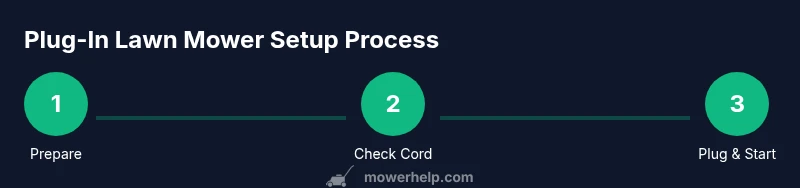
- 1
Prepare the workspace
Clear the mowing area, remove debris, and ensure the ground is dry. Check that the mower blade is secure and the safety switch is in the off position before connecting anything.
Tip: Wear gloves; keep children and pets away during setup. - 2
Inspect the power cord and outlet
Examine the extension cord for cuts, kinks, or wear. Test a GFCI outlet to ensure it trips properly, and verify the outlet is outdoors and weather-protected.
Tip: Do not use a damaged cord; replace immediately. - 3
Connect the cord safely
Attach the extension cord securely to the mower's power inlet, then plug into the outdoor outlet. Stand with the cord behind you to avoid tripping, and keep it taut but not stretched.
Tip: Avoid looping the cord around the mower handle. - 4
Start and mow
Use the mower’s safety interlock or start button, keeping both hands on the grips. Begin mowing with smooth, overlapping passes to ensure an even cut while watching the cord carefully.
Tip: If the mower stalls, release the safety control and restart after clearing debris. - 5
Conclude the mowing session
Stop the mower, unplug the extension cord, and inspect the blade and deck for clogs. Allow the mower to cool before storage.
Tip: Do not yank the cord to disconnect; pull from the plug. - 6
Post-mow maintenance
Wipe the deck, check blade sharpness, and store the mower upright. Coil the extension cord loosely and store in a dry place away from heat sources.
Tip: Keep blades sharp; dull blades waste energy and wear the motor.
Got Questions?
Do I need a GFCI outlet for plug-in lawn mowers?
Yes, a GFCI-protected outdoor outlet reduces the risk of electric shock, especially around wet grass or irrigation. Always test the outlet before use.
Yes, use a GFCI-protected outdoor outlet and test it before mowing.
Can I use a long extension cord safely?
Use the shortest cord possible that reaches your mower; longer cords increase voltage drop and heat. If a longer run is necessary, opt for a thicker gauge and outdoor-rated cord.
Stick to a cord that’s as short as possible and outdoors-rated.
What should I do if the mower won't start?
Check that the power cord is connected, the outlet is live, and the safety interlock is engaged. Inspect the cord for damage and test the outlet again.
First, verify the cord and outlet, then check the safety interlock.
Is mowing in wet conditions safe?
Mowing wet grass increases slip risk and can jam the blades. Delay mowing until the lawn is dry and the area is safe.
No—wait for dry conditions to avoid slips and blade jams.
How should I store the extension cord after use?
Coil the cord loosely, avoid tight bends, and store in a dry area away from heat sources and mower blades.
Coil it loosely and keep it dry and away from the mower.
Watch Video
The Essentials
- Identify and reduce electrical hazards before mowing
- Use a heavy-duty, outdoor-rated cord and a GFCI outlet
- Follow proper start/stop procedures to avoid injury
- Maintain the mower deck and blades for best results