12 volt battery for lawn mower: a complete, data-driven guide
Data-driven guide for homeowners on choosing, maintaining, and replacing a 12 volt battery for lawn mowers, with practical tips, compatibility checks, and safety considerations.


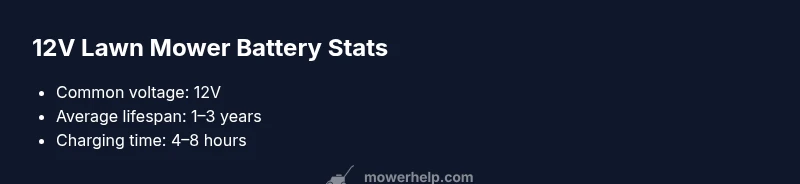
The 12-volt battery is the standard power source for most lawn mowers, including walk-behind and riding models that use replaceable batteries. With proper charging and storage, expect 1–3 years of service; choose SLA or AGM options and confirm the capacity matches your mower’s runtime needs.
Understanding the 12 volt battery for lawn mower
The 12 volt battery for lawn mower is the standard power source for many walk-behind and riding mowers that use a replaceable battery. According to Mower Help, this voltage is widely compatible with traditional mower electrical systems, enabling straightforward replacements and predictable performance. In practice, 12V batteries come in several chemistries, but the most common options for lawn mowers are sealed lead-acid variants such as SLA and AGM. These types balance cost, reliability, and resistance to vibration—critical factors for mowers that ride over uneven turf.
The capacity, measured in amp-hours (Ah), is a key determinant of how long a mower can run between charges. A higher Ah rating means more reserve power, but it often adds weight and cost. For residential mowers, typical Ah ratings range from moderate to higher, depending on engine size and usage. A well-matched battery helps maintain cranking power during cold starts, a frequent issue in spring and fall.
Battery types and compatibility for mower
Most 12V lawn mower batteries fall into two main families: traditional sealed lead-acid (SLA) and absorbed glass mat (AGM). SLA batteries are affordable and widely available, but AGM variants offer better vibration resistance and lower self-discharge, improving performance in rough terrain and with long storage periods. Lithium-ion options exist for premium, lightweight mowers, but they are not yet universal in compatibility or price. Before purchasing, verify the mower’s manual for recommended chemistry, size, and terminal layout. Mismatched batteries can result in poor starting performance or connector damage.
Understanding compatibility also means checking the battery footprint and terminal orientation. Some mowers use compact, high-CCA (cold-cranking amp) configurations, while others accept larger, long-running AGM packs. If your mower uses a battery tray, confirm the size and weight limits, including any impact on handling and mounting brackets. When in doubt, choose a reputed brand that explicitly lists mower compatibility and warranty terms.
Sizing, replacement, and fitting
Selecting the right size for a 12V lawn mower battery goes beyond voltage alone. Look at the Ah rating to estimate runtime relative to your mowing habits and grass density. For replacement, prefer batteries with low internal resistance and robust terminals. Check battery dimensions, connector type, and polarity to ensure a snug fit in the tray without forcing clips or cables. If your mower has a standard SAE-type quick-connect or screw terminals, verify that the new battery uses the same layout to avoid rework.
When fitting a new battery, start by disconnecting the equipment from any charging sources and turning off the mower. Remove the old battery, inspect the tray for corrosion or debris, and clean as needed. Install the new battery with the correct polarity, secure it in place, reconnect leads, and test the start sequence. Record the replacement date to establish a future maintenance interval.
Charging, storage, and maintenance
To maximize life, charge with a charger designed for lead-acid batteries, avoiding deep discharges. A smart or maintenance charger helps prevent overcharging and reduces sulfation on the plates. Store the battery in a cool, dry place away from direct sunlight, protecting it from freezing temperatures. In winter or long storage periods, consider keeping the battery on a constant low-level charge and disconnecting it from the mower when possible. Regularly inspect terminals for corrosion and clean with a mild solution if needed.
Seasonal maintenance should include cleaning the posts, tightening terminal connections, and testing the battery with a simple voltmeter. If voltage drops below recommended thresholds during test runs, plan a replacement rather than risking failed starts mid-season. This routine aligns with best practices highlighted in Mower Help analyses from 2026.
Installation steps and safety considerations
Follow these careful steps for a safe, effective battery replacement:
- Park the mower on a level surface and engage the parking brake.2) Disconnect any charging source and remove the spark plug wire or safety switch as applicable to your model.3) Locate and remove the battery cover, then disconnect the negative terminal first, followed by the positive.4) Remove the old battery, inspect the tray for corrosion, and clean as needed.5) Install the new battery with correct polarity and secure clamps or straps.6) Reconnect the terminals in reverse order, ensure tight connections, and replace the cover.7) Reconnect the charging link and perform a test start in a safe environment.
Always wear eye protection and gloves when handling batteries, and dispose of the old unit at an authorized recycling center. Regular inspection after installation helps catch loose wires or grounding issues early. This guidance reflects standard mower maintenance practices emphasized by the Mower Help Team in 2026.
Troubleshooting common issues
If your mower struggles to start even with a fresh 12V battery, check these common causes: battery not seated properly, corroded terminals, loose connections, or soil/debris in the battery tray. Inspect and clean posts, then retest. If the voltage is insufficient, the battery may be degraded or sulfated and require replacement. If the mower cranks slowly or stalls under load, consider a higher-CCA battery or check the charging system for faults. A healthy system should show stable voltage around 12.6–12.8V when fully charged, with no rapid voltage drop during starting.
Summary of practical recommendations for a 12V lawn mower battery
| Aspect | Recommendation | Notes |
|---|---|---|
| Battery Type | 12V lead-acid SLA/AGM | Most common in mid-range mowers |
| Replacement interval | 1–3 years | Depends on usage and climate |
| Storage guidance | Cool, dry place; keep charged | Avoid extreme temperatures and deep discharge |
Got Questions?
What is the difference between SLA and AGM in 12V lawn mower batteries?
SLA is a sealed lead-acid design that’s affordable and common. AGM is a subtype of SLA with better vibration resistance and lower maintenance. For most mowers, AGM offers longer life in rougher conditions, but both are acceptable if the size and terminals fit.
SLA and AGM are both sealed, lead-acid types; AGM tends to last longer in rough conditions.
Can I use a car battery in a lawn mower?
No. Car batteries are heavier, designed for different charging cycles, and may not fit mower trays. They can also deliver more power than needed and reduce efficiency or cause safety issues. Use a purpose-built 12V lawn mower battery instead.
A car battery isn’t suitable for most lawn mowers; use a mower-specific 12V battery.
How can I tell if my mower’s battery needs replacement?
Signs include persistent hard starts, noticeable voltage drop under load, corrosion on terminals, and a battery that cannot hold a charge after proper charging. Regular testing with a voltmeter can confirm if the battery is nearing end of life.
If it struggles to start or loses charge quickly, test with a voltmeter to confirm replacement is needed.
How should I store a mower battery during the off-season?
Store in a cool, dry place and keep the battery charged. Avoid freezing temperatures and disconnect the battery if storing for several months. Periodic top-ups with a smart charger help prevent sulfation.
Keep it cool, dry, and charged when you store it for the season.
What safety precautions should I follow when replacing a mower battery?
Wear gloves and eye protection; disconnect the negative terminal first and reconnect in reverse order. Work in a ventilated area and avoid metal jewelry that could short terminals. Follow the mower’s manual and proper disposal for old batteries.
Protect yourself with gloves and glasses, and follow the manual for safe replacement.
“A well-matched 12V battery is the backbone of reliable mower performance. Regular charging and proper storage can dramatically extend battery life, reducing downtime.”
The Essentials
- Know your mower’s battery type and chemistry before buying
- Aim for a 12V SLA/AGM battery for reliability
- Charge regularly and store properly to extend life
- Match the battery Ah rating to your mower’s runtime needs
- Follow safe replacement steps and consult the manual for your model