Are Lawn Mower Batteries 6V or 12V? A Practical Guide
Discover whether are lawn mower batteries 6V or 12V, how to identify the correct voltage, and the best practices for replacement and maintenance. Practical advice for homeowners from Mower Help.


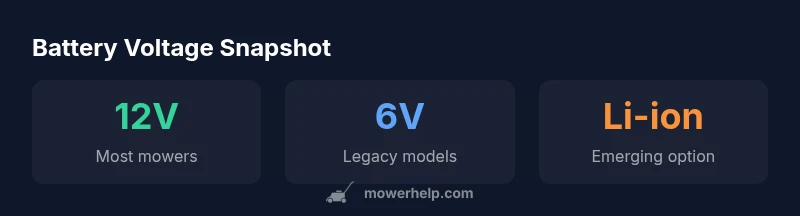
Are lawn mower batteries 6V or 12V? In modern mowers, the standard is 12V, not 6V. 6V batteries are mostly relics of older equipment. If your mower has electric start, check the label or manual to confirm voltage, as using the wrong voltage can damage the charging system and void warranties.
Voltage basics for lawn mower batteries
Lawn mower batteries power the starting circuit and, in some models, the charging system and onboard electronics. The voltage rating is a fundamental specification that determines compatibility with the mower’s electrical components. In practice, the vast majority of modern push and riding mowers use 12V batteries. The 6V format is far more common in older equipment or specialized garden vehicles, but it's increasingly rare among newer models. For homeowners, recognizing the voltage is essential before replacing a battery or choosing a charger. The voltage is typically printed on the top of the battery case or on a label near the battery compartment. When in doubt, consult the owner's manual or the manufacturer's website. According to Mower Help, understanding this simple specification can prevent costly mismatches and ensure reliable starting performance. In any case, the charger and the battery must be compatible; using a charger designed for 12V on a 6V battery (or vice versa) can lead to undercharging, overheating, or damage. The goal of this section is to establish the baseline: most mowers rely on a 12V system, but you may encounter 6V in legacy equipment. Always verify and never guess.
6V vs 12V in modern mowers: what's typical?
In practice, 12V has become the standard for the majority of contemporary lawn mowers—push, rider, and lawn tractors included. This voltage aligns with common automotive battery products, making replacement parts easier to source and chargers more widely available. Older or legacy equipment, however, occasionally used 6V batteries. Those 6V systems show up in some early garden tractors or equipment manufactured decades ago; as a result, you may encounter 6V labels on a battery that still powers a starter solenoid. If your mower is modern and features electronics such as LED indicators, speed control, or onboard sensors, a 12V supply is virtually guaranteed. Mower Help analysis indicates that the transition to 12V has simplified maintenance and improved reliability, though it does mean some old parts become obsolete. When inspecting your mower, confirm the voltage before purchasing a replacement. You should also check the recommended cold-cranking amps (CCA) and reserve capacity (Ah) specs to ensure the chosen battery meets your mower’s demands. The voltage alone matters; capacitor and regulator compatibility plays a role as well. In short, expect 12V as the standard, with 6V remaining in select older equipment.
How to identify the correct voltage on your mower
Identifying the correct voltage for your mower starts with a careful inspection of labels and manuals. Step one is to locate the battery itself and read the markings on the battery case; many commonly used 12V batteries display a '12V' inscription. If the battery is enclosed in a tray, the voltage may be printed on the side of the tray or in the nearby manual. If you cannot access the battery, the mower’s user manual or manufacturer’s support site is your next best source. In some cases, the voltage is printed on the starter solenoid or near the battery terminals. For safety, disconnect the terminal from the chassis before reading or handling the battery. With a multimeter, you can measure the resting voltage; a fully charged SLA battery will typically show around 12.6 volts when healthy, while a 6V battery generally reads in the 6V range. Note that readings can vary slightly with temperature and state of charge. Document the voltage and order a replacement that exactly matches the spec. According to Mower Help guidance, always prioritize exact voltage over other features when replacing a battery, since mismatches can compromise starting reliability and electronics.
Replacements and compatibility: installing the right battery
When replacing a mower battery, the most important rule is to match voltage exactly. Do not substitute a 12V battery into a 6V system, or you risk blowing fuses, damaging the charging circuit, or failing to start the engine. In most modern mowers, the battery is a lead-acid type—sealed or AGM—or increasingly, a lithium-ion variant designed for low self-discharge and lightweight operation. Regardless of chemistry, the voltage must align with the mower’s electrical architecture. Assess the required capacity (Ah) and cold-cranking amps (CCA) as specified by the manual, since these affect starting power and endurance. If you’re upgrading, ensure the physical dimensions fit the battery tray and terminals align with the cable harness. For DIY replacement, keep the terminals clean, apply a small amount of dielectric grease to prevent corrosion, and secure the battery firmly to avoid vibration during operation. If you’re unsure about compatibility, consult a local repair professional or reach out to the manufacturer’s support. The Mower Help team emphasizes that choosing the right voltage is the foundation of reliable starts and safe charging.
Charging, maintenance, and safety considerations
Charging a mower battery requires using a charger designed for the battery type and voltage. A 12V lead-acid charger is not suitable for a 6V battery, and likewise for Li-ion systems. Always follow the charger’s instructions, use proper connectors, and avoid leaving a charger unattended for extended periods. Regular maintenance extends battery life: keep terminals clean, inspect for corrosion, and remove any dirt or moisture buildup around the battery compartment. If you notice swelling, leaks, or a sudden loss of capacity, replace the battery promptly rather than attempting aggressive charging. For storage, disconnect and store the mower in a cool, dry place away from direct heat or sunlight. If you use a battery maintainer or trickle charger, keep the unit on a low, compatible setting to avoid overcharging. The key is to prevent deep discharges and maintain a healthy voltage state. As with all electrical components, practice basic safety: wear eye protection, disconnect the battery before service, and avoid metal tools that could bridge terminals.
Practical buying tips and common mistakes
When shopping for a replacement, the voltage must be correct and the battery fit must align with the tray and terminals. Read product descriptions carefully and verify voltage on the product label—don’t rely on model names alone. Compare chemistry and capacity: lead-acid options are robust and affordable, while lithium variants offer lighter weight and longer life but may require a compatible charger and BMS. If you own a vintage mower, 6V batteries are sometimes requested; in that case, source a model that preserves fit and electrical characteristics. Avoid cheap generic batteries that promise more than they deliver; invest in reputable brands and ensure the warranty covers misuse and charging problems. Finally, keep a small maintenance plan: test the battery every season, clean terminals, and store the mower in a safe place. The Mower Help team notes that attention to voltage, mounting size, and connector alignment pays off in smoother starts and fewer downtimes.
Typical mower battery voltage by model type
| Model Type | Common Voltage | Typical Battery Type |
|---|---|---|
| Push Mower (Electric Start) | 12V | Lead-Acid SLA/AGM |
| Riding Mower / Lawn Tractor (Older Models) | 6V or 12V | Lead-Acid |
| Modern Riding Mower (Newer) | 12V | Lead-Acid AGM or Lithium-ion |
Got Questions?
Are lawn mower batteries typically 6V or 12V?
Most modern lawn mowers use 12V batteries; 6V is uncommon and mostly found in older equipment. Always verify the voltage on the battery label or in the owner's manual.
Most mowers today use 12V batteries. Check your manual or the battery label to confirm.
How can I tell which voltage my mower uses?
Look for a '12V' or '6V' marking on the battery, tray, or in the manual. If needed, measure resting voltage with a multimeter—around 12.6V for a healthy 12V lead-acid battery and around 6V for a healthy 6V battery.
Check the battery label or manual; you can also use a multimeter to confirm.
Can I replace a 6V battery with a 12V battery in an older mower?
No. Substituting a higher voltage battery into a system designed for 6V can damage the charging circuit and electrical components. Always match the exact specified voltage.
Don’t mix voltages; use the exact one your mower requires.
Do mower batteries come in lithium-ion?
Yes, some newer mowers use lithium-ion batteries or Li-ion chemistries, but compatibility with the mower’s electronics and charger is essential.
Lithium options exist, but make sure everything in your mower supports it.
How should I maintain and charge my mower battery safely?
Use a charger designed for the battery’s voltage and chemistry, keep terminals clean, avoid deep discharges, and store in a cool, dry place. Always follow safety guidelines when handling batteries.
Charge with the right charger, keep it clean, and store safely.
What are signs a mower battery needs replacement?
Slow starts, frequent recharging, swollen case, or corrosion at terminals are common indicators the battery should be replaced.
If it won’t hold a charge, replace it.
“Voltage compatibility is the foundation of reliable mower performance. Always use the voltage and pack type specified by your mower's manufacturer.”
The Essentials
- Match voltage exactly to the manual before replacing
- 12V is the standard for most modern mowers
- 6V batteries persist only in legacy equipment
- Consider battery chemistry and capacity (Ah/CCA) when buying
- Use proper chargers and safety practices