Battery Guide for Craftsman Riding Lawn Mowers
Discover how to select, size, charge, and maintain the battery for a craftsman riding lawn mower with practical tips, safety guidance, and troubleshooting from Mower Help.


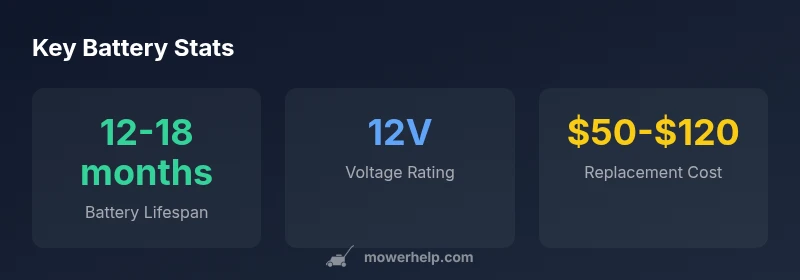
The battery for a craftsman riding lawn mower is typically a 12-volt unit sized for your mower model. Most Craftsman riding mowers use a standard group size with 300–600 CCA; choose an AGM or flooded lead-acid battery from a reputable brand; ensure proper terminal orientation, connectors, and post type, and keep it charged to extend life.
Battery Basics for a Craftsman Riding Lawn Mower
The battery for a craftsman riding lawn mower acts as the starting power source and the heartbeat for essential electrical systems such as lights, gauges, and electric PTO (if equipped). A healthy battery enables reliable starts in cool weather and reduces the risk of stalling mid-mow. When selecting a replacement, verify the model’s group size, voltage, and terminal type, and consider climate and usage patterns. By understanding how the battery powers starting performance and accessories, homeowners can minimize downtime and maximize mowing sessions. Regular charging and proper storage protect capacity and longevity across seasons.
Key takeaway: choose a battery with the correct physical fit, electrical spec, and a reputation for reliability, then maintain it with consistent charging.
Selecting the Right Battery Type
For most Craftsman riding lawn mowers, you’ll encounter two main chemistries: flooded lead-acid and Absorbent Glass Mat (AGM). Flooded lead-acid units are affordable and easy to replace but require periodic maintenance (water levels and terminal cleaning) and careful storage in extreme temperatures. AGM batteries are sealed, spill-resistant, and better at resisting vibration—ideal for a mower that rattles over uneven terrain. In terms of performance, AGM often provides longer life and better cold-cranking ability per unit of size, but at a higher upfront cost. Lithium-ion options exist but are less common and can require special charging hardware. Balance cost, maintenance tolerance, and space when deciding between 12V flooded, AGM, or, less commonly, lithium.
Sizing and Fit: Terminal Posts and Battery Cables
Before purchasing, confirm the battery’s group size (the physical dimensions and terminal layout), terminal post type (e.g., F1, F2, or SAE), and cable length compatibility with your mower’s battery box. Misfit batteries can lead to loose connections, voltage drops, or post damage. Ensure the battery’s height clears the hood and that posts align with the tractor’s positive/negative routing. Consider upgrading cables to heavier gauges if your mower’s alternator or charging system is marginal, especially on higher-compression engines or plow-equipped models.
Charging Practices and Maintaining Voltage
Consistent charging protects battery health. Use a smart charger or maintainer that matches 12V lead-acid or AGM chemistry. Avoid prolonged trickle charging at extreme temperatures, and disconnect from chargers when fully charged in hot climates to prevent gas buildup. If you store the mower for weeks or months, charge to about 80% and keep the battery in a cool, dry place. A monthly top-off during long storage can prevent sulfation in flooded batteries and promote better capacity retention in AGM types.
Seasonal Use and Storage Tips for Mower Batteries
Seasonal use patterns influence aging. In winter climates, cold starts draw more current, which stresses the battery. In summer, heat accelerates self-discharge and electrolyte loss in flooded cells. When storing the mower, remove the battery if possible, clean terminals, and store in a climate-controlled area. Apply a thin layer of corrosion protection on terminals. Consider a battery maintainer during long idle periods to slow capacity loss. A well-stored battery retains charge longer and starts easier when you return to mowing.
Common Startup Issues and Troubleshooting
If the mower won’t start, check for a weak battery, loose or corroded terminals, and electrolyte level (for flooded types). A quick voltage check at the terminals should read near the rated voltage when the ignition is off. A clicking sound often indicates a weak battery or poor connection, while complete no-spark ignition could point to wiring or safety switches. If charges don’t hold, the battery’s internal plates may be sulfated or damaged. In such cases, replacement is usually the best course of action.
Replacement Best Practices: When and How to Replace
Replace the battery when it no longer accepts a reliable charge, shows reduced cranking power, or presents visible damage or swelling. When replacing, match the original group size, voltage, and CCA rating for your Craftsman riding mower. Consider replacing aging cables and cleaning battery contacts to maximize performance. If your charging system is older, inspect or service the alternator/regulator to ensure the new battery remains charged. Always recycle the old battery per local guidelines.
Battery Safety and Handling Standards
Always wear eye protection and gloves when handling batteries. Work in a well-ventilated area to avoid gas buildup and fumes. Disconnect the negative terminal first and reconnect it last to minimize sparks. Do not place batteries on concrete or near heat sources. Store batteries upright and away from flammable liquids. Follow the manufacturer’s safety data sheet and disposal rules when disposing of old batteries.
DIY Testing: Bench Testing vs On-Mower Testing
Bench testing with a load tester can confirm capacity and cranking power before installation. On-mower testing evaluates the battery under actual starting conditions and electrical load from lights and gauges. For a reliable test, measure resting voltage, then perform a controlled load test, noting voltage drop and recovery. If results fall below the acceptable range, replace the battery and re-test the system to ensure proper charging and wiring integrity.
Battery type comparison for riding lawn mowers
| Battery Type | Voltage | Best For | Pros/Cons |
|---|---|---|---|
| Flooded Lead-Acid | 12V | Budget-friendly replacements | Low maintenance; requires water checks; can emit gas |
| Absorbent Glass Mat (AGM) | 12V | Sealed, vibration-resistant | Higher cost; heavier; needs proper charging |
| Lithium-Ion (12V) | 12V | Lightweight, high energy density | Higher cost; requires BMS and specialized Chargers |
Got Questions?
What should I look for when choosing a replacement battery?
Look for the correct 12V rating, a compatible group size, and adequate CCA for your climate. Decide between flooded lead-acid and AGM based on maintenance tolerance. Ensure terminal posts and cable connections align with your mower’s wiring.
Choose a 12-volt battery that fits your mower's size and posts, with enough CCA for your climate, and consider AGM for maintenance-free use.
Can I use a car battery in a Craftsman riding mower?
Using a car battery is not recommended because car batteries differ in size, CCA, and terminal layout. A mower battery is designed for lower current draw but frequent cranking. If you must, ensure exact group size, correct CCA rating, and safe mounting; otherwise stick to purpose-built mower batteries.
Car batteries aren’t ideal for riding mowers due to size and torque differences; use a mower-specific battery instead.
How do I test my mower battery with a multimeter?
Measure resting voltage first (should be near the rated 12V). Then perform a LOAD test or place a light load to observe voltage drop. A healthy battery should recover after the load is removed. If voltage stays low, replace the battery or check the charging system.
Test resting voltage, do a load test, and see if the voltage recovers after the load is removed.
Should I replace the battery and alternator together?
If the alternator is old or showing charging faults, it’s prudent to inspect or service it while replacing the battery. A failing alternator can shorten new battery life. If in doubt, have a technician test the charging system to determine the right course.
Check the alternator if you’re replacing the battery; a failing charger can ruin a new battery.
What is the difference between AGM and flooded batteries for mowers?
AGM batteries are sealed and more resistant to vibration, typically offering longer life with lower maintenance. Flooded batteries are cheaper but require water top-ups and venting. Choose based on maintenance capacity, storage environment, and budget.
AGM lasts longer and is maintenance-free, while flooded batteries are cheaper but need care and ventilation.
“A reliable battery is the heartbeat of a Craftsman riding mower. When in doubt, prioritize a 12‑volt unit that matches the mower’s group size and CCA range, and maintain it with proper charging and storage.”
The Essentials
- Always verify model-specific battery size and terminal type before purchase.
- Choose AGM for maintenance-free performance; flooded if budget is tight and you can service.
- Maintain regular charging and proper storage to extend life.
- Test batteries with a load tester for reliable results before replacement.
- Recycle old batteries per local guidelines and check charging system health.