Lawn Mower Battery Guide: Sizing, Replacement, and Care
Master lawn mower battery basics and replacements, including Advance Auto Parts options, sizing, safety, charging, storage, and troubleshooting for reliable starts and longer mower life.


For most residential lawn mowers, choose a 12-volt, maintenance-free battery (sealed lead-acid or AGM) that matches your mower’s group size and terminal layout. When shopping at Advance Auto Parts, verify the correct group size, terminal type, and CCA rating listed on your mower’s label. Use only batteries recommended by your mower’s manufacturer to ensure reliable starting and long life.
Understanding Lawn Mower Batteries: Key Concepts
According to Mower Help, the most common residential mower battery is a 12-volt sealed lead-acid type configured to fit a specific group size. The critical specifications you must match are the group size, terminal layout, and cold-cranking amps (CCA). The phrase lawn mower battery advance auto often appears in consumer searches, but the safest path is to start with your mower’s label and buy a maintenance-free, compatible unit. Batteries store energy chemically and deliver a surge to crank the engine; mismatching size or polarity can prevent starting or cause damage. By understanding the labels, you’ll avoid returns and ensure smoother mowing sessions. Routine checks of connections, cleanliness, and mounting are as important as the battery itself. The Mower Help team found that proper fit and secure mounting reduce vibration and prolong life. Always keep spare fuses and tools nearby to handle terminal cleaning and bolt tightening quickly.
The Advance Auto Battery Strategy for Lawn Mowers
Advance Auto Parts offers a wide selection of 12V mower batteries and related accessories. When you search for a lawn mower battery advance auto option, prioritize the exact group size and terminal orientation your mower requires, then compare CCA and RC specs. Practical buying tips include checking for maintenance-free designs, corrosion-resistant terminals, and warranty length. If your mower label lists a specific reserve capacity (RC) and CCA, try to match or exceed those figures for reliable starting, especially in cold seasons. Consider shopping during sales events to maximize value, and verify return policies in case the battery needs exchange due to fit issues. The strategy is to align retailer options with your mower’s spec sheet and local climate needs.
Battery Types for Lawn Mowers: Which One Is Best?
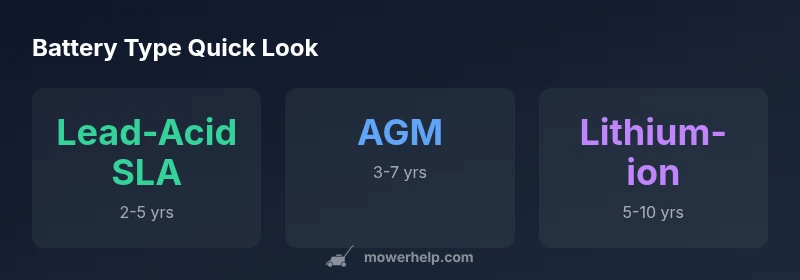
There are three main options for lawn mowers: lead-acid sealed (SLA), absorbed glass mat (AGM), and lithium-ion. SLA batteries are the traditional, affordable choice with solid reliability but heavier weight and shorter cycle life. AGM batteries are lighter, more vibration-tolerant, and generally longer-lasting, making them a popular middle-ground. Lithium-ion packs offer the longest life and lowest weight but come at a higher upfront cost and may require modern charging hardware. Your decision should consider mower size, starting current needs, climate, and maintenance tolerance. As a rule of thumb, homeowners with large lawns or hills benefit from AGM or lithium options, while casual users may prefer SLA for budget reasons. Always confirm compatibility with your mower’s charging system and warranty coverage.
How to Check Battery Health and Replace
Begin with a visual inspection: clean terminals, no white crust, and intact cables. Use a multimeter to confirm a resting voltage around 12.6–12.8V for a healthy 12V battery. If the voltage drops significantly under load, the battery is weak and should be tested under load at a service center or replaced. When replacing, disconnect negative terminal first, then positive, and ensure clamps are tight. Clean corrosion with a mixture of baking soda and water, applied with a small brush. Always disconnect the mower’s spark plug or power switch before handling to avoid accidental starts. After installation, verify proper fit, secure mounting, and cable routing to prevent vibration and wear. The goal is to restore reliable starting and consistent performance across mowing sessions.
Installation Tips for Different Mower Brands
Different mower brands use different battery clamps, terminal layouts, and vent/cover configurations. Check your owner’s manual for the exact group size and polarity. When mounting, ensure the battery sits firmly in the tray with anti-slip padding and that the hold-down strap or bracket is snug but not crushing the case. Some mowers require vented caps or sealed units for safety in enclosed compartments. If your mower uses a mounting plate, align terminals to avoid bending cables during engagement. For plastics and metal hardware, apply no paint on terminals and avoid metal shavings that could cause short circuits. By following brand-specific recommendations, you reduce the risk of misfit and improve longevity.
Maintenance Beyond the Battery: Charging, Storage, and Safety
Regular charging after mowing sessions helps extend battery life, especially in cold climates. Store batteries in a cool, dry place away from metal objects and flammable materials; keep terminals covered when not in use. Refrain from deep-discharge cycles; aim to keep the charge above 12.4V when storing for more than a few weeks. Use a charger designed for sealed lead-acid or AGM batteries and avoid fast-charging unless the charger is compatible with the battery type. Safety basics include wearing eye protection during terminal cleaning and never smoking or using open flames near stored batteries. With these practices, you’ll reduce sulfation, corrosion, and performance degradation. Mower Help’s guidance emphasizes regular maintenance as a practical path to longer mower life.
Troubleshooting Common Battery Problems
If your mower cranks slowly or doesn’t start, inspect wiring and battery connections for corrosion, loose clamps, or damaged cables. A quick test with a multimeter or a battery tester can reveal a weak cell or bad connection. If you hear a rapid clicking sound, the starter may not be getting enough current due to a weak battery or poor connections. Swollen or leaking batteries indicate failure and should be disposed of at a proper recycling facility. If a replacement is needed, verify the group size and polarity before purchasing, and consider an AGM if you use the mower in rugged terrain. Routine maintenance reduces the likelihood of these issues and keeps your lawn mower ready to go when you need it.
Practical Buying Guide: From Prices to Warranty
When shopping for a lawn mower battery, price ranges vary by type and brand, but you should expect a broad spectrum from budget SLA options to premium lithium-ion packs. Warranty length is a practical indicator of confidence from the manufacturer; longer warranties often reflect better build quality and service support. Consider a battery with a robust corrosion-resistant terminal design, but balance cost with expected lifespan and climate needs. If you own multiple tools or engines, consolidate on a single chemistries family to simplify charging and storage. This approach improves overall reliability and reduces maintenance complexity over time.
Comparison of common lawn mower battery types
| Battery Type | Lifespan | Weight | Typical Cost |
|---|---|---|---|
| Lead-Acid SLA | 2-5 years | 6-8 lb | $40-$80 |
| AGM | 3-7 years | 6-9 lb | $60-$120 |
| Lithium-ion | 5-10 years | 3-5 lb | $120-$260 |
Got Questions?
What does 'group size' mean when replacing a lawn mower battery?
Group size defines the battery's physical dimensions and terminal layout. It must match your mower's tray, connectors, and voltage expectations to ensure a proper fit and reliable starting.
Group size is the battery’s physical size and terminal layout; pick the one your mower requires for a proper fit.
Can I use a car battery in a lawn mower?
No. Car batteries are larger, heavier, and designed for high cranking amps; they can damage the mower’s electrical system and may be unsafe.
No—use a mower-specific 12V battery that matches your mower’s spec.
Are lithium-ion lawn mower batteries worth the extra cost?
Lithium-ion batteries are lighter and longer-lasting but costlier and may require compatible chargers. For frequent users or larger lawns, they can offer better overall value.
They’re lighter and longer-lasting, but cost more and need the right charger.
How do I know when to replace my mower battery?
Look for slow cranking, dim lights, or a voltage that remains low under load. A professional load test can confirm weakness and whether replacement is needed.
If it cranks slowly or the voltage drops under load, you’re likely due for a replacement.
Should I shop at Advance Auto Parts for mower batteries?
Yes, but always verify the exact group size, terminal type, and warranty. Compare with other retailers to get the best value.
Yes, just check group size, terminals, and warranty before buying.
What maintenance steps lengthen a mower battery’s life?
Keep the battery charged, clean terminals, avoid deep discharges, and store in a cool, dry place. Use a compatible charger and follow manufacturer guidelines.
Keep it charged, clean, and stored properly; use the right charger.
“Battery compatibility and proper maintenance are the two levers that reliably extend a mower’s starting performance and lifespan.”
The Essentials
- Match group size and terminals to your mower.
- Choose maintenance-free 12V options for ease.
- AGM and lithium offer longer life than SLA in many cases.
- Always verify compatibility with manufacturer specs.
- Proper charging, storage, and safety extend battery life.