How to Change a Lawn Mower Fuel Filter: Step-by-Step
Learn to safely change a lawn mower fuel filter with this step-by-step guide. Find the filter, install a compatible replacement, and test for leaks to protect your engine.


By the end of this guide you will be able to change the fuel filter on a lawn mower with confidence. You’ll locate the filter, select a compatible replacement, and remove the old part without spills. The process includes disconnecting lines, installing the new filter, and priming the system before starting the engine.
Why changing the fuel filter matters
A lawn mower's fuel filter protects the engine from dirt, varnish, and moisture carried into the fuel system. Over time, fine particulates and fuel degradation accumulate, especially if the mower sits with old gasoline. A clogged or dirty filter restricts fuel flow, leading to weak idle, stalling, hesitation, or hard starting. In worst cases, contaminants can reach the carburetor or injectors, causing corrosion or damage. Regularly changing the fuel filter helps maintain optimal fuel delivery, reduces emissions, and extends the life of the fuel system. According to Mower Help, keeping the fuel system clean begins with replacing the fuel filter on a schedule and using fresh fuel and high-quality filters. When you replace the filter, you also improve your mower's ignition performance, which saves time during mowing and prevents costly repairs later.
Safety and preparation
Safety comes first. Work on a flat, well-ventilated surface away from any ignition sources. Wear eye protection and nitrile gloves to minimize skin contact with gasoline. Disconnect the spark plug to prevent accidental starts, and keep a drain pan and absorbent towels handy for potential spills. Clear the area of debris and ensure you can reach the fuel line and filter housing without stretching hoses. Finally, confirm you have the correct filter by checking your mower model, manual, or the existing part number before you buy a replacement.
Choosing the right fuel filter for your mower
Not all fuel filters are identical. Inline filters and canister-type filters vary in size, port size, and flow rating. The right filter matches your mower’s fuel type, engine design, and the connector size on the fuel line. Check the owner’s manual or the current filter for a part number, and order a filter with the same diameter and port orientation. Based on Mower Help analysis, using a high-quality filter designed for your engine reduces risk of fuel leaks and improves reliability. If you have a carbureted engine, ensure the filter fits the housing and fittings. For EFI systems, confirm compatibility with the expected fuel pressure. Also verify the correct orientation—the arrow on the filter or housing indicates flow direction.
Symptoms that indicate you should change the fuel filter
A malfunctioning fuel filter often shows up as degraded performance. Look for engine sputtering at mid-range or under load, hard starting, reduced horsepower, or hesitation when accelerating. A noticeable fuel odor around the line can indicate a leak or varnish buildup, while visible varnish on filters or hoses is a red flag. If you notice any of these signs, don’t delay replacing the filter. Early replacement preserves fuel quality and engine performance, helping you finish mowing tasks more efficiently.
How the fuel filter fits into the mower’s fuel system
The fuel filter sits in the path of fuel from the tank to the carburetor or injectors. Its purpose is to trap particulates and moisture that could clog jets or clogging pathways. A clean filter maintains steady fuel flow, prevents air getting into the fuel line, and helps the engine run smoother. Over time, ethanol blends and gasoline degrade, increasing varnish and gum buildup. A fresh filter minimizes these problems and, coupled with clean fuel, reduces maintenance headaches over the mowing season.
Maintenance and best practices to extend filter life
To maximize filter life, store gasoline in a clean, sealed container and use stabilizers if ethanol blends are common in your region. Avoid letting fuel sit in the tank for long periods. Change the filter at the start of each mowing season or sooner if you notice performance issues. Keep the fuel system free of debris by inspecting the fuel cap, line, and filter housing for cracks or leaks. Regular inspections save time and money by catching problems early.
Tools & Materials
- Safety glasses or goggles(Protect eyes from fuel splashes and debris)
- Nitrile gloves(Keep skin clean and safe from gasoline)
- Drain pan(Catch fuel and prevent spills)
- Rags or absorbent material(Wipe spills and clean connections)
- Wrench set or pliers(Loosen clamps and fittings)
- Screwdrivers (flathead & Phillips)(Open clamps and access fasteners)
- Replacement fuel filter(Match mower model and fuel type)
- Fresh gasoline(Top off after testing, if needed)
Steps
Estimated time: 25-40 minutes
- 1
Disconnect power and secure mower
First, disconnect the spark plug wire to prevent accidental starts. Move the mower to a clean work area and ensure the engine is cool. Engage the parking brake if applicable and place a drain pan underneath the fuel area to catch any spills.
Tip: Always double-check the spark plug wire is fully disconnected before touching fuel components. - 2
Relieve pressure and drain the fuel
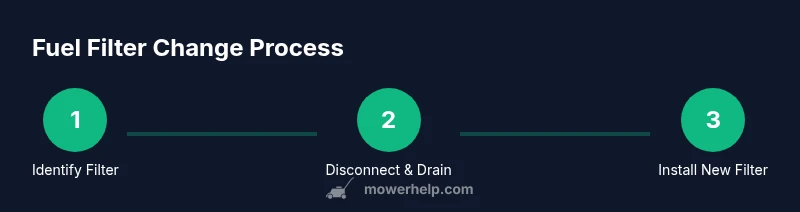
Carefully loosen the fuel line clamp and relieve any residual pressure in the line. Place the drain pan under the connection and loosen the line clamp to allow a small amount of fuel to drain. Use a rag to catch drips and avoid spills.
Tip: Work slowly to minimize spills; have a second rag ready for quick cleanups. - 3
Locate and disconnect the old filter
Identify the fuel filter along the fuel line between the tank and the carburetor. Note the orientation and the direction of flow. Use the appropriate tool to loosen clamps or fittings and gently detach the filter.
Tip: Take a photo of the connections before removing for reference during reassembly. - 4
Install the new fuel filter
Install the new filter with the correct flow direction. Reattach clamps or fittings securely, ensuring there are no gaps. Wipe away any spilled fuel and verify the filter sits firmly in its housing.
Tip: Lubricate any O-rings if the manufacturer recommends it and avoid overtightening. - 5
Reconnect lines and inspect for leaks
Reconnect the fuel lines and clamps. Check all connections for signs of fuel leakage. Wipe clean and ensure hoses are not kinked or stressed. Allow a minute or two to settle before the test.
Tip: Do a quick visual check for leaks around every clamp after reconnecting. - 6
Prime and test the fuel system
If your mower has a priming bulb, press it according to the manual to push fuel through the new filter. Reconnect the spark plug, start the mower, and let it run for 1–2 minutes while observing for leaks or abnormal sounds.
Tip: If the engine runs rough or stalls, recheck connections and ensure the filter is seated correctly.
Got Questions?
Do I need to drain the fuel tank before changing the filter?
Not always, but draining reduces spill risk and helps you inspect fuel lines. If you can't drain, work carefully and have absorbent materials ready. Always avoid smoking or open flames during the process.
Drain the tank if possible to minimize spills, and work slowly to avoid splashes.
What type of fuel filter do I need for my mower?
Check the owner's manual or current filter for a part number, size, and flow rating. Use a filter designed for your engine and fuel type to ensure compatibility and reliable operation.
See the manual or the existing filter for the correct part number and size.
How do I know the fuel filter is clogged?
Symptoms include engine sputtering, hard starting, reduced power, or poor acceleration. If you notice these signs, inspect and replace the filter as needed to restore performance.
Sputtering or hard starting usually means the filter is obstructed. Replace it to restore fuel flow.
Can I reuse an old fuel filter?
No. Fuel filters are designed for single use and should be replaced with a new part to ensure proper filtration and prevent clogging.
No, replace with a new filter for reliability.
Is it safe to run the mower after replacing the filter?
Yes, if there are no leaks and the engine starts smoothly. Start the mower and observe for a few minutes to ensure stable operation.
Yes, but watch for leaks and listen for unusual sounds.
How often should I change the fuel filter?
Replacement intervals vary by usage and fuel quality. Start with a seasonal change or whenever you notice performance issues.
Change it at least every mowing season or when you notice problems.
Watch Video
The Essentials
- Identify the correct replacement filter before starting
- Disconnect power and drain fuel safely
- Install the filter with proper orientation and seal
- Prime and test for leaks after installation
- Adopt a regular maintenance schedule to keep fuel clean