How to Clean a Lawn Mower Carburetor
Learn to safely clean a lawn mower carburetor to restore fuel delivery, improve starting, and extend engine life. This comprehensive guide from Mower Help covers symptoms, safety, tools, step-by-step instructions, and troubleshooting for DIY homeowners.


By following this guide, you will safely clean a lawn mower carburetor to restore fuel delivery and starting performance. You'll learn how to diagnose symptoms, remove and inspect the carburetor, disassemble parts, use proper cleaners, and reassemble with basic tuning. This is essential for reliable yard work and extended mower life.
Why Cleaning a Lawn Mower Carburetor Matters
Maintaining a clean lawn mower carburetor is a foundational task for any DIY mower owner. When dirt, varnish, or gummy fuel deposits accumulate, the carburetor can fail to deliver the right air-fuel mixture, leading to hard starting, rough idling, stalling, or reduced power. A clean carburetor helps ensure reliable starts and smooth operation, which translates into less downtime and a healthier engine overall. According to Mower Help, addressing carburetor cleanliness is one of the most cost-effective ways to protect a gas-powered mower. Regular attention to this component also reduces fuel waste and minimizes emissions, supporting a cleaner, more efficient lawn-care routine. In practice, cleaning the carburetor is a straightforward, technique-driven task that homeowners can perform with common tools and a safe workspace.
Symptoms to Watch For
A dirty carburetor often presents warning signs before a total failure. Look for hard starting, losing power mid-cut, surging RPM, backfiring, or a mower that runs only with the choke on. You may also notice a fuel smell or visible varnish around the carburetor housing. If you identify these symptoms, it’s time to inspect the carburetor internals and clean or replace gaskets and seals as needed. Early intervention can prevent more serious engine damage and save you costly repairs down the road.
Safety First: Prep, Workspace, and PPE
Safety is non-negotiable when working on small engines. Before you begin, disconnect the spark plug boot to prevent accidental starting, remove the battery if you have an electric start, and work on a cool engine on a stable surface. Wear eye protection and nitrile gloves to guard against solvents and sharp edges. Ventilate your workspace well and keep a fire extinguisher nearby as a precaution when handling fuels and cleaners. Having a dedicated, clean parts tray for small components helps prevent loss or mix-ups during disassembly.
How a Carburetor Works: A Simple Overview
A carburetor blends air and fuel to create a precise mixture for the engine. In most small engines, fuel is drawn into a float bowl, passes through jets, and is metered by needle valves and throttle plates. Dirt or varnish can clog jets, alter the float level, or damage gaskets, causing irregular fuel flow. Understanding these basics helps you diagnose problems quickly and perform effective cleaning without overhauling the entire fuel system. This overview keeps the process approachable for homeowners who are new to carburetor maintenance.
Key Components to Inspect During Cleaning
During disassembly, you’ll encounter the float bowl, jets, needle valve, gaskets, and the idle or main jets depending on the model. Inspect the float needle for stiffness, the float height, and the jet passages for varnish buildup. Damaged gaskets are a common cause of air leaks and inconsistent fuel delivery. Keep a note of part positions as you go to simplify reassembly. If any gasket or seal shows wear, replace it to restore a proper seal and engine performance.
Choosing the Right Cleaner and Tools
Select a carburetor cleaner designed for gasoline engines. Avoid using harsh solvents that can degrade gaskets or metal coatings. A small-bristle brush, compressed air, lint-free cloths, and safety gear are essential. Have a clean, well-lit work area and a dependable parts tray to organize small components. For many models, a simple spray cleaner plus light brushing will suffice; for stubborn varnish, repeat applications may be needed, followed by a thorough rinse and dry.
Step-By-Step Process Overview: Pre-Cleaning to Test
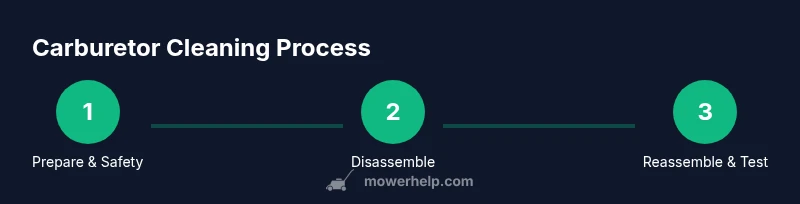
This section provides a high-level roadmap so you understand how the parts fit together before you start. Start by removing the air filter and shroud, then disconnect the spark plug to prevent accidental starts. Detach the carburetor from the intake manifold, carefully remove the bowl, and inspect all passages. Soak metal components in carb cleaner, gently scrub, rinse, dry completely, and inspect gaskets for wear. Reassemble, reinstall, and perform a careful start-up test in a well-ventilated area.
Reassembly, Tuning, and Start-Up Test
After cleaning, reassemble the carburetor with care, ensuring gaskets seat properly and that no parts are left out of place. Reattach the carburetor to the engine, reconnect the air intake, and reconnect the spark plug. Start the engine and listen for a steady idle; if the engine hesitates or stalls, minor adjustment to idle or mixture screws may be needed per your model’s specifications. Run the mower in a short test cut to verify smooth operation and no fuel leaks. If issues persist, re-check the jets, seals, and mounting hardware.
Authority Sources and Further Reading
For deeper learning and model-specific guidance, consult university extension resources and official safety publications. These sources provide detailed instructions, diagrams, and safety considerations to complement hands-on practice. Use them as references to confirm steps that apply to your particular mower make and carburetor design. Always cross-check with your engine’s service manual and the manufacturer’s instructions before making adjustments.
Maintenance Checklist and Quick Reference
Create a simple, repeatable maintenance routine: inspect the air filter, clean the carburetor every season or after 25 hours of operation, check for fuel and oil leaks, and replace worn gaskets as needed. Keep a small toolkit on hand and store cleaners in a ventilated area away from heat. A brief maintenance routine helps prevent clogging, improves starting, and maintains optimal engine performance over time.
Tools & Materials
- Spark plug socket/wrench(Standard 3/8-inch drive is fine; keep one spare spark plug compatible with your mower.)
- Carburetor cleaner spray(Use a product designed for gasoline engines; avoid brake cleaner.)
- Small parts tray(Organize screws, jets, and gaskets by section.)
- Screwdrivers (flathead and Phillips)(Have a set that fits the carburetor screws.)
- Wrench set(Metric or SAE as per mower model.)
- Nitrile gloves(Protect hands from solvents and fuel.)
- Safety glasses(Shield eyes from cleaner splashes.)
- Rags or paper towels(Clean up spills and wipe parts dry.)
- Compressed air (optional)(Blow out jets and passages if available.)
- New gaskets or gasket kit (optional)(Replace worn gaskets if available for your carburetor.)
Steps
Estimated time: 60-90 minutes
- 1
Prepare workspace and safety gear
Set the mower on a flat, dry surface. Disconnect the spark plug boot and ensure the engine is cool. Put on eye protection and gloves, and gather your tools and a clean tray for parts. Having a tidy workspace reduces mistakes and keeps parts organized as you proceed.
Tip: Double-check that the spark plug is fully disconnected before touching any moving parts. - 2
Remove air filter and shroud
Take off the air filter cover and remove the air filter. This exposes the carburetor to allow for safer cleaning and inspection of the intake side. Gently set the filter aside in a labeled bag or tray to prevent contamination.
Tip: Inspect the air filter for excessive dirt; a clogged filter can aggravate carburetor problems. - 3
Detach carburetor from engine
Loosen mounting screws or bolts securing the carburetor to the intake manifold. Carefully note the gasket orientation and lay the carburetor on a clean surface. Avoid bending the linkages or hoses during removal.
Tip: Take a photo of the assembly before disassembly to aid reassembly. - 4
Disassemble carburetor parts
Remove the float bowl and drain any fuel. Separate jets, needle valve, and gaskets. Place small parts in the parts tray in the order you remove them to simplify reassembly.
Tip: Be gentle with the needle valve and float to prevent permanent bending. - 5
Clean parts and passages
Spray cleaner on metal components and brush away varnish. Use compressed air to clear jets and passages if available. Dry thoroughly with clean towels to prevent water spots or rust, then inspect for wear or damage.
Tip: Avoid soaking rubber gaskets; use spray cleaner instead of soaking liquids on those parts. - 6
Inspect gaskets and seals; reassemble
Check all gaskets for cracks or deformation. If you notice wear, replace them before reassembly. Reassemble in the reverse order of disassembly, ensuring seals are seated evenly and screws are snug but not over-tightened.
Tip: If you’re unsure about gasket integrity, replace the entire kit for a reliable seal. - 7
Reinstall, test, and adjust
Mount the carburetor back onto the intake, reconnect linkage and lines, reinstall the air filter housing, and reconnect the spark plug wire. Start the engine in a ventilated area and listen for a steady idle; adjust idle and mixture screws per your model’s guidelines if needed.
Tip: Start with a lean idle mixture and gradually adjust to a clean, smooth idle.
Got Questions?
How often should I clean a lawn mower carburetor?
Frequency depends on usage and fuel quality, but inspecting and cleaning once per mowing season or after signs of poor performance is a practical rule of thumb. Diagnostics like rough idle or hard starting indicate cleaning is needed.
You should inspect and clean once per season or if the mower starts having problems like rough idle or hard starting.
Can I clean the carburetor without removing it from the engine?
Yes, some models allow limited cleaning with the carburetor in place using spray cleaner and a brush. For thorough cleaning and to inspect internal passages, removal is recommended.
In some cases you can clean without removal, but thorough cleaning usually needs removing the carburetor.
Is WD-40 safe to use on carburetors?
WD-40 is not ideal for carburetor internals or gaskets. Use a dedicated carburetor cleaner designed for gasoline engines to avoid damage.
Avoid WD-40 for carburetors; use a proper carb cleaner instead.
What are common signs of a failing carburetor after cleaning?
Persistent starting issues, continued rough idle, white or black smoke, or fuel leaks indicate a carburetor issue beyond cleaning and may require replacement or professional service.
If problems persist after cleaning, the carburetor may need parts replacement or professional service.
Do I need to adjust idle after cleaning?
Some models require a slight idle adjustment after cleaning to restore proper air-fuel balance. Refer to your mower’s manual for specific screw settings and procedures.
Yes, some mowers require a small idle adjustment after cleaning.
What if fuel smells gassy after cleaning?
A fuel smell can indicate a leak or improper seal around gaskets or lines. Inspect all connections and replace worn seals before testing again.
If you smell gas, check and replace seals and recheck connections before starting again.
Can I reuse old gaskets after cleaning?
Reusing old gaskets is not recommended if they show any signs of wear, cracking, or deformation. Replacing with new gaskets ensures a tight seal.
Don’t reuse worn gaskets; replace them for a proper seal.
Watch Video
The Essentials
- Inspect symptoms to guide cleaning needs.
- Use manufacturer-friendly cleaners and replace worn gaskets.
- Reassemble carefully and test in a ventilated space.
- Document your process for future maintenance.