How to Tell If Your Lawn Mower Needs Carburetor Cleaning
Learn how to tell if your lawn mower needs carburetor cleaning with symptom checks, safe diagnostics, and a practical, step-by-step guide. Prevent hard starts and stalling by diagnosing fuel delivery issues accurately.


Understanding the signs that point to a carburetor issue is the first step in determining if a lawn mower needs carburetor cleaning. Look for hard starts, a rough idle, stalling or hesitation under load, and a noticeable fuel smell or varnish around the carburetor. If fuel is aged or deposits are visible, cleaning is likely needed. This guide explains symptoms and safe steps to diagnose and clean.
What signals your carburetor might need cleaning
If you're wondering how to tell if lawn mower needs carburetor cleaning, you start with symptoms that point to fuel delivery issues rather than spark or compression problems. The carburetor’s job is to meter fuel and deliver it in the correct air-fuel ratio as the engine runs. When varnish, gum, or debris clog passages, restrict jets, or foul the float bowl, fuel flow becomes erratic or restricted. The result is symptoms that mimic other issues, so a careful diagnostic is essential. Common signals include hard starting, a sputtering idle, engine surging or stalling at idle or under load, and hesitation when you raise the throttle. You may also notice a strong gasoline smell near the carb or visible varnish on-metal surfaces. It’s important to check the fuel itself: old gasoline or ethanol blends can contribute to varnish and gum, masking the true cause. If you want to diagnose accurately, rule out air flow and ignition issues first, then evaluate the carburetor condition. This approach helps you avoid unnecessary carb replacements and ensures you’re addressing the real culprit. The keyword here is accuracy—understanding how to tell if lawn mower needs carburetor cleaning sets the stage for a safe, effective fix.
Common symptoms of carburetor buildup
Carburetor buildup often shows up as a collection of fuel-system related signals. A stubborn starting process is a red flag: you may need to pull the air filter and inspect fuel delivery. Once running, a rough idle that hunts between high and low RPMs can indicate lean or rich conditions caused by clogged jets or passages. Hesitation when you squeeze the throttle, or a drop in RPM when the load increases (for example, mowing a hill) also points toward carburetor issues. Sputtering at acceleration or during load is a classic sign that the mixture is not being metered properly. A sweet or strong gasoline smell near the engine, along with visible varnish or gum around the carburetor body, supports the suspicion of fuel deposit buildup. If you notice black smoke or a rich exhaust, the issue could involve the float or needle valve not sealing correctly due to deposits. While many symptoms overlap with air filter or ignition problems, persistent carburetor trouble typically responds to thorough cleaning or replacement of worn components like gaskets and jets.
Pre-cleaning checks to narrow the cause
Before tearing into the carburetor, perform quick checks to narrow the cause. Start with the simplest components: inspect and clean or replace the air filter, ensuring unobstructed air flow. Check the spark plug for fouling or wear and replace if necessary. Inspect the fuel: ensure it’s fresh, not old or varnished, and check the fuel line for cracks or kinks. Verify the choke function; a stuck or partially engaged choke can mimic carburetor starvation. Finally, inspect the fuel cap vent and fuel filter for blockages, as limited fuel flow can create symptoms similar to carburetor deposits. By systematically validating these parts, you can be confident that cleaning the carburetor is the appropriate next step rather than chasing issues elsewhere.
Tools, parts, and safety considerations
You’ll need a basic set of tools and a carburetor cleaning kit. Essential items include carburetor cleaner spray, a small screwdriver set, needle-nose pliers, a clean tray for parts, and rags. Optional but helpful items are a soft brush, compressed air, a parts tray, and replacement gaskets or jets. Work in a well-ventilated area away from open flames, with safety gear such as gloves and eye protection. Disconnect the spark plug and relieve fuel pressure before starting. If you’re working with ethanol-blended fuel, consider using a stabilizer and draining old fuel to prevent varnish formation. Keep track of screws and small parts by labeling or using a magnetic dish. A digital photo log during disassembly helps with reassembly. Finally, confirm you have a clean, dry workspace to protect delicate carburetor passages from dirt and moisture.
How carburetor cleaning works and methods
Carburetor cleaning typically involves removing varnish and gum from the small passages and jets that meter fuel. There are a few common approaches. External cleaning with spray cleaner or compressed air is suitable for minor buildup on the exterior and accessible passages. For more thorough cleaning, disassembly is required to access the jet and internal passages; after removal, soak components in a carb cleaner solution according to the product instructions, then rinse with clean, dry air. Be mindful that some gaskets and seals can be damaged by solvent exposure or heat; avoid soaking gaskets, and replace any worn parts. When in doubt, consult the engine’s service manual for disassembly limits and recommended solvents. After cleaning, reassemble carefully, ensuring all passages align and jets seat properly. Finally, confirm you’ve cleared all vent passages and reinstalled the air fuel delivery system securely.
Cleaning workflow overview
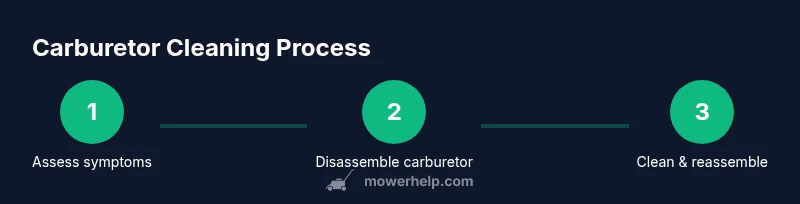
A balanced approach to carburetor cleaning combines inspection, cleaning, and testing. Start by removing and inspecting the carburetor, noting the location of jets and passages. Clean both the exterior and interior surfaces, being careful not to damage delicate parts. After cleaning, reassemble and re-install the carburetor, reconnect all hoses and linkages, and replace the air filter if needed. Fill with fresh fuel and run the engine at fast idle to purge the lines. If the engine still shows symptoms, a complete disassembly and gasket replacement may be necessary. Always document the steps you take and test under load, so you know the fix is effective.
Aftercare: testing and tune-up
Testing after cleaning is essential to confirm the fix. Start the mower in a well-ventilated area, using fresh fuel. Let the engine reach operating temperature and verify idle stability; adjust idle speed and air-fuel mixture screws per the manual, if applicable. Check acceleration response and throttle return to ensure smooth operation. If the engine stumbles or dies when you apply load, re-check the jets for any missed deposits and confirm the float level. Finally, run a short mowing session to observe performance under real working conditions, looking for consistent RPM, stable idle, and clean exhaust.
Prevention and maintenance to extend carburetor life
Prevention is easier than correction. Use fresh fuel and fuel stabilizers to keep varnish at bay. Store the mower with a full tank and stabilized fuel when possible, and run the engine briefly before storage to prevent moisture buildup. Regularly replace air filters and spark plugs to prevent contaminants from entering the carburetor. If you use ethanol-based fuel, consider ethanol treatment products to minimize gum formation. Keep the carburetor environment clean and dry, and inspect for signs of wear on gaskets and seals during routine maintenance. A simple, proactive maintenance routine can significantly extend carburetor life and reduce the frequency of cleaning.
When to replace rather than clean
Carburetor cleaning can address most minor to moderate deposits, but severe clogging, warped or cracked housings, or damaged jets and needles may require replacement. If after several cleanings the performance remains inconsistent, replacing the carburetor or related components (gaskets, seals, float needle) is typically more cost-effective than repeated cleanings. Always compare the cost of replacement parts with the price of a new carburetor and consider the mower’s age, expected lifespan, and intended use. Keep in mind that improper reassembly can cause more damage, so select the safer option and consult a professional if you’re unsure.
Tools & Materials
- carburetor cleaner spray(Choose a fast-evaporating solvent; avoid dairy-based cleaners)
- small screwdriver set(Phillips and flat-head sizes to fit screws)
- needle-nose pliers(Helpful for removing springs or clips)
- clean tray or magnetic dish(Keep fasteners organized)
- rags and lint-free cloths(Wipe all parts dry and clean)
- replacement gaskets/jets (optional)(Have on hand if worn)
- compressed air canister or blower(Careful with delicate passages)
- gloves and eye protection(Protect from solvents and particles)
- fuel-safe container for draining fuel(Dispose or treat old fuel properly)
- owner’s manual or service sheet(Follow torque specs and disassembly limits)
Steps
Estimated time: 60-90 minutes
- 1
Prepare and safety check
Shut off the mower and disconnect the spark plug. Remove the air filter housing to expose the carburetor and inspect the immediate area for obvious damage or leaks. Remove fuel from the float bowl if you’ll be disassembling; this reduces spills and fumes.
Tip: Label hoses and linkages before removal to simplify reassembly. - 2
Drain fuel and remove carburetor
Drain any remaining fuel in the float bowl or tank into a safe container. Detach fuel lines and any mounting screws, then carefully lift the carburetor away from the engine. Take photos from multiple angles to aid reassembly.
Tip: Keep small parts in a labeled tray to avoid losing anything. - 3
Disassemble and inspect
Remove the jets, screws, and float with care. Inspect the jets for varnish or gum, check the float for damage, and look for deteriorated gaskets. Do not force parts—if something is stubborn, stop and recheck alignment.
Tip: Take note of spring placements and jet orientation; a missing position causes performance issues. - 4
Clean internal passages
Clean jets and passages with carb cleaner and a soft brush. Use compressed air to blow out debris, working from the outside toward the small passages. Avoid soaking gaskets; if a part is deeply gummed, consider replacing that component rather than forcing a cleaning.
Tip: Always dry parts completely before reassembly to prevent corrosion. - 5
Inspect and replace worn parts
Reinspect gaskets, seals, and the needle valve. Replace any parts showing wear or damage. Ensure the metering components sit correctly and that the float height is within specification if you have that information.
Tip: Use manufacturer specifications for gasket thickness and jet sizes. - 6
Reassemble and reinstall
Carefully reassemble the carburetor, reinstall onto the engine, and reconnect fuel lines and linkages. Reinstall the air filter and housing. Refill with fresh fuel and ensure there are no leaks around fittings.
Tip: Torque mounting screws to manual specs to avoid leaks or warping. - 7
Test start and idle tune
Start the engine in a safe area and let it warm up. Check idle stability and throttle response; adjust the idle speed or air-fuel mixture if your mower has adjustable screws. Watch for smooth acceleration and consistent RPM under light load.
Tip: Make minor adjustments in small increments to avoid over-tuning. - 8
Cleanup and disposal
Wipe the workspace, dispose of used solvents and old fuel responsibly, and store tools properly. If you performed a significant cleaning, run the mower through a light mowing session to ensure stability.
Tip: Never mix old fuel with fresh fuel; dispose of it per local environmental guidelines.
Got Questions?
What are the signs that indicate carburetor cleaning is needed?
Hard starting, rough idle, stalling, and hesitation under load point to carburetor issues. A varnished carb or strong fuel smell near the carb further suggests deposits. Always confirm ignition and air supply are working before assuming carburetor cleaning is required.
Look for hard starts, rough idle, stalling, and hesitation under load, plus a varnish smell near the carburetor.
Can I clean the carburetor without removing it?
Basic external cleaning can help with light buildup, but a thorough cleaning typically requires removal to access internal jets and passages. If symptoms persist after external cleaning, plan for removal and deeper inspection.
External cleaning helps, but deep cleaning usually needs removal.
How often should I clean my carburetor?
There is no fixed interval. Clean when you notice symptoms of fuel delivery issues, after long storage, or when varnish buildup is evident. Regular fuel maintenance reduces the need for frequent carburetor cleaning.
Clean when you see symptoms or after long storage.
Will carb cleaning fix starting issues caused by other problems?
Carb cleaning helps with carb-related symptoms, but ignition, compression, or fuel line problems can mimic carb issues. A full diagnostic should rule out these other causes first.
Only if the issue is carb-related; other causes require different fixes.
Are there safety considerations I should follow?
Yes. Work in a ventilated area, disconnect the spark plug, and store fuel safely. Use gloves and eye protection when handling cleaners and solvents.
Always wear safety gear and disconnect power.
What parts are likely to wear out after carb cleaning?
Gaskets, seals, and needle valves can wear after cleaning or use. Inspect these parts and replace as needed to prevent leaks and improper metering.
Watch gaskets and needles; replace worn parts.
Watch Video
The Essentials
- Identify symptoms early and act.
- Disconnect the spark plug before starting work.
- Keep track of small parts to avoid loss.
- Inspect gaskets; replace damaged ones.
- Test run and adjust idle after reassembly.