How Do Lawn Mowers Make Stripes: A Practical Guide
Learn how lawn mowers create crisp stripe patterns on your lawn with roller-driven patterns, mowing direction, and blade height. A practical guide from Mower Help for homeowners and DIY enthusiasts.


How do lawn mowers make stripes? Stripes result from a mower with a rear roller and a deliberate mowing sequence. As you pass, the roller bends the grass blades in the mowing direction; when you turn, the blades bend the opposite way, creating light and dark bands as sun reflects differently. Consistency in direction, blade height, and weight distribution is key.
The Science Behind Lawn Stripe Patterns
Stripes that appear on a well-manicured lawn are a visual effect born from how grass leaves reflect sunlight after being cut. When a mower moves forward, the roller presses blades in the direction of travel, bending them slightly forward. On the return pass, blades bend in the opposite direction. Light reflects off blades bent toward the sun differently than blades bent away, producing the familiar light and dark bands. Several factors influence stripe clarity: the mower’s cutting height, whether a roller is used, grass health, and the overall uniformity of the cut. According to Mower Help, stripes look best on dry, evenly grown turf with consistent height across the entire mowing path. The science is simple, but achieving sharp stripes requires a deliberate sequence of passes and careful maintenance of the roller and deck. Keep this understanding in mind as you move into practical setup and technique.
Tools and Setup for Stripe-Mfriendly Mowing
To reliably create stripes, you’ll want the right setup. A rear-roller mower is the primary tool for creating pronounced bands, because the roller applies even pressure and bends blades consistently. Keep blade height uniform across the width you cut each pass; a non-variable deck helps maintain the stripe geometry. If you have a separate lawn roller, it can press stripes after mowing, especially on taller or thicker turf. Before you start, check that the deck is clean, the blade is sharp, and the height setting matches across the entire width of the mower. As the Mower Help team notes, a stable, well-maintained cutting system makes stripes more pronounced and long-lasting. If you cannot use a rolled mower, you can still achieve stripes with careful weight distribution and straight-line passes, but the effect might be subtler.
Pattern Styles You Can Achieve
Stripe patterns aren’t limited to a single look. Linear stripes run in constant, parallel lines along the length of the lawn, ideal for long, rectangular yards. Checkerboard or cross-hatch patterns arise when you mow in alternating directions for successive passes, creating a grid-like appearance. Diagonal stripes can visually widen narrow lawns by running at a 30–45 degree angle to the edges. Each style has pros and cons depending on lawn shape, sun position, and mowing direction. The key is consistency: keep the same baseline direction for a whole mowing cycle, then switch direction intentionally to refresh the pattern. Mower balance and roller pressure play a big role in how dark or light each stripe appears.
How a Rear Roller Creates Light and Dark Stripes
The rear roller is the principal driver of stripe visibility. As it presses the grass and sweeps blades in the mowing direction, blades lie flat and reflect more light, appearing lighter. When you pass in the opposite direction, blades spring back and orient differently, absorbing more light and appearing darker. The result is a sequence of alternating bands that read as stripes from a distance. This is why a uniform pass width and consistent cut height are essential: any variation breaks the pattern. In dry conditions, the blades stay stiffer and hold their shape longer, making stripes crisper. If your lawn has many uneven patches, you may see irregular stripes or gaps; address those areas before attempting a full stripe run.
Step-By-Step Overview to Stripe Your Lawn (High-Level)
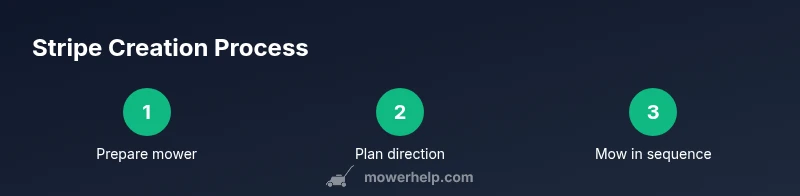
A practical stripe plan starts with preparing the mower, choosing a baseline direction, and executing straight passes with careful turns at the ends. Start with a baseline that follows the longest edge for clean, continuous lines. After each pass, check that your cut width aligns with the previous line so stripes stay uniform. Conclude each mowing session by evaluating stripe visibility and adjusting height or roller pressure as needed. The goal is repeatable patterns that look intentional rather than accidental. The next section dives into a detailed, step-by-step workflow you can follow on your own lawn.
Maintenance Tips to Keep Stripes Crisp
Crisp stripes rely on a sharp blade, a clean deck, and a well-functioning roller. Regularly sharpen or replace dull blades to prevent ragged edges that blur stripe boundaries. Clean the underside of the deck after mowing to prevent grass buildup, which can alter cutting height and stripe sharpness. Check roller alignment and ensure it remains evenly weighted across passes. If you notice stripes fading, revisit your mowing height and whether you’re mowing in consistent directions with the same pass width. Dry, settled turf responds best to stripe maintenance, so avoid mowing immediately after heavy rain. A quick touchup pass in the opposite direction can refresh the pattern.
Common Mistakes and How to Avoid Them
Several common issues sabotage stripes: mowing wet or dewy grass, varying cutting heights across passes, and turning too sharply at ends, which creates jagged lines. Another frequent error is starting with a baseline direction that doesn’t suit the lawn’s shape or sun angle, making stripes difficult to read from typical viewing angles. Ensure your mower is properly balanced, the wheel drive is evenly engaged, and you maintain a consistent distance from the strip behind you. If you’re using a rolling lawn mower, verify the roller pressure is appropriate for your turf height. By avoiding these mistakes, you’ll see more consistent, pronounced stripes from edge to edge.
Stripes on Slopes and Uneven Ground
Mowing on slopes introduces extra risk and can blur stripe patterns if not done carefully. When stripes are needed on uneven ground, maintain a constant cutting height and use a wide, smooth turning radius to minimize gouges that disrupt lines. If the slope is steep, prioritize safety and consider mowing in narrow strips rather than one long pass to preserve stripe integrity. On shaded or uneven sections, stripes may appear less distinct due to variations in blade growth and leaf angle. In those cases, you may need to adjust your baseline direction or wait for drier, firmer conditions to reattempt the stripe pattern. Safety remains paramount on slopes.
Real-World Scenarios: Homeowners, Slopes, and Shady Areas
For most homeowners, achieving stripes is a blend of technique and equipment. In a typical suburban yard, a rear-roller mower with a consistent height setting can deliver strong results on a dry spring or summer day. If your lawn has pockets of uneven growth or stubborn tall patches, treat those areas first with targeted passes and possibly a patch cut before running the broader stripe pattern. Shady areas with slower growth may require more passes to achieve the same stripe depth, but patience pays off. Finally, keep expectations realistic: stripe intensity varies with sun angle and blade color from a distance, so aim for pattern readability rather than perfect contrast in every patch of turf.
Tools & Materials
- Rear roller-equipped mower(Essential for bending blades consistently and creating visible stripes.)
- Adjustable cutting height mechanism(Set a uniform height across the entire mowing width.)
- Lawn roller (optional)(Presses stripes after mowing for extra depth.)
- Quality mower blade sharpener (optional)(Keep blades sharp for clean cuts and crisp stripes.)
- Measuring tape or chalk (optional)(Mark baseline lines to maintain consistent pass widths.)
Steps
Estimated time: 60-90 minutes
- 1
Inspect and set cutting height
Check that the blade is sharp and the cutting height is uniform across the deck. If the mower has a vibration or unusual noise, stop and inspect. Establish a baseline height that matches your turf's growth stage and mower manufacturer's guidance.
Tip: Use a ruler or calipers to verify deck height at several points along the cutting width. - 2
Plan your baseline direction
Choose a starting edge and a direction that runs the longest path of the lawn. A straight baseline makes pattern planning easier and stripe visibility more consistent from typical viewing angles.
Tip: Avoid directions that put the sun directly behind you, which can wash out stripe contrast. - 3
Prepare the lawn
Remove debris, sticks, and stones. Mow when the grass is dry to prevent clumping and ensure clean cuts. If the lawn is damp, wait for it to dry to avoid tearing blades.
Tip: Dry turf preserves stripe clarity and reduces the chance of blade damage. - 4
Mow the first pass
Begin along the baseline edge and mow straight, maintaining a consistent pass width. Keep a relaxed, even pace for uniform stripe formation. Do not overlap more than intended or you’ll blur the lines.
Tip: Use the wheels as a guide for straight lines and avoid sudden speed changes. - 5
Turn carefully at ends
At the end of each pass, stop, rotate in a wide arc, and begin the next pass in the opposite direction. Small, controlled turns preserve stripe alignment and minimize blade wear.
Tip: Plan your turns so you complete entire passes with clean edges on each stripe. - 6
Mow in successive passes
Continue mowing in the opposite direction in parallel passes, keeping the same width. Overlap should be minimal; aim for a consistent strip width throughout the cycle.
Tip: If stripes fade, consider a light, final pass in the opposite direction to refresh contrast. - 7
Inspect stripe depth and width
Step back and view your lawn from typical seating or viewing points. Compare stripe depth and uniformity; note any areas that require rework or adjustments in height or roller pressure.
Tip: Small adjustments to height or roller stiffness can make a big difference in stripe depth. - 8
Finish and post-mow care
Clean the deck, sharpen blades if needed, and store the mower properly. If you used a lawn roller, consider a light roll across the lawn to press the stripes further and improve durability.
Tip: Cool-down passes help set the blade orientation and prolong stripe visibility.
Got Questions?
Do stripes require a roller mower to be visible?
A roller helps produce stronger stripes by bending the blades consistently, but a careful pattern and weight distribution can still create stripes on some mowers without rollers. The effect will typically be subtler.
Stripes are clearer with a roller, but you can still see patterns with careful technique if your mower lacks one.
Why aren’t stripes visible on a lawn after dew or rain?
Moisture makes grass blades stand differently, reducing the directional contrast that creates stripes. Mowing after the lawn dries tends to yield crisper lines.
Stripes fade when the grass is wet; wait for it to dry to get the best contrast.
Can stripes be created on slopes?
Yes, but slopes increase risk and reduce stripe clarity. Mow with a low, controlled pace, use gentle turns, and avoid heavy blades on steep sections.
You can stripe slopes, but go slowly and keep safety first.
Do stripes affect lawn health?
Stripes are cosmetic and do not harm turf when mowing height is appropriate. Avoid removing more than one-third of leaf blade in a single pass and adjust height for turf type.
Stripes won’t harm the lawn if you keep mowing height appropriate.
What determines stripe width and depth?
Stripe width depends on pass width and mower deck size; depth depends on roller pressure, mowing height, and blade sharpness. Consistent technique yields the best results.
Width and depth come from your pass width and roller setup.
How can I fix uneven stripes?
Check the cutting height across the deck, verify the roller alignment, and ensure your passes are parallel. Re-cutting with consistent rhythm helps even out irregular areas.
Make sure the height is uniform and you mow in straight, parallel passes.
Is it possible to stripe a very small lawn?
Yes. Use narrow passes to keep stripe width proportionate to the lawn size and avoid over-processing a tiny area. A single-direction baseline can still yield a neat pattern.
Even small lawns can show stripes with careful passes.
Should I reseed patchy areas before attempting stripes?
Patchy areas can disrupt stripe visibility. Improve uniformity by mowing those sections separately, then reseed or overseed as needed before a full stripe run.
Tend to patchy spots first so stripes read clearly.
Watch Video
The Essentials
- Use a rear roller for most pronounced stripes
- Maintain a consistent cutting height on all passes
- Mow on dry turf and plan a clear baseline direction
- Refresh stripes with a final pass in the opposite direction